Credit Card Debt After Death: What Executors Commonly Do, What to Pause, and What to Record
Credit Card Debt After Death Executor

Credit card balances are unsecured claims against the estate, meaning they typically sit near the bottom of the payment priority list. Stop the bleed immediately by pausing autopay subscriptions and notifying the major credit bureaus to lock the deceased’s profile against fraud. Debt collectors rely on creating urgency. Shift the burden back to them by … Read more


Home Contents Inventory Checklist: Photos, Categories, and Proof

Home Contents Inventory Checklist

Establish the baseline: Always take wide-angle and detail photos of every room, garage, and storage space before a single item is moved, boxed, or thrown away. Group the ordinary: Do not list every spoon and towel individually; categorize everyday items into logical groups to save hours of administrative time. Map the proof: For high-value items, … Read more

Executor Bond and Probate Bond Checklist: When It Comes Up and What to Expect

Executor Bond

An executor bond (or probate bond) is essentially an insurance policy that protects the estate and its heirs, not a penalty against you. Courts commonly ask for a bond if there is no will, if the will does not explicitly waive it, or if you live in a different state. The bond amount is set … Read more

Find the Will After Death: Where Executors Actually Look First

How To Find A Will After Death

Start the physical home search by looking for distinctive law firm envelopes, checking hidden fireboxes, and scanning old mail for attorney retainer receipts. Do not bypass digital passwords or force open locked safes. Focus on gathering physical clues, checking cloud storage structures, and documenting what you find. Maintain a single “Will Search Log” to prove … Read more

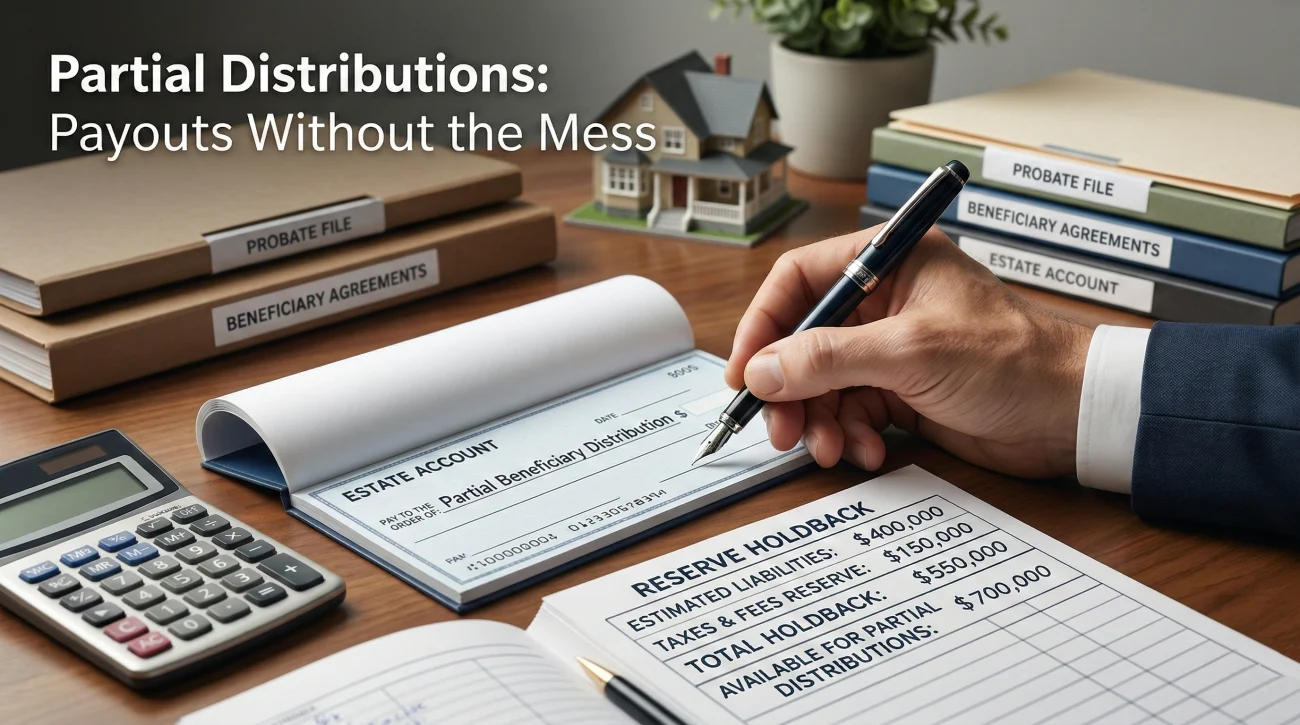
Partial Distributions: How Executors Do It Without Creating a Mess

Partial Distribution Estate

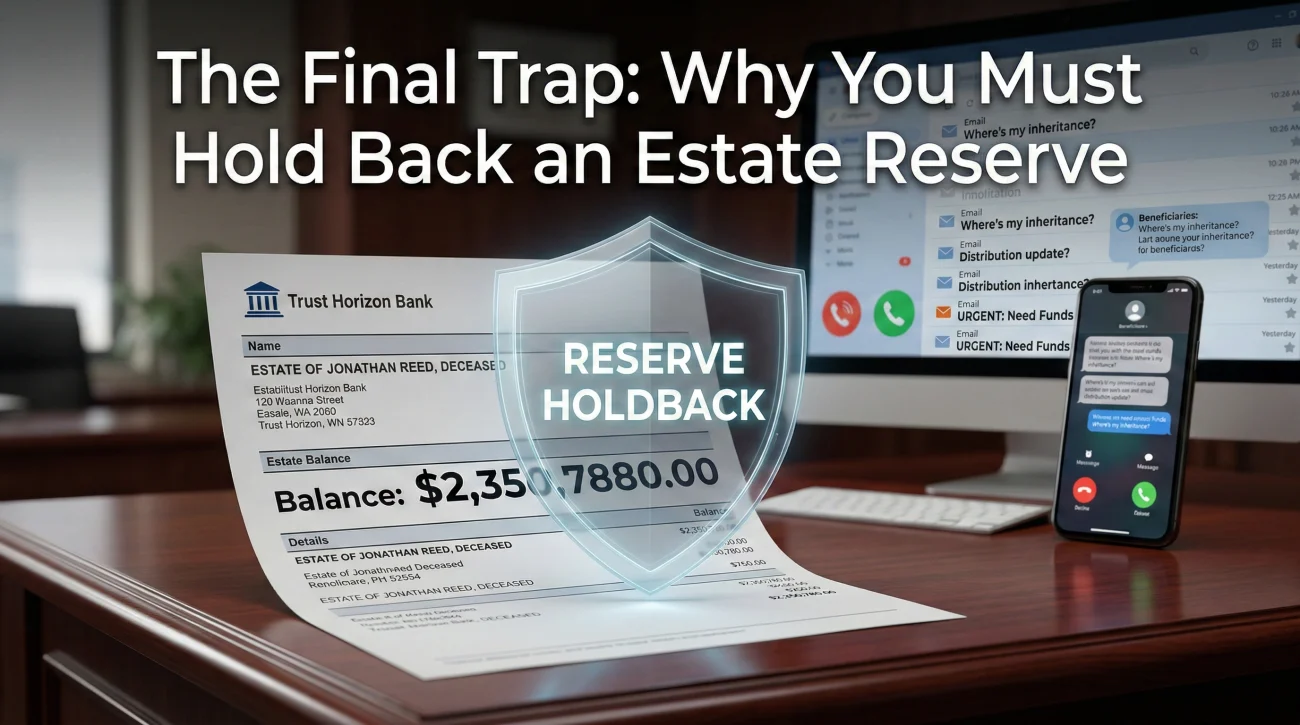
A partial distribution estate strategy allows you to release some funds early, but it requires strict tracking to prevent future conflicts. Never drain the estate account; you must always maintain a documented reserve holdback to protect yourself from unexpected final bills and taxes. Every interim distribution must be treated as a documented advance on the … Read more

Secured Debts After Death: Mortgages and Car Loans, and Why the Asset Changes Everything

Secured Debts After Death - Mortgages And Car Loans

The debt follows the asset: Secured debts are tied to a specific physical item, meaning the lender typically retains rights to that property if payments stop. Ownership dictates action: Before worrying about payments, verify if there is a surviving co-signer, if the property is in a trust, or if mortgage protection insurance exists to clear … Read more

Digital Assets Inventory Checklist: Crypto, Passwords, and Cloud Storage

Digital Assets Inventory Checklist

Building a digital assets inventory checklist is about finding footprints through bank statements and physical devices. Never attempt to guess passwords or bypass locks. You will likely trigger fraud alerts or permanently erase the data. Always prioritize securing the physical devices (phones, laptops) and keeping the phone service active to maintain access to two-factor authentication … Read more

What to Bring to Probate Court: A Practical Executor Checklist

What To Bring To Probate Court

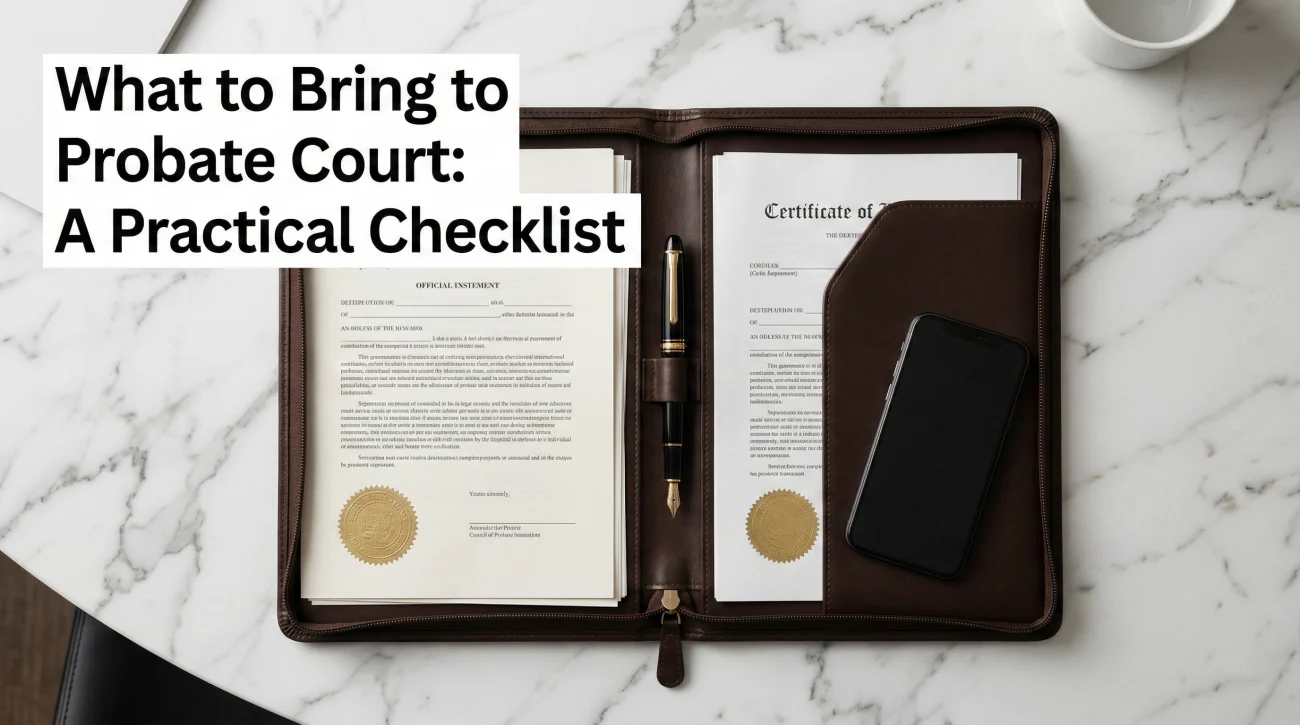
Your first visit to the courthouse is about information gathering and filing initial paperwork, not about leaving with full authority on day one. Bring original core documents: the original will (never remove the staples), multiple certified death certificates, and your valid government-issued ID. If there is no will, bring vital records like marriage or birth … Read more

How Many Death Certificates Do You Need: A Practical Rule of Thumb

How Many Death Certificates Do You Need

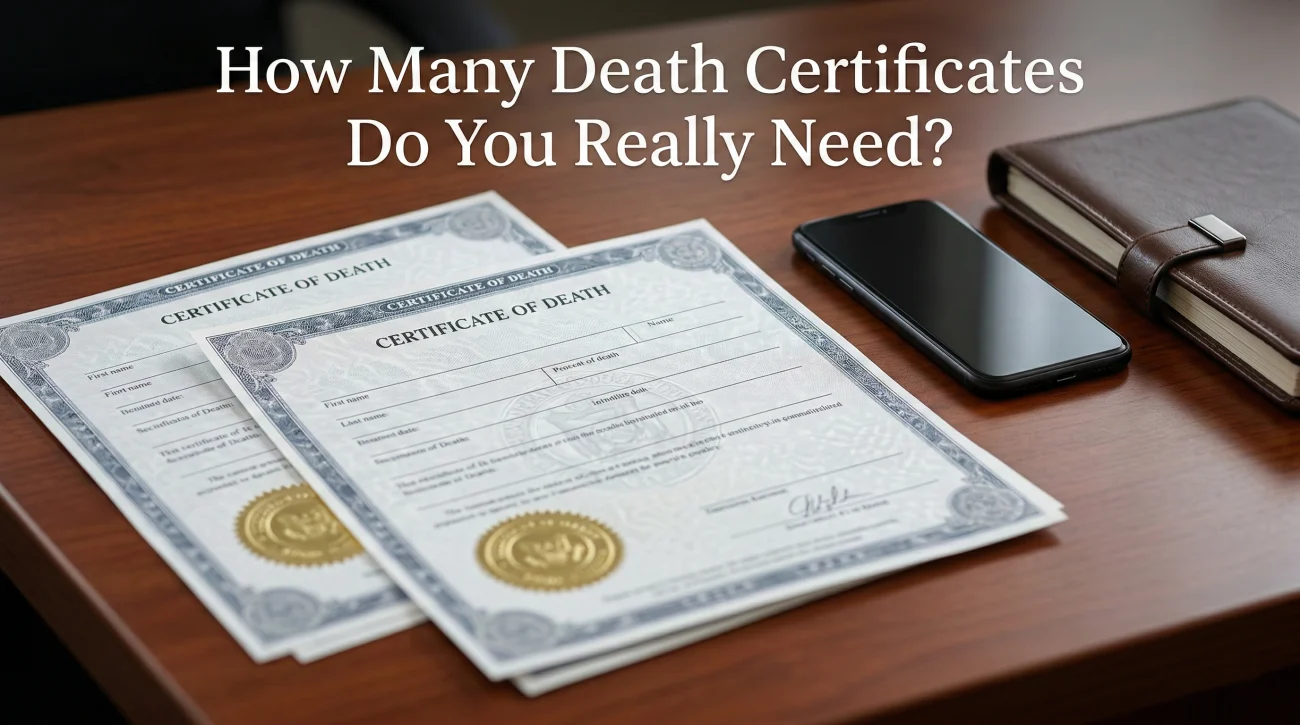
The Baseline Rule: Most standard estates require between 5 and 10 certified copies, while complex estates with multiple properties or disparate accounts may need 15 to 25. Not Everyone Needs an Original: Many modern institutions will accept a high-quality PDF scan, but you must ask for their requirements in writing first. The “Return” Reality: Some … Read more

Estate Reserve Holdback: How Executors Decide What to Keep Back

Estate Reserve Holdback

An estate reserve holdback is a calculated safety buffer of funds kept in the main estate account to cover final taxes, delayed bills, and closing administrative costs. Executors must actively plan for “ghost bills,” such as delayed medical invoices or forgotten digital subscriptions, to avoid paying out of pocket. A partial distribution can safely relieve … Read more

Executor Paying Debts: A Safe Order-of-Operations Without State-Specific Priority Charts

Executor Pay Debts In What Order

The most common trap for a new executor is paying the loudest creditor first, which creates massive liability if the estate runs out of money later. Estate administration relies on a strict workflow order: keep the estate running, reserve for taxes, manage secured assets, and finally, evaluate unsecured claims. Distinguishing between “administration expenses” (costs generated … Read more

Non-Probate Assets Checklist: What Often Bypasses the Estate and How to Track It

Non Probate Assets Checklist

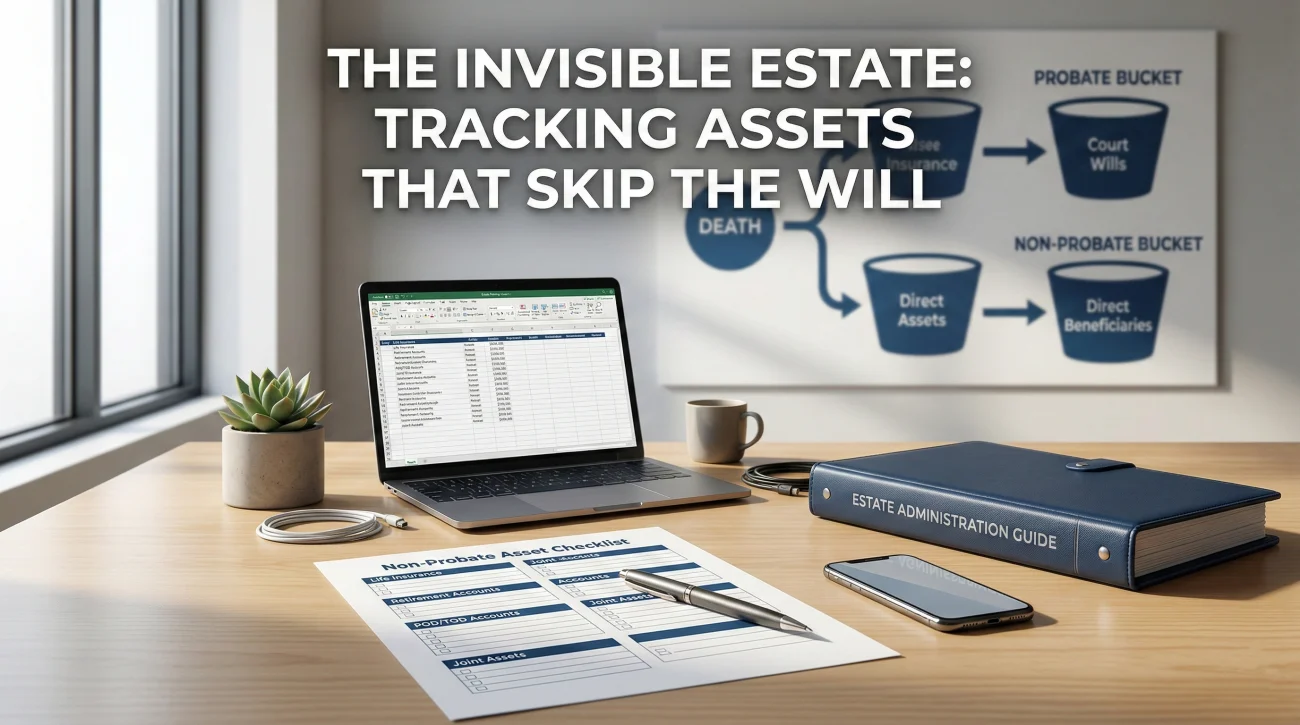
The core separation: A non-probate asset checklist helps you identify accounts and properties that transfer directly to someone else via built-in contracts, completely outside the traditional court process. The printable tracker: Use our structured template below to log the asset type, suspected mechanism, date contacted, and receipt of written confirmation. Red flags to watch for: … Read more

Letters Testamentary vs Letters of Administration: Which One Applies and What Changes

Letters Testamentary Vs Letters Of Administration

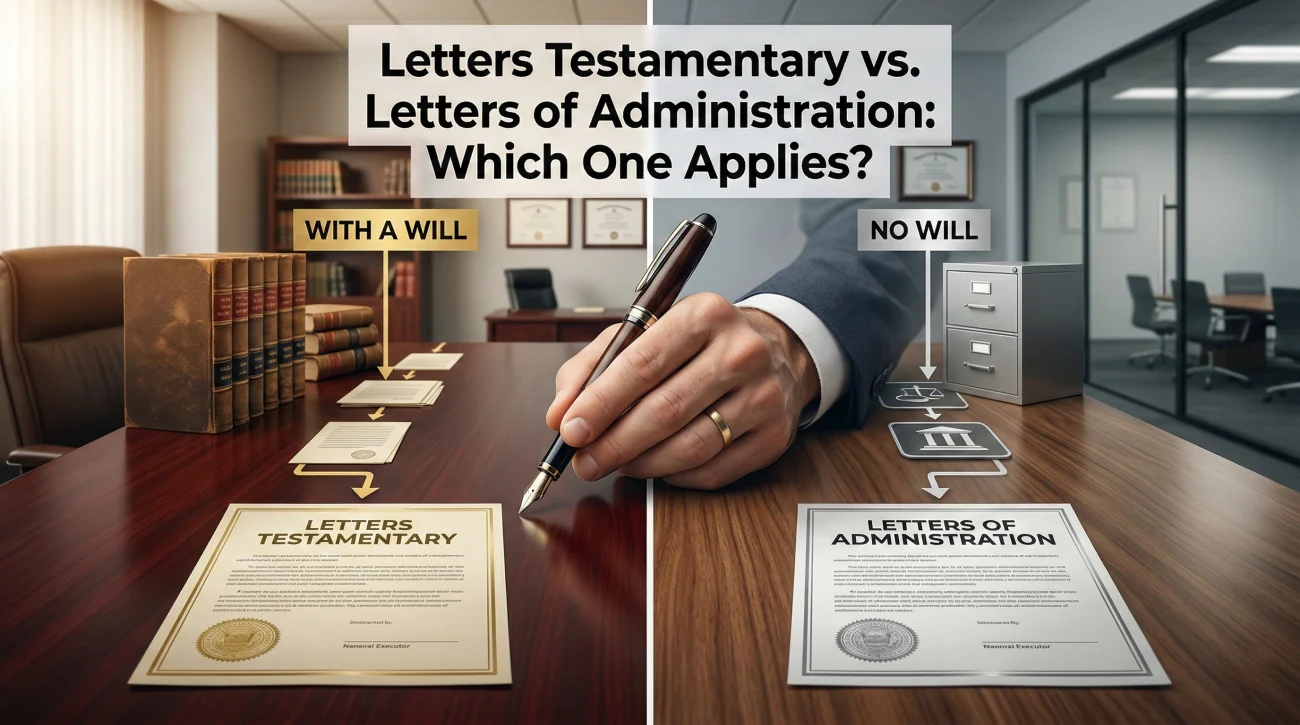
The primary difference is origin: Letters Testamentary are issued when the court validates a will, while Letters of Administration are issued when there is no will or the named executor cannot serve. Administrators usually face a longer, more heavily supervised timeline, often requiring specific court hearings to sell real estate (adding 45 to 90 days … Read more