- Your first visit to the courthouse is about information gathering and filing initial paperwork, not about leaving with full authority on day one.
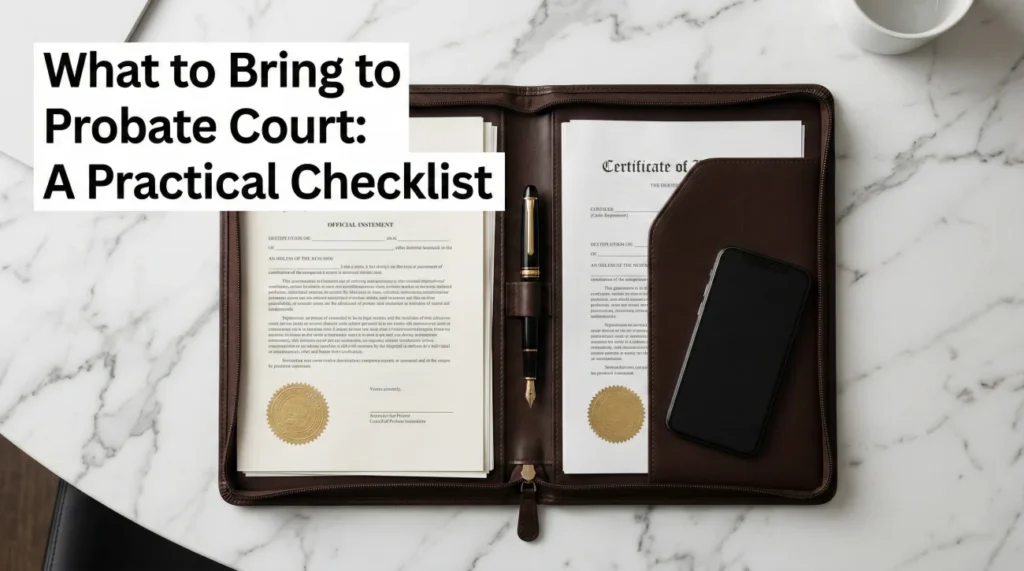
- Bring original core documents: the original will (never remove the staples), multiple certified death certificates, and your valid government-issued ID.
- If there is no will, bring vital records like marriage or birth certificates to prove your relationship and priority to serve as administrator.
- Prepare a clean, typed interested parties list that includes full legal names, current mailing addresses, and relationships to the deceased person.
- Compile a high-level asset snapshot (including physical and digital assets) to help the court determine if you qualify for a simplified small estate process.
- Always ask the clerk for a written checklist of local requirements and confirm exact next steps before you leave the window.
Preparing for Your First Court Visit
Walking into a courthouse for the first time after a loss is an intimidating experience. In my work supporting families through estate administration, I often hear the same anxiety from new executors. It is the fear of waiting in line for an hour only to be turned away because a single piece of paper is missing. Knowing what to bring to probate court is less about memorizing state laws and more about mastering administrative preparation.
I once sat next to a grieving daughter who was told to go home because she brought a printed bank statement instead of a certified death certificate. Courts operate strictly on documentation. They do not work off assumptions, verbal promises, or informal agreements among family members. Every claim you make about who you are, who has passed away, and who is involved in the estate must be backed by paper. When you arrive unprepared, the process stalls before it even begins.
I want to be clear right upfront. I am not an attorney, and this guide does not replace local legal advice. Every county has its own specific petition forms, local rules, and filing fee structures. You must always check your local court’s website or call ahead to verify their specific packet requirements. However, the foundational items you need to build that packet remain remarkably consistent across the board.
My goal is to walk you through how to organize your materials so that when you step up to the clerk’s window, you present a clear, professional, and complete picture. A well-organized packet signals to the clerk that you are serious about your duties, which often makes the entire interaction much smoother.
Core Identity and Death Documents
Before any estate can be opened, the court must establish two absolute facts. First, the person in question has actually passed away. Second, you are exactly who you say you are. This seems simple, but I commonly see this step create the very first bottleneck.
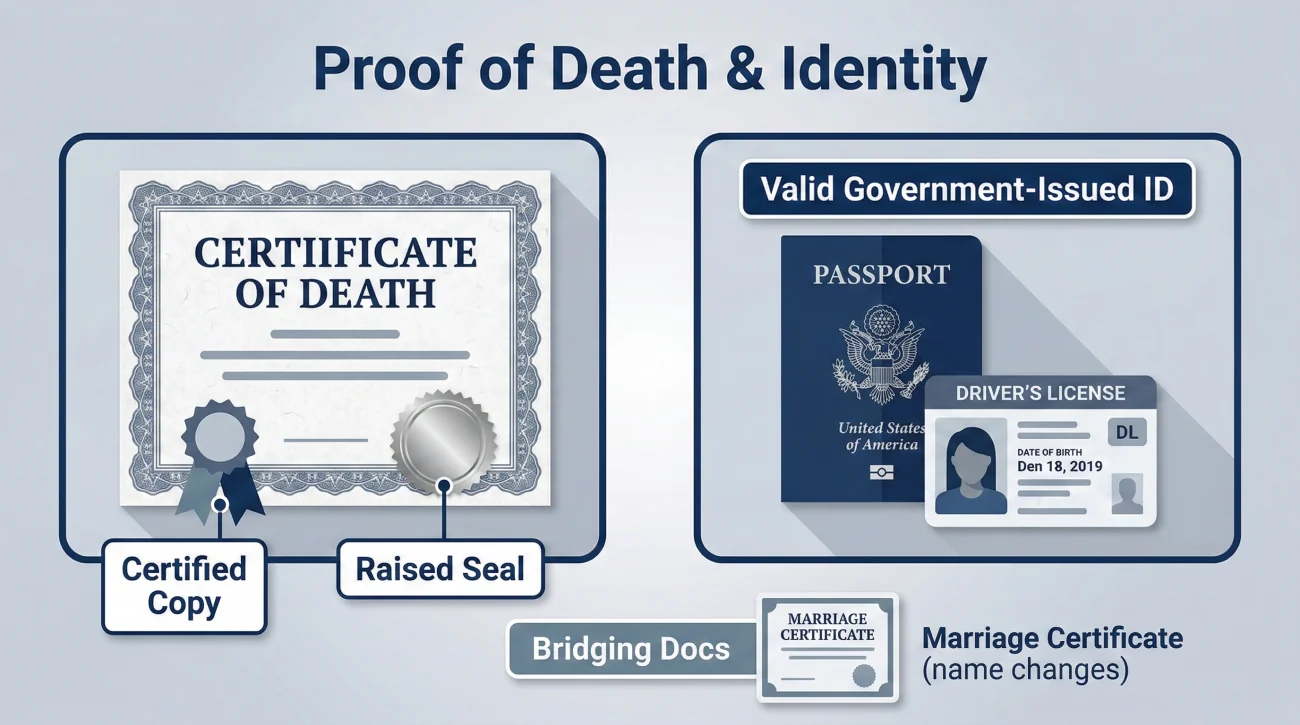
The Certified Death Certificate
You will need to bring certified copies of the death certificate. Notice the word “certified.” A photocopy you made on your home printer is almost never accepted for the initial filing. Courts want to see the raised seal, the colored stamp, or the specific security paper used by the vital records office.
In many cases, courts require you to submit at least one original certified copy which they will keep for their records. I always advise bringing two or three certified copies with you, just in case they need an extra or if you need one stamped to prove you submitted it.
Key Point: Check the death certificate for accuracy before you go to court. If the deceased person’s name is spelled incorrectly, or if their marital status is listed wrong, the court may pause the process until you get the certificate amended by vital records.
Your Own Identification
You cannot simply tell the court you are the person named in the will; you must prove it. Bring a valid, unexpired government-issued photo ID. A driver’s license or a passport is standard.
One pattern I see frequently in administrative work involves mismatched names. If the will names “Elizabeth Ann Smith” as the executor, but your driver’s license says “Betty Smith” or reflects a new married name “Elizabeth Johnson,” this can cause friction at the clerk’s window. If your current legal name differs from the name printed in the will, bring the bridging documents. A marriage certificate or a legal name change order shows the clerk the paper trail of why your name has changed.
⚠️ Warning: Do not bring an expired ID. It is a very common mistake to overlook an expiration date during the chaos of a family emergency, but a court clerk typically cannot accept an invalid identification card.
Handling the Will Packet Basics
If the deceased person left a will, this document is the centerpiece of your court visit. How you handle the physical document matters just as much as what it says inside.
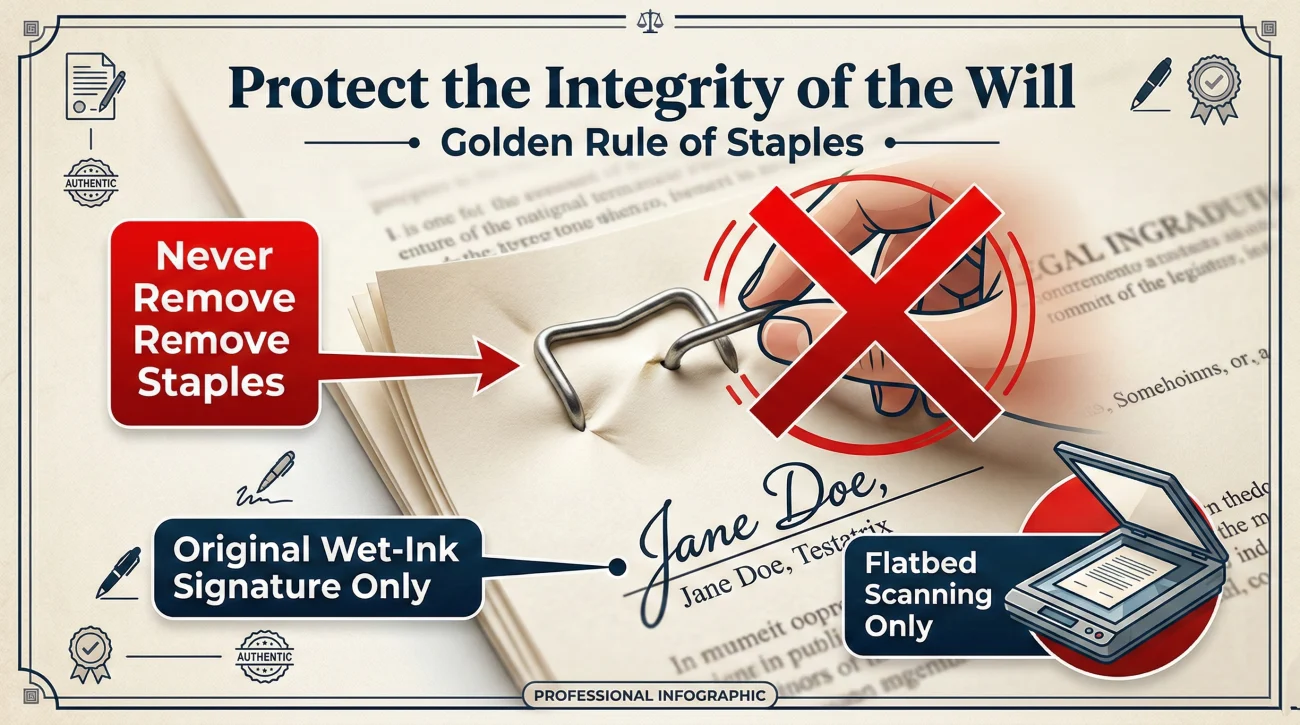
The Original Document is Paramount
Courts commonly request the original, wet-ink signature version of the will. A scanned copy, a fax, or a PDF saved on your phone will rarely suffice for opening an estate. The court needs to inspect the original to ensure it appears valid, hasn’t been tampered with, and meets the basic witnessing requirements.
If you cannot find the original and only have a copy, you can still go to court, but the process becomes significantly more complex. You will likely need to explain exactly why the original is missing, which often requires specific legal procedures and extra hearings.
The Golden Rule of Staples
In my day-to-day administrative work, this is the single most avoidable mistake I see. People often remove the staples from the original will so they can run it through a sheet-fed scanner at home.
❌ Note: Never, under any circumstances, remove the original staples, binding, or brads from a last will and testament.
If a court clerk sees staple holes that have been removed and replaced, or extra holes along the top margin, it immediately raises a red flag for tampering. The court might wonder if pages were swapped out or altered. If you must make copies before your court visit, use a flatbed scanner or carefully copy it page by page without removing the binding. If the staple is already removed when you find it, leave it exactly as is and be prepared to explain that you found it that way.
Clean Copies and Filing Notes
Along with the precious original, bring at least two clean photocopies of the will. Often, the court will keep the original in their vault and may stamp your copies as “received” for your own records.
Once the court is satisfied with the physical condition of the will itself, their next immediate focus will be on the people affected by it.
What If There Is No Will? (Intestate Estates)
A large percentage of families I work with do not have a will to bring to the courthouse. In these cases, the estate is considered “intestate,” and the court will appoint an administrator rather than an executor. The responsibilities are nearly identical, but your day-one paperwork looks different.
Because you cannot hand the clerk a document that names you as the chosen representative, you must prove you have the legal priority to serve. State laws outline a strict order of who gets to be the administrator, usually starting with the surviving spouse, then adult children, then parents.
If you are applying to be the administrator, bring vital records that prove your relationship to the deceased person. A certified marriage certificate is crucial if you are the spouse. A birth certificate showing the deceased person as your parent is standard if you are an adult child applying for the role. By anticipating the clerk’s need to verify your relationship, you prevent an unnecessary trip back home.
Special Situations to Prepare For
Standard checklists cover normal scenarios, but administration is rarely perfectly standard. If you fall into one of these common edge cases, pack accordingly.
The Out-of-State Executor
It is incredibly common for an adult child to live in a different state than their parent. If your ID shows an out-of-state address, the clerk will notice immediately. I have seen this catch people off guard more times than I can count. An executor flies in for the week, stands at the clerk’s window, and is suddenly told they cannot be appointed without an in-state resident agent. This is simply a person living in the state who agrees to accept official court mail on your behalf. Bring the name and address of a trusted local friend or family member just in case the clerk hands you a resident agent form to fill out.
Finding Multiple Wills
Sometimes you clean out a desk and find a formal will from 1995, another from 2018, or even a handwritten letter detailing their final wishes (often called a holographic will). Bring all original versions you found. Do not make the legal decision of which one is valid yourself. I have seen estate proceedings delayed for months because a family member threw away an older will, assuming it was useless, only to find out the newer one was improperly witnessed. Bring every version, neatly separated, and let the judge or clerk sort out the legal timeline.
Once you have sorted out which core documents apply to your specific situation, the next immediate task is making sure the court knows who else needs to be in the loop.
Building Your Interested Parties List
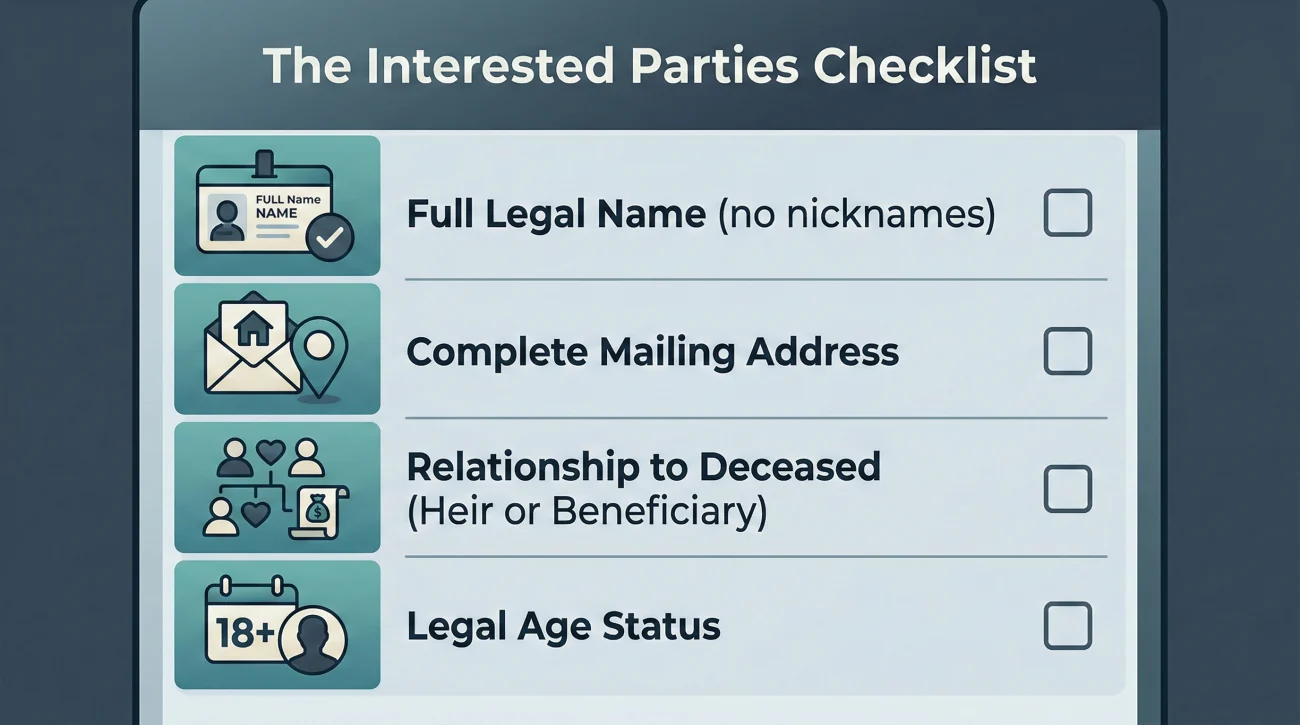
The court needs to know who else has a stake in this process. This usually includes anyone named in the will (beneficiaries) and anyone who would legally inherit if there were no will (heirs-at-law). The court requires this list because these individuals generally have a right to be notified that the estate is being opened.
Do not show up with a handwritten list scribbled on the back of an envelope. When I help organize estate files, I always insist on creating a clean, typed document. It reduces errors when the clerk inputs the data and ensures notices go to the right places.
Your list should commonly include:
- ✅ The person’s full legal name (not nicknames)
- ✅ Their current, complete mailing address
- ✅ Their relationship to the deceased (e.g., son, sister, friend)
- ✅ Their age or status as a minor, if applicable
If you have individuals whose addresses are completely unknown, list their names and write “Address Unknown, Last known location: [City, State].” Be prepared for the court to ask you what efforts you have made to find them.
A sticky note saying “Call Uncle Bob about the house.”
A printed table listing “Robert Smith (Brother), 123 Main St, Springfield IL, Beneficiary.”
The High-Level Asset Snapshot
When you first walk into the probate court, you do not need to know the exact balance of every bank account down to the penny. The process of gathering that precise information comes later. However, courts do need a general, high-level snapshot of what the estate owns.
Your snapshot should roughly categorize assets into broad buckets:
- 📄 Real Estate: The address and a rough estimate of the property value.
- 📄 Bank Accounts: “Two checking accounts at Local Bank, roughly estimating $40,000 combined.” (Do not list full account numbers on this public overview sheet).
- 📄 Investment/Retirement: Mention them if they exist, but note if they have named beneficiaries, as those often pass outside of probate.
- 📄 Vehicles: The make, model, and year of any cars owned.
- 📄 Digital Assets: Include cryptocurrency wallets, monetized social accounts, or digital storefronts if they hold financial value.
Why do they need this so early? The estimated value of the estate often dictates the path you will take. It helps the judge set the amount for an executor bond (an insurance policy protecting the estate) if one is required.
More importantly, this rough total helps the clerk determine if you might qualify for a simplified small estate process. Many states offer an affidavit process that lets you skip formal probate entirely if the estate value falls below a certain threshold. You do not need to memorize these limits beforehand. By bringing this clear snapshot, the clerk can quickly glance at the total and guide you toward a faster, cheaper path if you are eligible.
To understand exactly how this initial snapshot eventually transforms into your official legal power, I highly recommend reviewing our core probate court checklist for executors to see the full administrative map.
Questions to Ask the Clerk Before You Leave
Court clerks are incredibly busy professionals. They cannot give you legal advice, which means they cannot tell you what forms you should file or how you should handle a family dispute. They can, however, provide procedural information. Knowing how to ask the right questions can save you weeks of delay.
Before you step away from the window, make sure you understand the exact next steps. Do not leave simply assuming the court will call you when things are ready. Instead of asking a vague “what do I do now?”, here is how I have seen successful executors phrase these requests effectively:
To confirm missing items:
“I want to make sure my packet is complete before I leave. Could you provide a written checklist or point me to the specific list of any remaining forms the court requires for this filing?”
To clarify the timeline:
“Can you give me a general idea of the current processing timeline for a filing like this? Should I expect to hear back by mail, or do I need to call to check the status in a few weeks?”
If a clerk verbally tells you to “fill out the notice form,” you might go home and find three different notice forms on their website. Ask them to write down the specific form number or title.
[Polite Request] + [Ask for Form Numbers] + [Confirm Follow-up Method]
How to Organize the Packet So It Is Readable
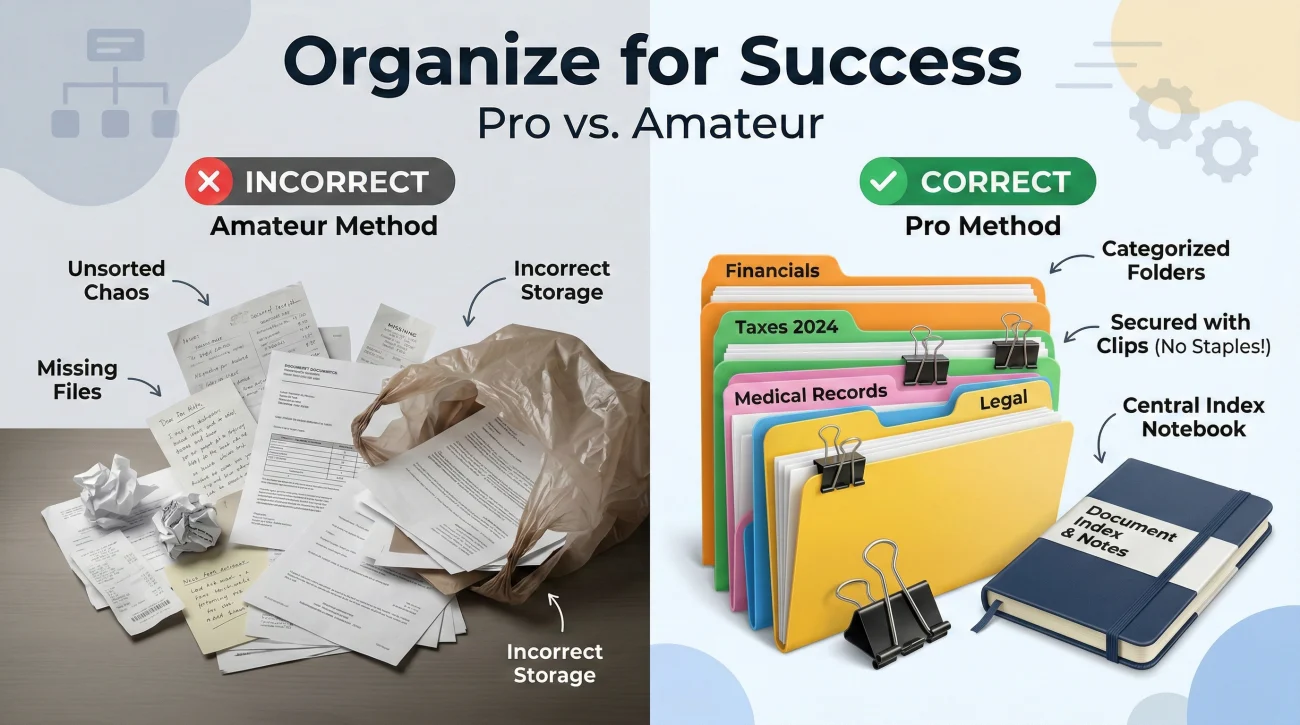
The physical presentation of your documents sets the tone for your interaction. If you walk up to the counter and empty a plastic grocery bag full of crumpled mail, loose receipts, and folded certificates, you immediately make the clerk’s job harder. It also increases the risk that an important original document will be dropped or lost in the shuffle.
In my experience, the fastest wins usually come from basic file hygiene. You want to make it as easy as possible for the clerk to review your items, take what they need, and hand the rest back.
| Organization Strategy | Why It Works |
|---|---|
| Use separate, labeled folders | Keeps the Original Will separate from copies, protecting it from accidental damage or misplacement. |
| Use binder clips, not staples | For your own copies and forms, clips allow the clerk to easily separate pages for scanning without tearing corners. |
| Bring a dedicated notebook | Gives you an immediate place to log the date of your visit, the clerk’s name, and the instructions you were given. |
| Leave financial statements at home | Courts rarely need 12 months of credit card statements on day one. Bring the snapshot summary, not the raw data. |
💡 Pro Tip: Bring two pens (black and blue ink) and a blank checkbook or credit card. Courts require filing fees, and it is very common for people to forget their payment method because they are so focused on the paperwork.
Common Reasons Your Filing Might Be Rejected
Even with good preparation, clerks have strict rules they must follow. If your paperwork is handed back to you, do not panic. It is usually an administrative hurdle, not a legal dead end. Here are the most common reasons I see initial filings paused:
- ❌ Missing Signatures or Notary Stamps: You filled out the petition but forgot to sign it in front of a notary public as required by local rules.
- ❌ Incomplete Interested Parties List: You left off a sibling because you have not spoken in ten years. The court requires all legal heirs to be listed regardless of personal relationships.
- ❌ Wrong Death Certificate Type: You brought a “pending” death certificate (often issued before a final cause of death is determined) and the local court requires the finalized version.
- ❌ Unexplained Will Damage: The will has coffee stains, torn edges, or removed staples, and the clerk requires you to file a separate affidavit explaining the damage.
What Happens After You File: The Next Steps
Handing over your packet is just the opening move. Once the clerk accepts your documents and your filing fee, the administrative gears slowly begin to turn. Here is a brief look at what usually happens next so you can build a realistic mental map of the journey ahead.
First, there is typically a waiting period. The court may require you to mail formal notices to the interested parties you listed, giving them a set number of days to object to your appointment. Next, your file goes into a queue for a judge or a registrar to review. They check that the will is valid and that you meet the qualifications to serve.
Finally, if everything is in order, the court will formally appoint you. Only at that point will they issue your official authority documents, such as Letters Testamentary. That is the actual document that grants you the power to walk into a bank and take control of the assets.
Final Thoughts Before You Go
The anxiety leading up to your first courthouse visit is entirely normal. Everyone worries they will say the wrong thing or bring the wrong paper. But remember that this initial visit is simply an administrative intake process. You do not need to have all the answers, and you do not need to resolve the entire estate on day one.
By bringing the correct core documents, preparing a clean interested parties list, and organizing your files professionally, you protect yourself from endless rounds of frustrating delays. Take a deep breath. Verify the basic forms on your county’s website. Build your packet methodically. Stepping away from the clerk’s window with officially stamped paperwork in hand is an incredible relief, and being well-prepared is the fastest way to get there.
❓ FAQ
🗂️ What do I need to bring to probate court to get started?
You commonly need the original will (if one exists), multiple certified death certificates, your valid photo ID, a typed list of interested parties, a high-level asset snapshot, and a method of payment for court filing fees.
📄 Do I need the original will or is a copy okay?
Courts almost universally require the original, wet-ink signature will. Bringing only a copy usually triggers delays and requires special legal procedures to explain why the original is missing.
🪦 How many death certificates should I bring?
Bring at least two or three certified copies. The court will likely keep one for their permanent file, and you may need another on hand if they need to verify information during your visit.
🏦 Do I have to bring all the financial statements to the court?
No. For the initial visit, courts generally only need a high-level summary or estimate of the estate’s value. Detailed account statements and appraisals are typically filed later during the inventory phase.
🌍 What if I don’t know where all the heirs live yet?
List the heirs by name and write “Address Unknown” with their last known city and state. The court will usually require you to document the specific efforts you are making to locate them.
📱 Can I bring my phone or laptop into the courthouse?
Many courthouses have strict security rules prohibiting cell phones, smartwatches, or laptops, or requiring them to be turned off. Check the specific building security rules on the local court website before you arrive.
💳 Do I need to pay a fee on the first visit?
Yes, opening an estate almost always requires a filing fee. These fees vary widely by county and the size of the estate. Bring a blank check and a credit card, and confirm accepted payment methods beforehand.
📛 What if the name on the ID doesn’t match the will perfectly?
If your legal name has changed since the will was written (e.g., due to marriage), bring linking documents like a certified marriage certificate or a court order for a name change to prove your identity.
🗣️ Will the clerk automatically tell me what to do next?
Not always. Clerks process paperwork but cannot act as your advisor. You must proactively ask them for a timeline and request a written list of any outstanding requirements before you leave the window.
⚖️ Do I have to bring a lawyer with me?
In many states, you can file initial paperwork yourself (pro se), though some specific states or complex estates require attorney representation. Always check your local court rules regarding pro se filings before arriving.
⚠️ Disclosure: I'm not an attorney and nothing on this site is legal or tax advice. The content covers process, organization, and workflow—the operational side of estate administration. For legal interpretation, jurisdiction-specific deadlines, contested situations, or tax matters, please work with a licensed professional in your state.