Executor Compensation: How It’s Commonly Handled
Executor Compensation

Clarity over surprise: Executor compensation creates the most conflict when beneficiaries are surprised by it at the very end. Early communication is your best defense. Reimbursement is not compensation: Getting paid back for estate expenses (like buying a death certificate) is entirely separate from being paid for your time and effort. Three common paths: Executors … Read more
Proof of Distribution Checklist: How Executors Show What Was Delivered

Proof Of Distribution Executor

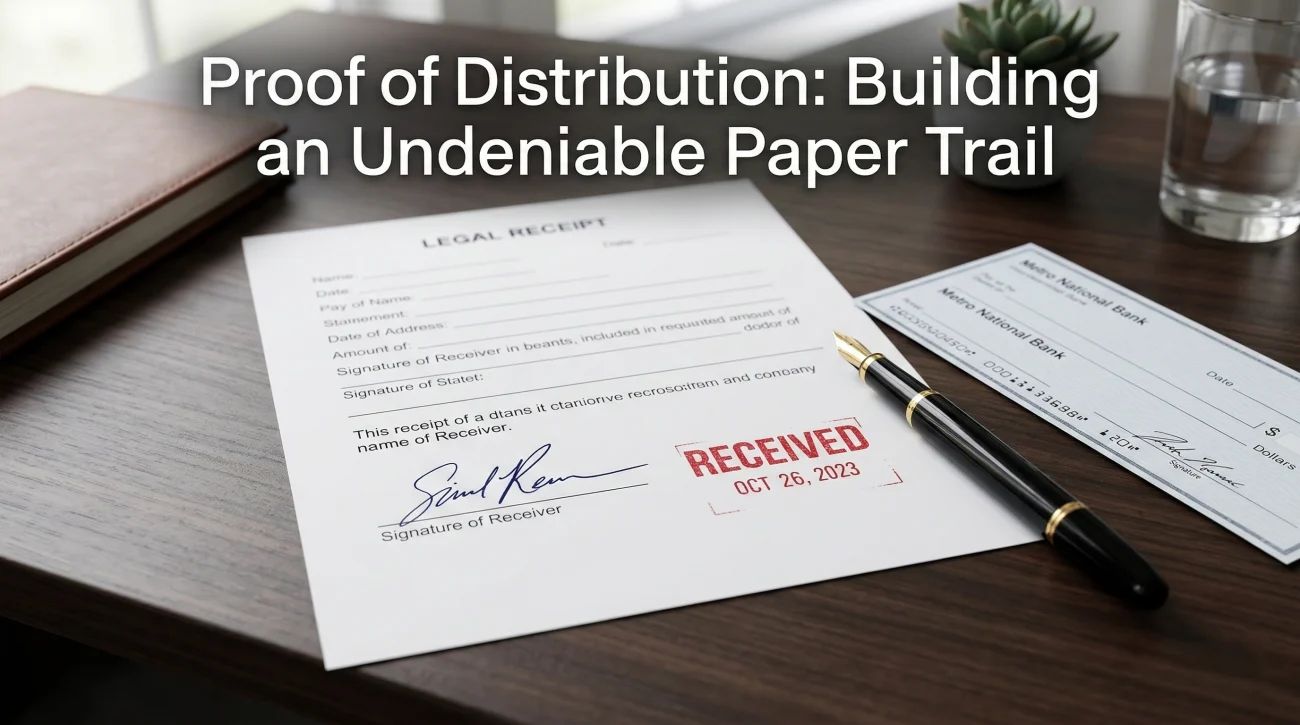
If a distribution cannot be proven with a clear paper trail, it is highly vulnerable to future disputes or accounting questions. A complete proof of distribution executor file usually contains three layers: the bank record, the delivery confirmation, and the signed beneficiary acknowledgement. Never rely on cash distributions or vague bank memos. Every payment must … Read more

Closing the Estate: The Final Packet Executors Keep for Peace of Mind

Closing The Estate Checklist

Closing an estate is not just about making the final payments; it is about building a secure, permanent record of everything you did. Your final closing packet should act as a self-contained history, combining your final accounting, proof of distribution, zero-balance bank statements, and communication archives. Never rely on verbal confirmations. Collect written receipts and … Read more

Preventing Beneficiary Disputes at Distribution: The Paper Trail That Keeps Things Calm

Beneficiary Disputes Estate Distribution

Disputes grow in silence and shrink in transparent, written summaries. Use a consistent, neutral bi-weekly update routine to prevent beneficiaries from feeling ignored. Show your math clearly before distributing funds so there are no surprises about final expenses. Move emotional arguments to formal channels by utilizing a read-only document approach and strict email updates. Avoid … Read more

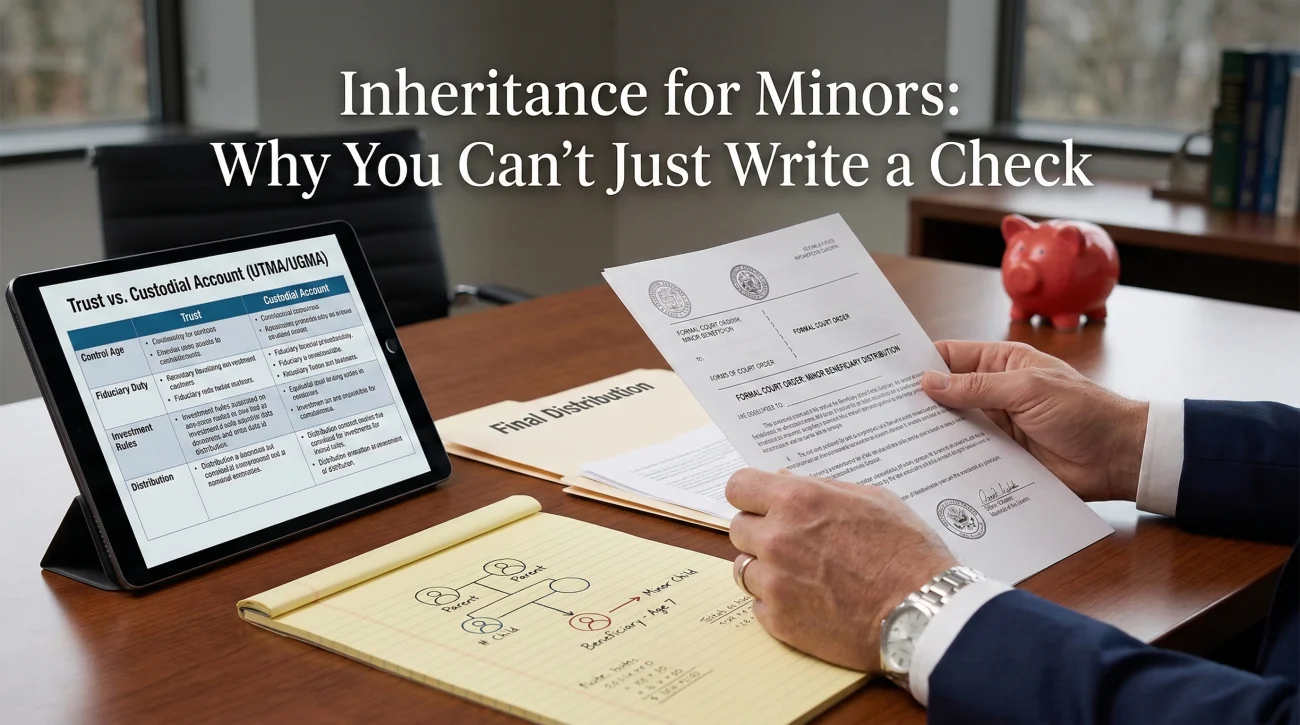
Distribution to Minors or Protected Beneficiaries: Why It Usually Cannot Be Handed Over Directly

Distribution To Minor Beneficiary

Minors usually cannot legally receive or manage inheritance directly, forcing the executor to use alternative, documented delivery methods. Informal handoffs to parents without a formal legal structure create massive personal liability for the executor. While waiting for custodial accounts or trusts to open, executors must use precise ledger entries to calculate, segregate, and protect the … Read more

Missing Beneficiary or Heir: How Executors Handle Distribution When Someone Cannot Be Found

Missing Beneficiary Executor

The Core Rule: Never substitute or distribute a missing person’s share to other family members without explicit local legal authorization. Documentation is Your Shield: Build a strict tracking log of bounced mail and unanswered calls. This paper trail is your proof of diligence when you eventually need court intervention. Asset Complications: A missing heir forces … Read more

Real Property Distribution: Transfer to Heirs or Sell, and What Changes at Closing

Transfer House To Heirs Or Sell

The Core Decision: Real estate usually forces a binary choice. You either transfer the physical deed to the heirs, or you sell the property and distribute the cash proceeds. The Drivers: In my experience, estate debts, carrying costs, and the sheer number of beneficiaries are what actually dictate the path, rather than personal preference. The … Read more

Distributing Personal Property: A Simple, Low-Drama Process

Distributing Personal Property As Executor

Success in distributing personal property relies on shifting family focus from subjective memories to an objective, documented process. Using established selection pathways prevents the executor from becoming the target of bias accusations. Remote beneficiaries and third-party claims require specific communication guardrails to keep the timeline on track. Securing written confirmations for every distributed item is … Read more

Cash vs In-Kind Distribution: The Tradeoffs Executors Explain to Beneficiaries

Cash Vs In-kind Estate Distribution

Every method has a cost: Cash distributions divide easily but depend on unpredictable market timelines. In-kind distributions transfer instantly but require heavy paperwork to prove fair valuation. Equalization requires math: If one person takes a large asset like a house, they often have to use personal funds to buy out the estate so the other … Read more

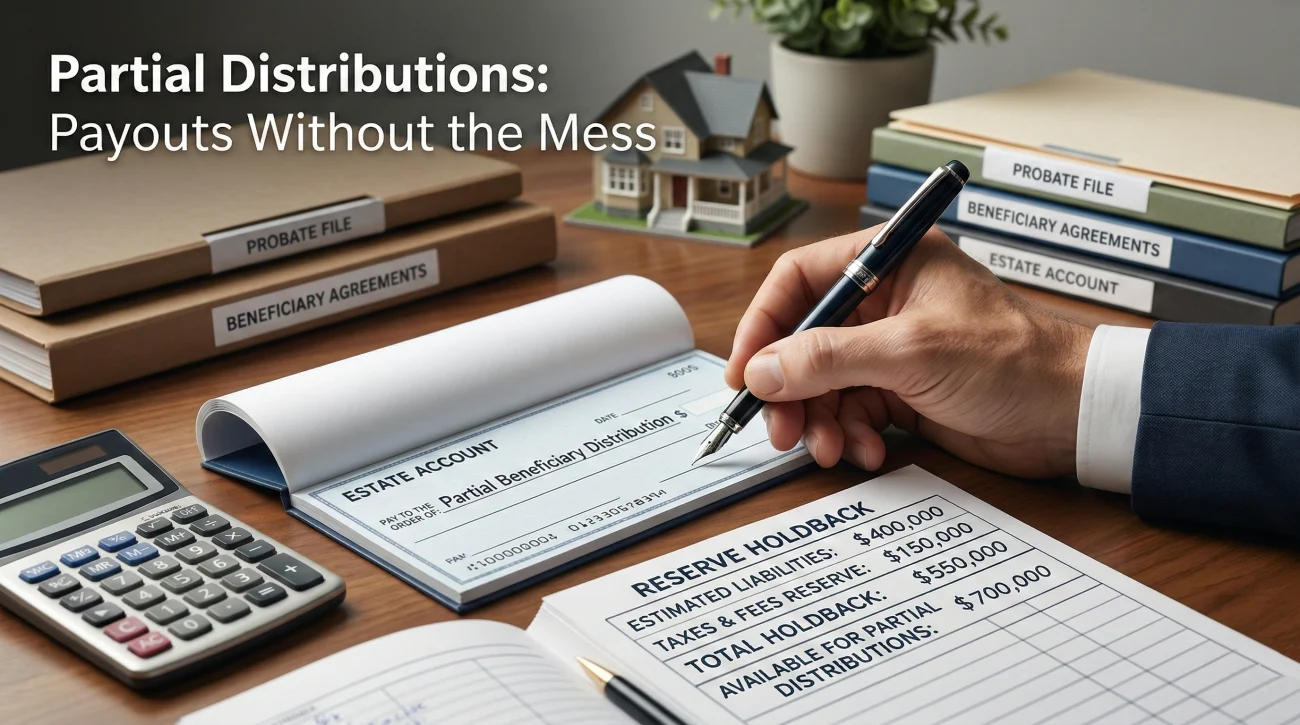
Partial Distributions: How Executors Do It Without Creating a Mess

Partial Distribution Estate

A partial distribution estate strategy allows you to release some funds early, but it requires strict tracking to prevent future conflicts. Never drain the estate account; you must always maintain a documented reserve holdback to protect yourself from unexpected final bills and taxes. Every interim distribution must be treated as a documented advance on the … Read more

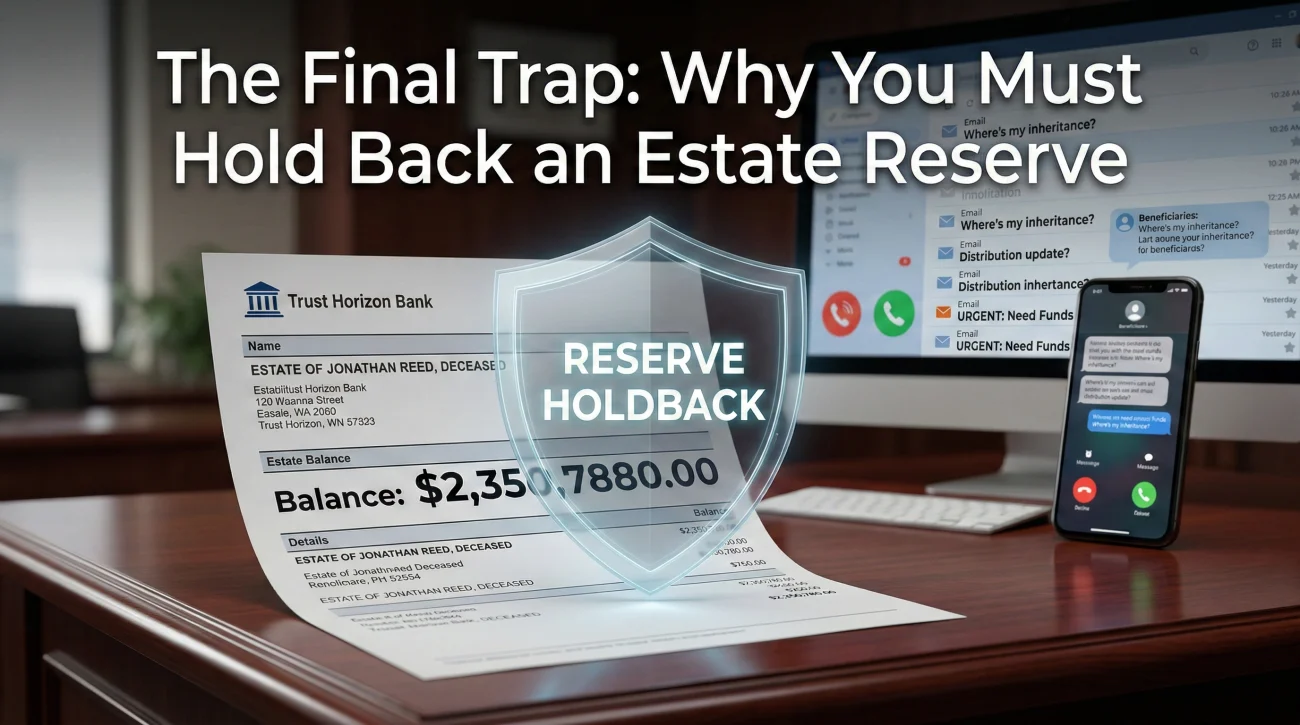
Estate Reserve Holdback: How Executors Decide What to Keep Back

Estate Reserve Holdback

An estate reserve holdback is a calculated safety buffer of funds kept in the main estate account to cover final taxes, delayed bills, and closing administrative costs. Executors must actively plan for “ghost bills,” such as delayed medical invoices or forgotten digital subscriptions, to avoid paying out of pocket. A partial distribution can safely relieve … Read more

Receipts and Releases: Why Executors Collect Them Before Closing

Receipts And Releases Probate

The core objective: You must create a permanent paper trail connecting the final estate accounting to the physical transfer of assets, protecting yourself from future claims. Two distinct functions: A receipt proves exactly what was delivered, while a release acts as a formal agreement that the beneficiary accepts the math and waives the right to … Read more

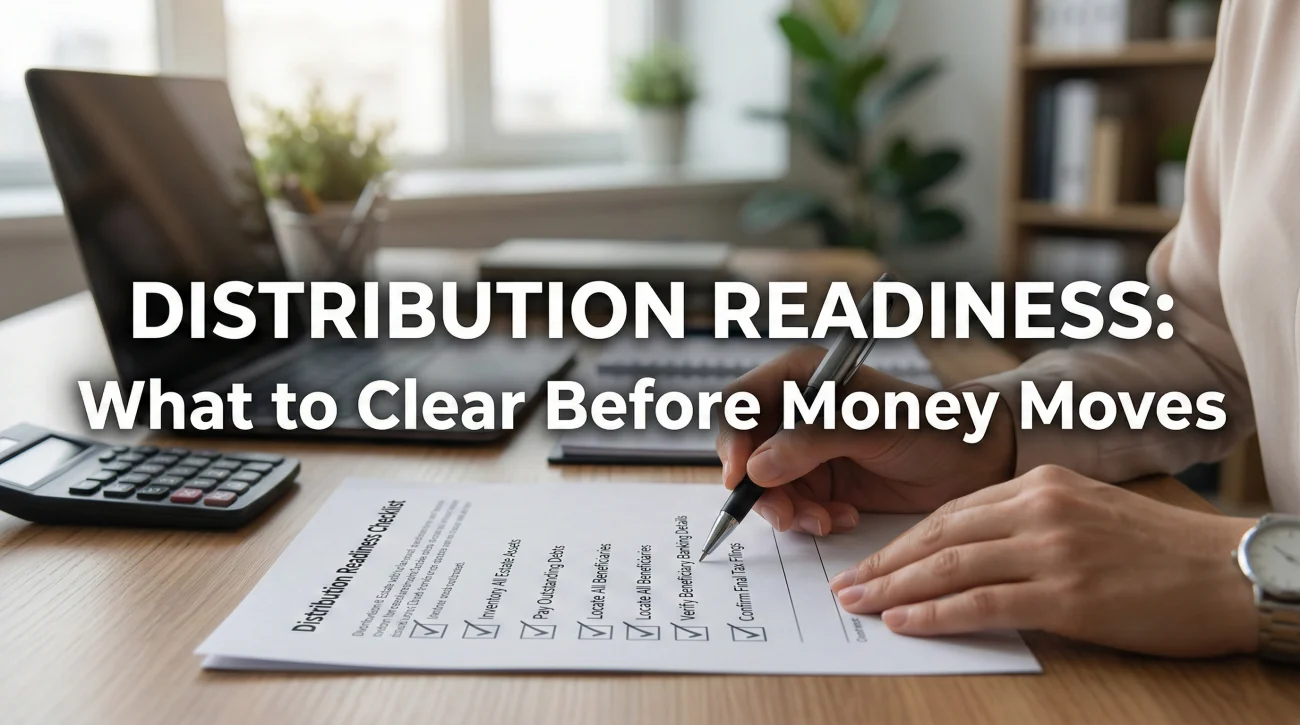
Distribution Readiness Checklist: What to Clear Before Money Moves

Distribution Readiness Checklist

The goal is safety: Distributing estate assets too early is the most common way executors accidentally take on personal financial risk. You need a structured readiness checklist. Verify the core gates: Before money moves, debts must be stable, tax lanes identified, assets fully pooled, beneficiary disputes addressed, and a readable accounting draft must exist. Holdbacks … Read more