- Closing an estate is not just about making the final payments; it is about building a secure, permanent record of everything you did.
- Your final closing packet should act as a self-contained history, combining your final accounting, proof of distribution, zero-balance bank statements, and communication archives.
- Never rely on verbal confirmations. Collect written receipts and releases for every asset distributed before you officially step down.
- Keep your records organized in a “cold storage” format (both physical and digital) that you can easily access years later if questions arise.
The Reality of Crossing the Finish Line
By the time you are preparing to close an estate, you are likely exhausted. The house is dealt with, the accounts are drained, the beneficiaries have received their shares, and you are ready to simply walk away. I have worked with many executors at this exact stage, and the overwhelming feeling is usually a desperate desire to be done with the paperwork.
However, this is precisely when you need to slow down. Getting through an estate distribution checklist is a massive achievement, but stepping down without building a final, impenetrable record is a risk you do not want to take. In my experience, the questions from beneficiaries, tax agencies, or unknown creditors do not usually happen the week you close the estate. They happen a year, or sometimes several years, later.
If you do not have a neatly organized closing the estate checklist of documents saved in one place, a simple question can turn into weeks of digging through old emails and requesting archived bank statements. My goal here is to help you build a final packet that gives you complete peace of mind, knowing that if anyone ever asks, “What happened to that account?” you can answer them in five minutes.
What “Closed” Actually Looks Like in Practice
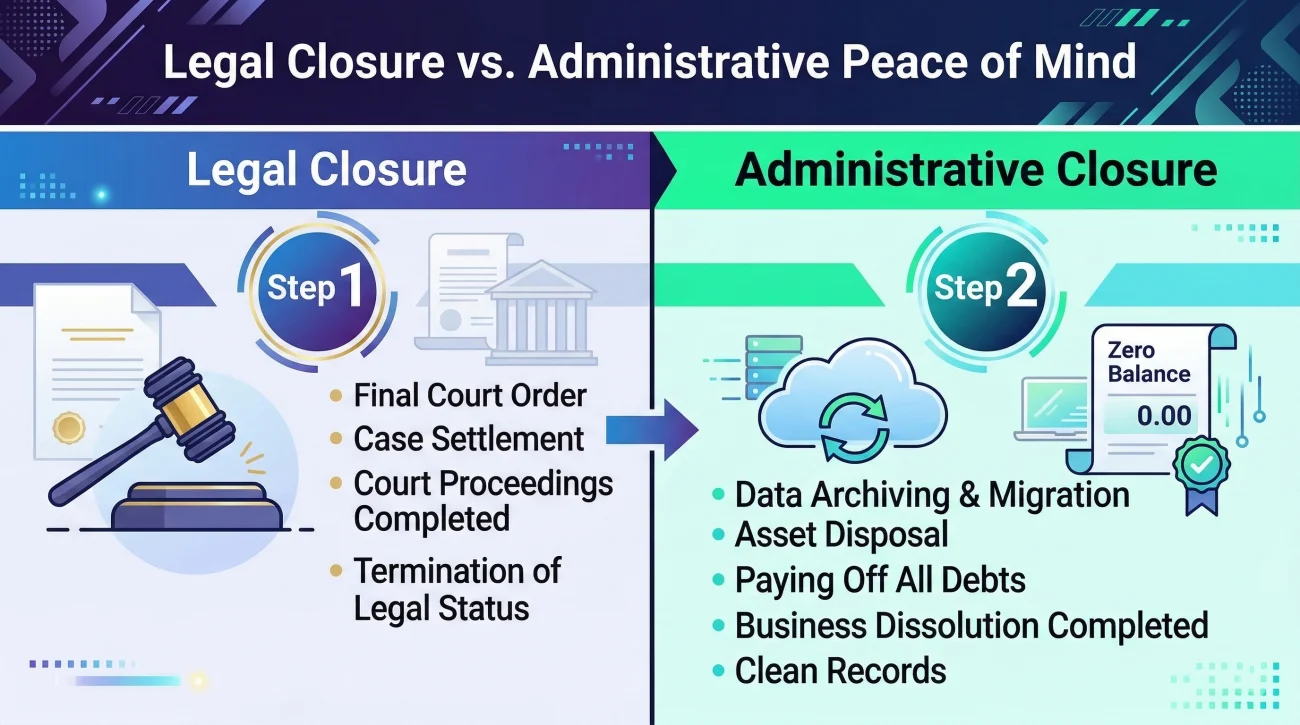
I once worked with an executor who popped champagne the day the probate judge signed the final order. Two weeks later, a lingering auto-pay for the deceased’s storage unit overdrew the supposedly “closed” checking account, creating a messy bounce fee and reviving the paperwork nightmare. That is the fundamental difference between legal closure and administrative closure.
To safely close probate estate tasks, “closed” means that every single dollar that entered the estate can be traced to a specific, documented exit point, and you hold the receipt to prove it. It means there are no loose ends, no pending transfers, and no automatic subscriptions silently waiting to trigger.
Key Point: Do not confuse the court’s timeline with your administrative timeline. Even if the local authorities say you are finished, you are not truly done until your personal records are compiled, backed up, and safely stored away.
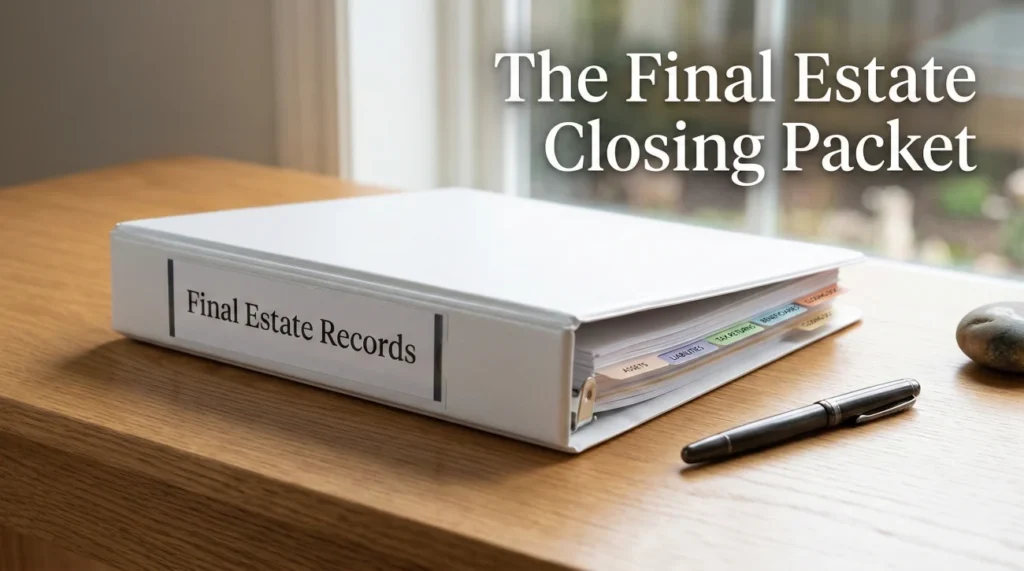
A clean, organized final packet is your absolute best defense against future confusion. It transforms a messy, emotional multi-year process into a neat, factual binder that speaks for itself.
Building Your Final Closing Packet
Imagine getting a letter from a tax agency three years from now asking to verify a specific deduction. The panic sets in immediately. But then you remember your closing packet. You pull the binder from the shelf, flip to the tax tab, and find the exact clearance letter you need within seconds. That is what the ultimate defense file does for you. It should be a standalone binder (or a master digital folder) that tells the entire story of the estate from start to finish, without you having to rely on your memory to explain it.
The Master Accounting Summary
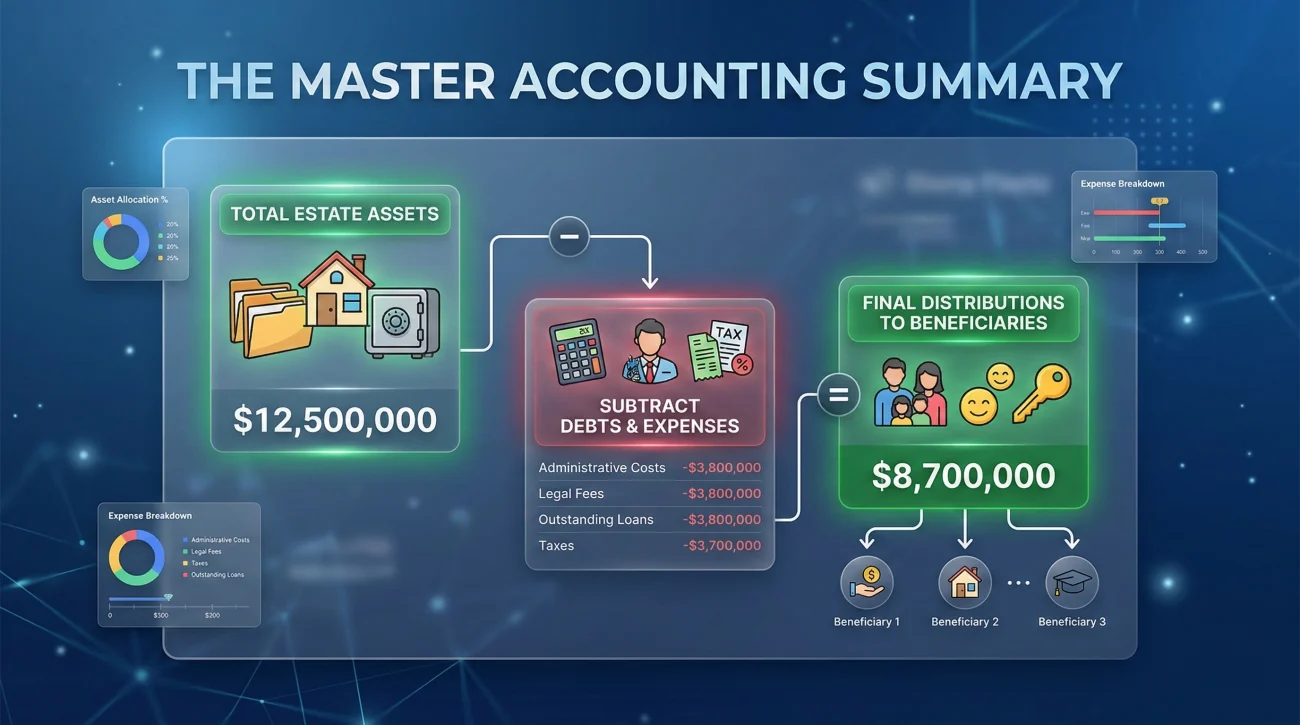
The centerpiece of your final steps to close estate processes is the final accounting document. This is not just a pile of bank statements; it is the summary that translates those statements into plain English. It shows the starting balance of the estate, all income that arrived, all expenses and debts paid, and the final distributions.
I always recommend keeping the final, approved version of this accounting at the very front of your closing packet. If beneficiaries signed off on this specific document, make sure you keep the version that includes their signatures or written acknowledgments.
The Proof of Distribution & Release Forms
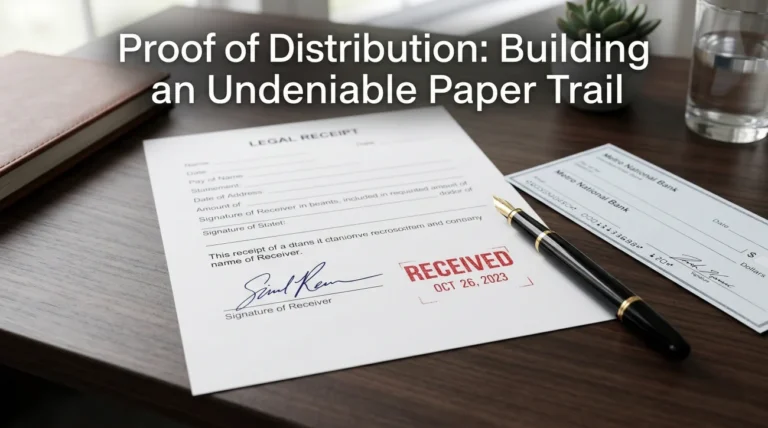
Having a list that says you paid someone is not the same as having proof that they received it. Your closing packet must contain undeniable evidence that the beneficiaries took possession of their inheritance. This is where an executor proof beneficiaries paid file becomes critical.
For cash distributions, this means keeping copies of cleared checks (front and back) or bank-generated wire receipts. Beyond the bank proof, this folder should house your Receipt and Release forms. Conceptually, a solid receipt and release does two things: it acknowledges that the beneficiary received a specific amount on a specific date, and it states they accept this as their full share, waving the right to sue you over it later. Keeping these signed forms is non-negotiable for a clean exit.
Final Financial Statements
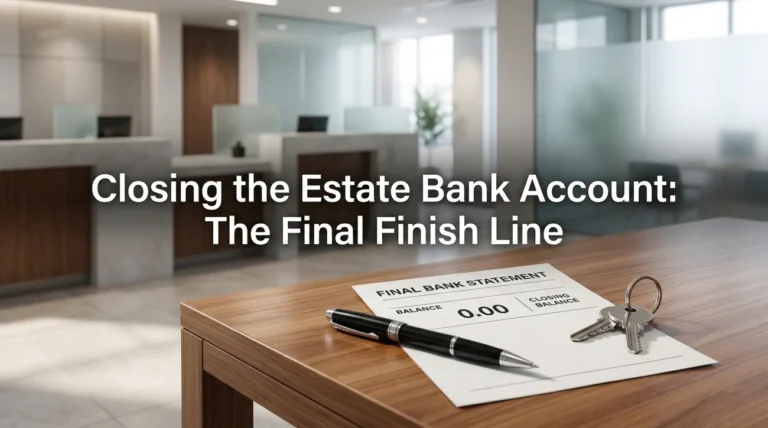
One of the most common gaps in an executor closing checklist is the missing “zero balance” bank statement. Many executors empty the estate checking account, call the bank to close it, and then never capture the final piece of paper.
⚠️ Warning: Banks do not always automatically mail a final statement when an account is closed mid-cycle. You often have to specifically request a final closing statement or a closure confirmation letter.
Your packet should include the final statement for every single account the deceased owned, showing that the account was properly closed, transferred, or drained to zero.
The Communication Archive
Do not delete your executor email account before backing it up. I highly advise saving critical email threads (especially with difficult beneficiaries, accountants, or contentious creditors) as PDF files. Drop these PDFs into a dedicated communications folder within your master digital packet. If someone later claims you never informed them of an accounting delay, you will want that date-stamped email on hand.
Structuring the Packet
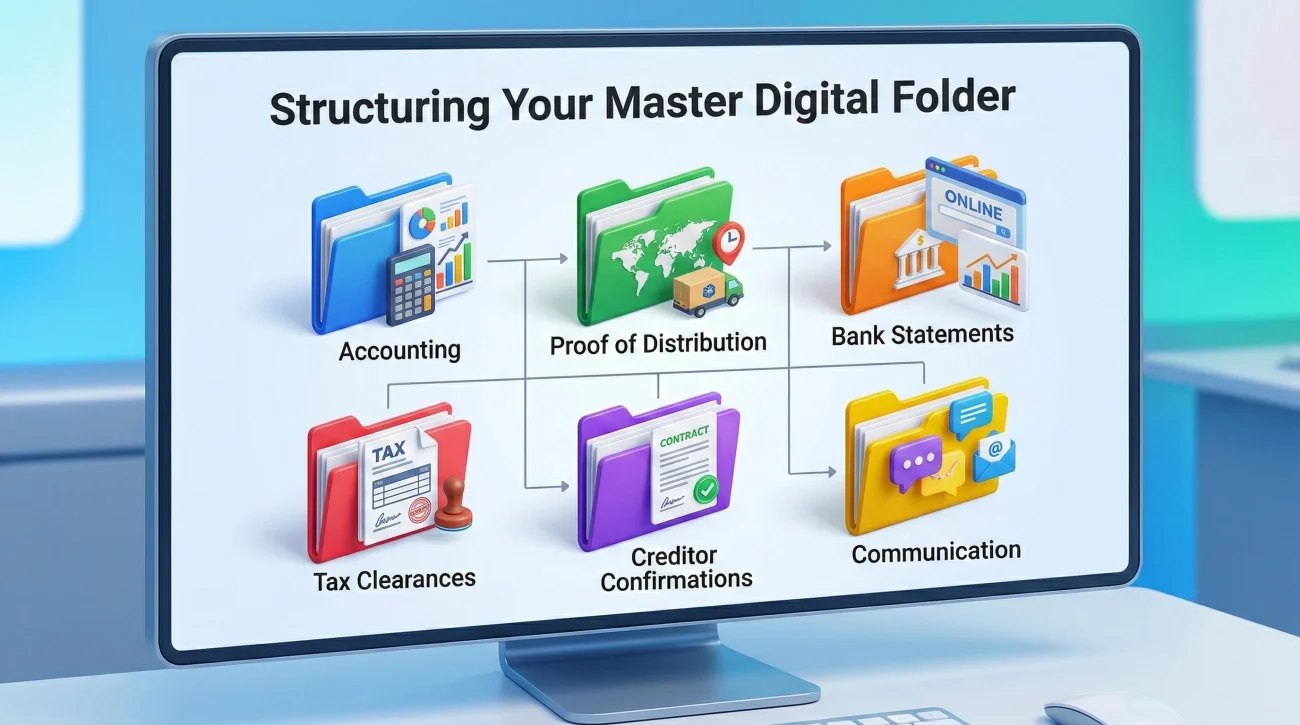
In my day-to-day admin work, I find that a simple, chronological folder structure works best. You do not need expensive software. Here is a very typical, highly effective way to organize your master folder:
Sample Closing Packet Structure:
    📁 01_Final_Accounting_and_Approvals
    📁 02_Proof_of_Distribution_Receipts
    📁 03_Zero_Balance_Bank_Statements
    📁 04_Tax_Clearances_and_Returns
    📁 05_Paid_Creditor_Confirmations
    📁 06_Communication_Archives
Confirmations That Prevent Future Headaches
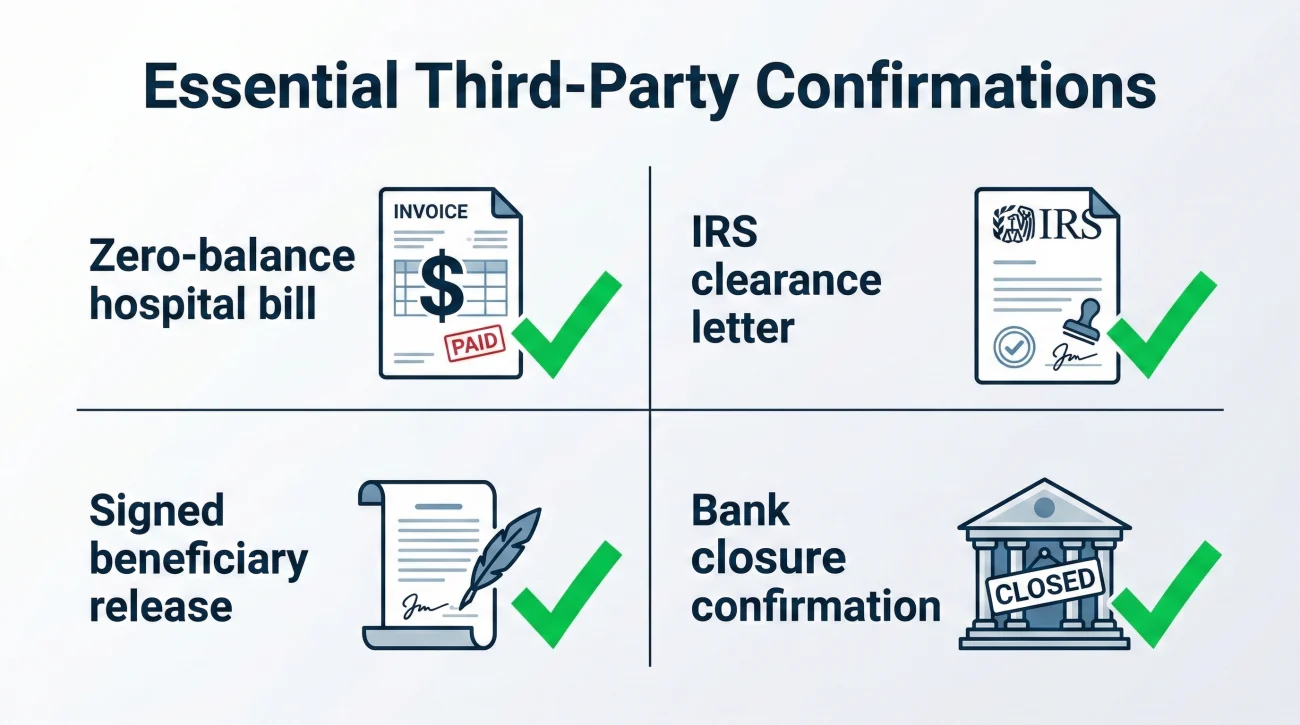
Picture this: you paid the final hospital bill out of the estate account eight months ago. Out of nowhere, a collections agency sends a letter demanding payment. If you only have a line item on your spreadsheet, you are going to spend hours on hold trying to trace the payment. If you have a zero-balance confirmation letter from the hospital’s billing department, you simply email them the PDF and the problem vanishes instantly.
If you are looking at the broad estate distribution checklist, you will see that every major action requires a corresponding reaction in the form of a receipt. Gathering documents to keep after estate is closed is all about securing these third-party confirmations.
| The Action Taken | The Confirmation Document to Keep |
|---|---|
| Paying a final hospital bill | A zero-balance invoice or a letter from the billing department stating the account is settled in full. |
| Filing final tax returns | Certified mail receipts showing delivery to the tax agency, plus any official clearance letters received. |
| Distributing funds to a beneficiary | A signed Receipt and Release form, plus the bank’s wire confirmation or a copy of the cleared check. |
| Closing the estate bank account | A formal closure letter from the bank or a final statement showing $0.00 balance and “Account Closed” status. |
While banks and billing departments are usually reliable about providing those documents, the biggest bottleneck at the finish line is almost always the beneficiaries. I see this pattern constantly: a beneficiary is incredibly fast to cash their distribution check, but suddenly goes silent when you ask them to return the signed Receipt and Release form.
When that silence stretches on, you have to actively manage the situation to get your confirmation. Maintain your communication hygiene. Do not let it turn into a personal argument. Keep your follow-up professional and focused strictly on the required process.
Subject: Missing receipt for final distribution
Hello [Name],
I am finalizing the estate records this week and noticed I have not yet received your signed distribution receipt for the transfer sent on [Date].
Having these receipts on file is a required step before I can fully close my files. Could you please sign the attached copy and email it back to me by [Date]?
Thank you for helping me wrap up these final steps.
Best regards,
[Your Name]
If the polite email goes ignored and they absolutely refuse to sign, you are not stuck. In those cases, do not hold their funds hostage indefinitely waiting for a signature. Instead, you can manufacture your own paper trail. Send the final accounting and the distribution check via certified mail, which requires a signature upon delivery. Keep that postal receipt, and later, pair it with the copy of the cleared check from the bank showing they cashed it. That combined evidence acts as a highly effective substitute for a signed release.
How Long Should You Keep These Records?
Once you have this beautiful, organized packet, you will immediately wonder how long it has to take up space in your house. Because I cannot give you state-specific legal advice or tax advice, I cannot give you a hard number of years.
However, I can share the universal principle: keep the closing packet longer than you think is necessary. The duration usually aligns with tax audit cycles and local liability rules. Most professionals will advise you to keep these records for several years after the official closure date, simply because inquiries from tax agencies or undiscovered creditors can lag significantly behind your actual work.
💡 Pro Tip: Before you destroy any estate documents, have a quick five-minute phone call with the tax professional who handled the estate’s final returns. Ask them specifically how long they recommend keeping the files based on the type of returns filed.
The method of storage is just as important as the length of time. I highly recommend a “belt and suspenders” approach. Keep the physical documents in a safe, dry place, but do not rely on paper alone.
Shoving all loose mail, bank statements, and sticky notes into a cardboard box and pushing it to the back of the garage.
Scanning all finalized, signed documents into a single PDF, backing it up to a secure cloud drive or an external USB, and keeping the neatly tabbed physical binder in an indoor filing cabinet.
Final Thoughts on Stepping Down
You have likely spent months, perhaps even years, managing someone else’s life on paper. It is a heavy, thankless job. Building this final closing packet is the boundary line between your role as a fiduciary and your return to being just a family member or friend.
By taking the extra weekend to organize your zero-balance statements, your signed receipts, and your clear accounting, you are buying your future self a tremendous amount of peace. You are ensuring that if a question ever arises, you do not have to panic or rely on fading memories. You simply open the file, point to the documentation, and move on with your day. Seal the box, lock the digital folder, and give yourself permission to finally let it go.
❓ FAQ
🗂️ What exactly is a closing the estate checklist?
It is a final inventory of administrative tasks and documents you must gather before stepping down. It usually includes finalizing the accounting, getting signed receipts from beneficiaries, obtaining zero-balance statements from banks, and keeping proof of paid taxes and debts.
🗑️ Can I throw away the estate bank records once the account is closed?
No. You should keep the final bank statements, especially the one showing a zero balance and account closure. These are critical pieces of proof that you properly managed and emptied the accounts according to the final accounting.
📱 How exactly should I format my digital records?
Use universal formats like PDF for documents and CSV for spreadsheets. Create a strict naming convention, like YYYY-MM-DD_DocumentName, so files sort themselves chronologically. Keep one copy in a secure cloud drive and another on a physical USB drive stored with your paper binder.
📝 What documents to keep after estate is closed if there was no will?
The documentation requirements are generally the same. You still need to keep the final accounting, proof of distribution to the legal heirs, zero-balance bank statements, tax clearances, and any final orders confirming your release from duties.
🛑 How do I prove I paid all the creditors?
Keep a dedicated file containing the original invoice, the copy of the cleared check or payment confirmation, and any zero-balance statements or settlement letters provided by the creditor acknowledging the debt is satisfied.
🤝 Do I need the beneficiaries to sign something before I close everything?
In most administrative workflows, yes. Collecting a signed receipt and release from every beneficiary confirms they received their correct share and helps protect you from future disputes regarding the distribution amounts.
📬 What do I do if a refund check arrives after the estate account is closed?
This is a major headache, but do not cash it into your personal account. You will typically need to contact the issuer to see if they can reissue it directly to the beneficiaries, or you may need to consult a local professional about briefly reopening the estate to process it.
📧 Should I keep my executor email account open forever?
No, you do not need to pay for or monitor it indefinitely. Once you have exported your important threads to your Communication Archive, you can safely shut it down. Many executors prefer to keep the inbox active for about six months after the final checks clear, just to catch any late-arriving tax documents, before permanently deleting it.
📦 Is it better to keep physical copies or digital copies of the final packet?
It is best to keep both. Having a well-organized physical binder is great for immediate reference, but a digital backup ensures that your records are safe from physical damage like fire, water, or simply getting misplaced during a move.
✍️ What if I discover a mistake in my accounting after closing?
If you find a material error after distributing funds and closing the accounts, you should immediately consult the professional who assisted with the estate. Do not attempt to fix it informally by moving personal funds; get professional guidance on the correct correction procedure.
⚠️ Disclosure: I'm not an attorney and nothing on this site is legal or tax advice. The content covers process, organization, and workflow—the operational side of estate administration. For legal interpretation, jurisdiction-specific deadlines, contested situations, or tax matters, please work with a licensed professional in your state.