Executor Records Retention Checklist: What to Keep, How to Label, and Where to Store It
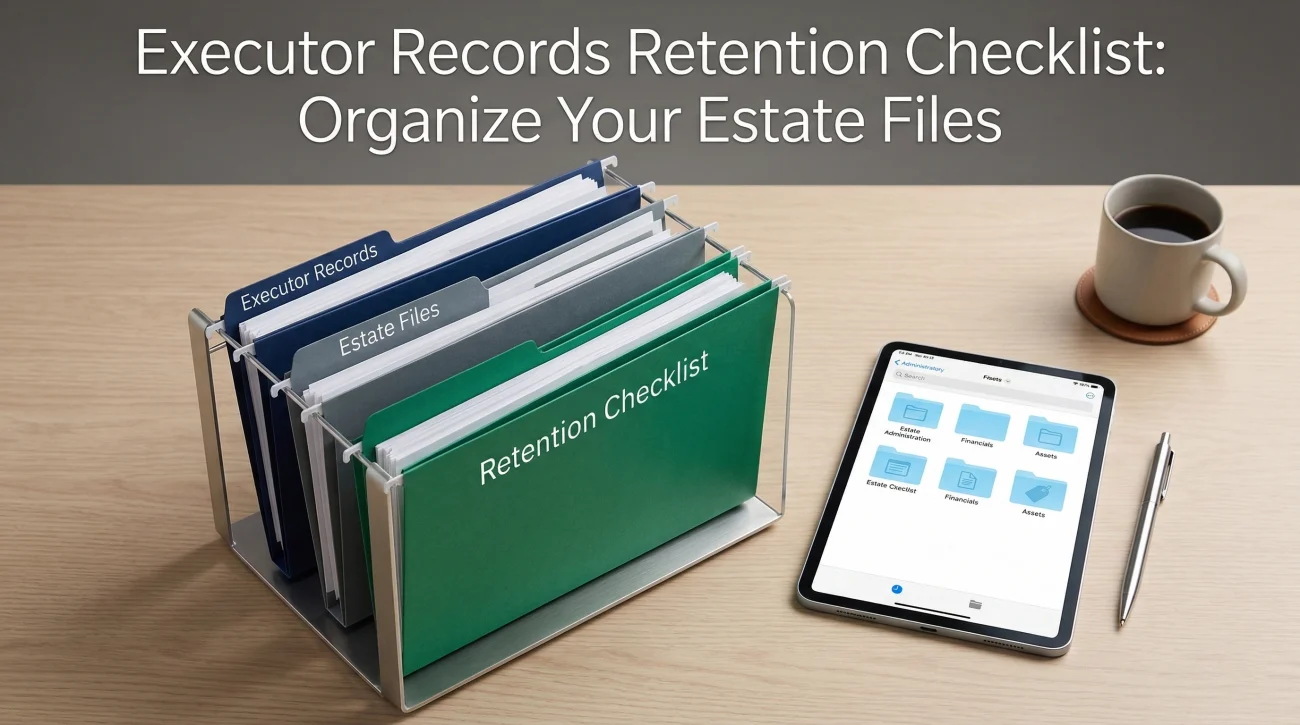
Executor Recordkeeping

Build a simple three-folder system: Authority, Assets, and Transactions. Never name a digital file “scan_1” – use a consistent date-first naming rule so files sort themselves automatically. Keep clear separation between your personal records and the estate’s paperwork to prevent confusion later. Always confirm local record retention timelines with a professional in writing before shredding … Read more
Estate Expense and Reimbursement Tracker: Keep Receipts Clean from Day One

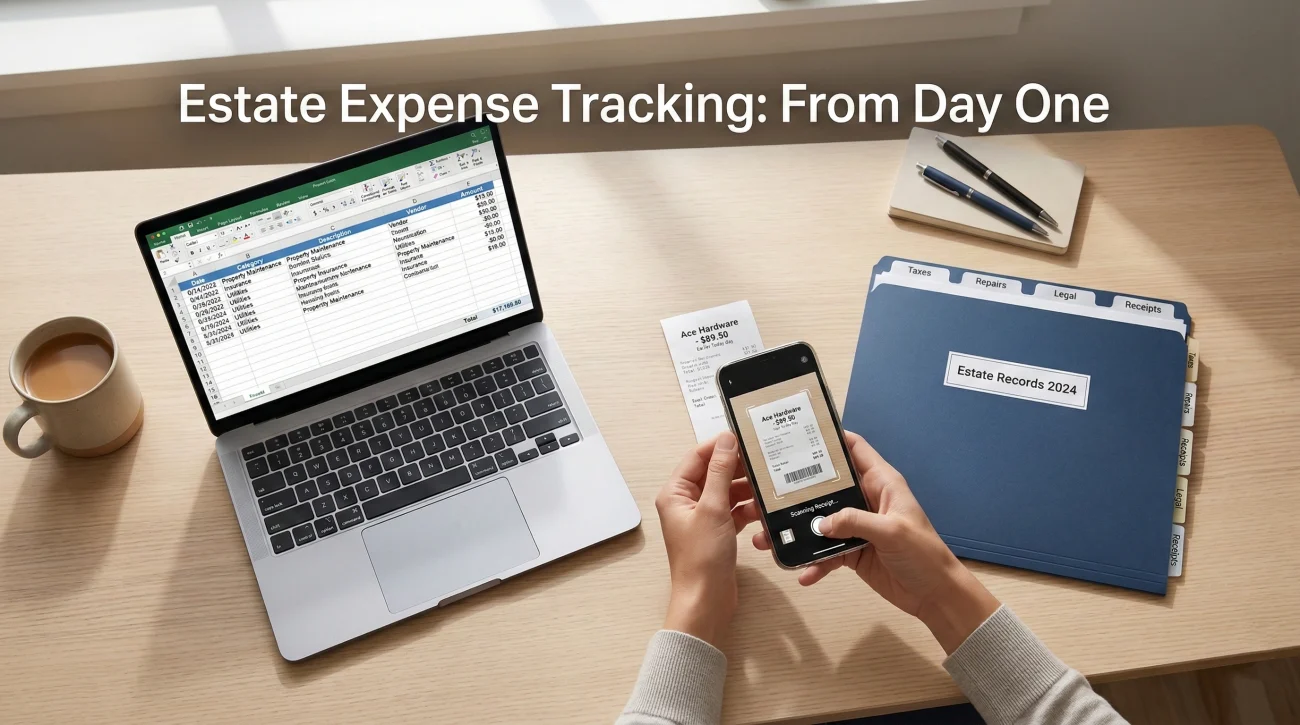
Executor Expense Log

An executor expense log is your best defense against confusion and family disputes over money. Physical receipts degrade quickly; digitize them immediately using a strict naming convention to preserve evidence. If you pay out of pocket before the estate account is open, tracking those details meticulously is the only safe way to handle reimbursements. Keep … Read more

Unclaimed Property Search Checklist: The Simple Step Most Executors Forget

Unclaimed Property Search Checklist

The hidden layer: An unclaimed property search catches the stray assets (like old utility deposits or uncashed checks) that never made it into the deceased’s main filing cabinet. Timing matters: Do not rush this on day one. Wait until you have gathered the core assets, but always run a search before you finalize and close … Read more

Estate Valuation Evidence Checklist: What to Save for Each Asset Type

Estate Valuation Evidence

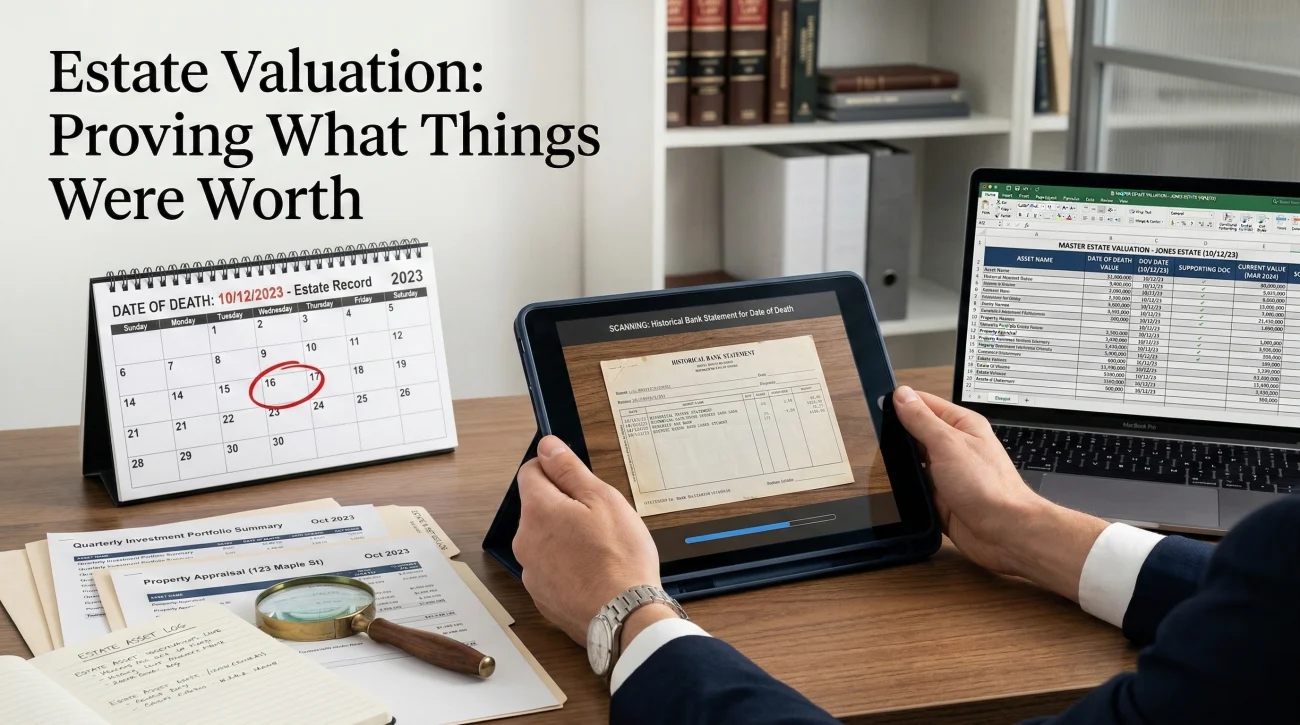
Estate valuation evidence proves what an asset was worth on the specific date the person passed away, which establishes the baseline for all future reporting. Online account access decays quickly. Capture historical pricing, balances, and property condition before passwords stop working or physical items are moved. For bank accounts, a standard monthly statement is not … Read more

Business Interests Inventory Checklist: What to List Without Getting Pulled Into Legal and Tax

Business Interests Inventory Checklist

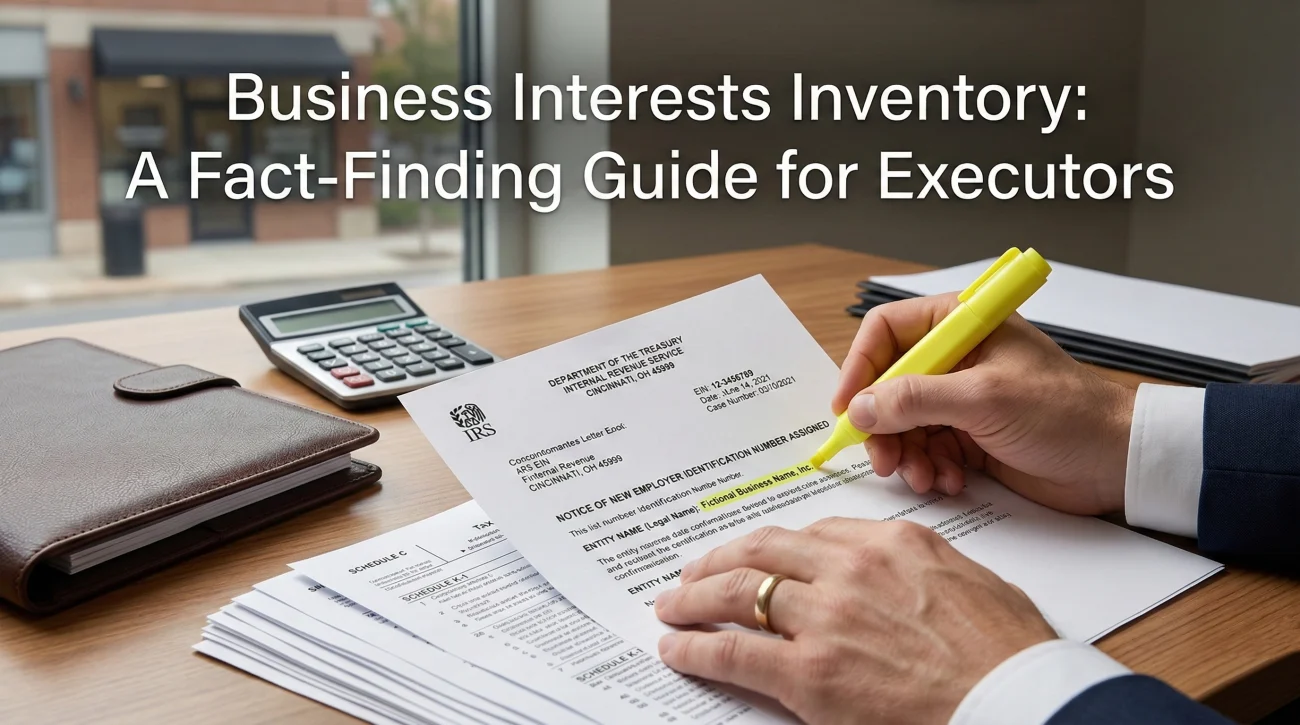
Your immediate job is to locate and inventory the business paperwork without accidentally mixing estate funds with operating funds. Start by following the paper trail. Tax returns (Schedule C or K-1 forms) and basic corporate formation documents prove the business exists. Modern estates often include digital businesses. You must actively look for 1099-K forms, merchant … Read more

Vehicle Records Checklist: What to Capture Before Any Transfer or Sale

Executor Vehicle Checklist

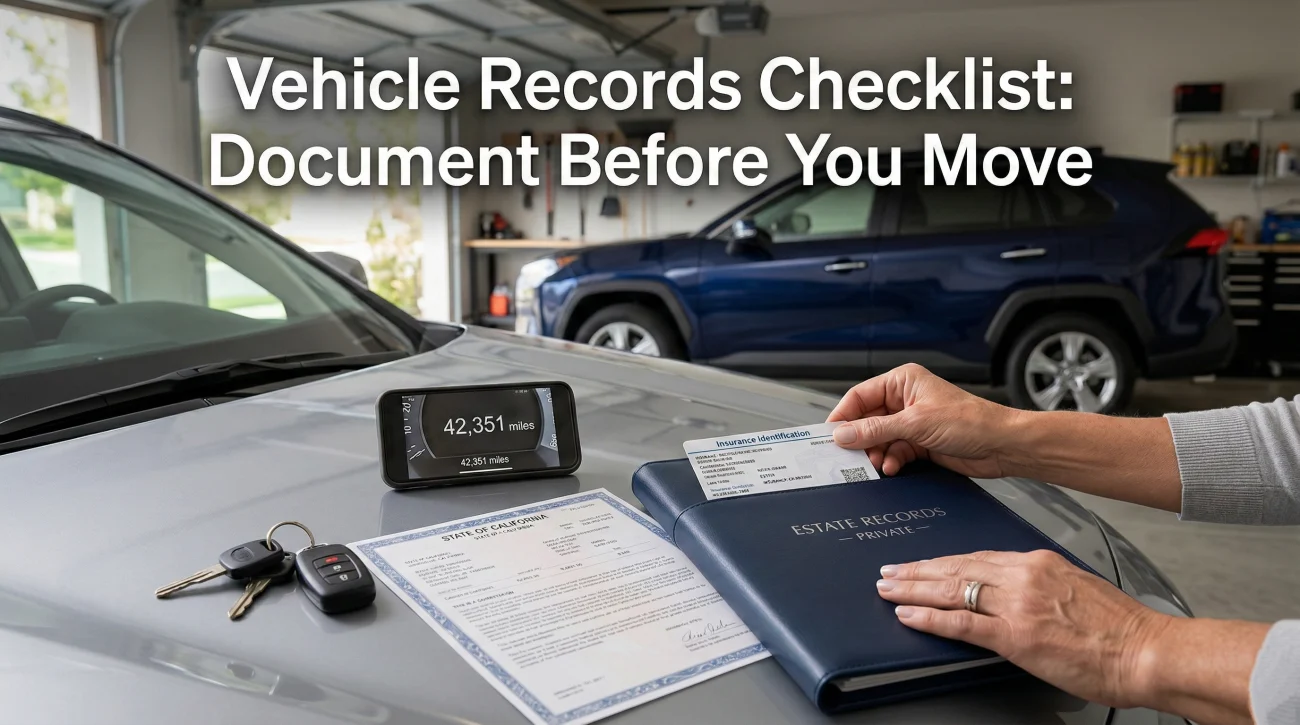
Do not let anyone drive the vehicle or attempt a title transfer until you have captured all current data, photos, and paperwork. Locate the physical title, current registration, and insurance policy, and map these documents to your master inventory table. Take date-stamped photos of the odometer, VIN, and exterior/interior condition to freeze the asset’s status … Read more

Real Estate Documents Checklist: What to Gather and How to Index It

Real Estate Documents Checklist

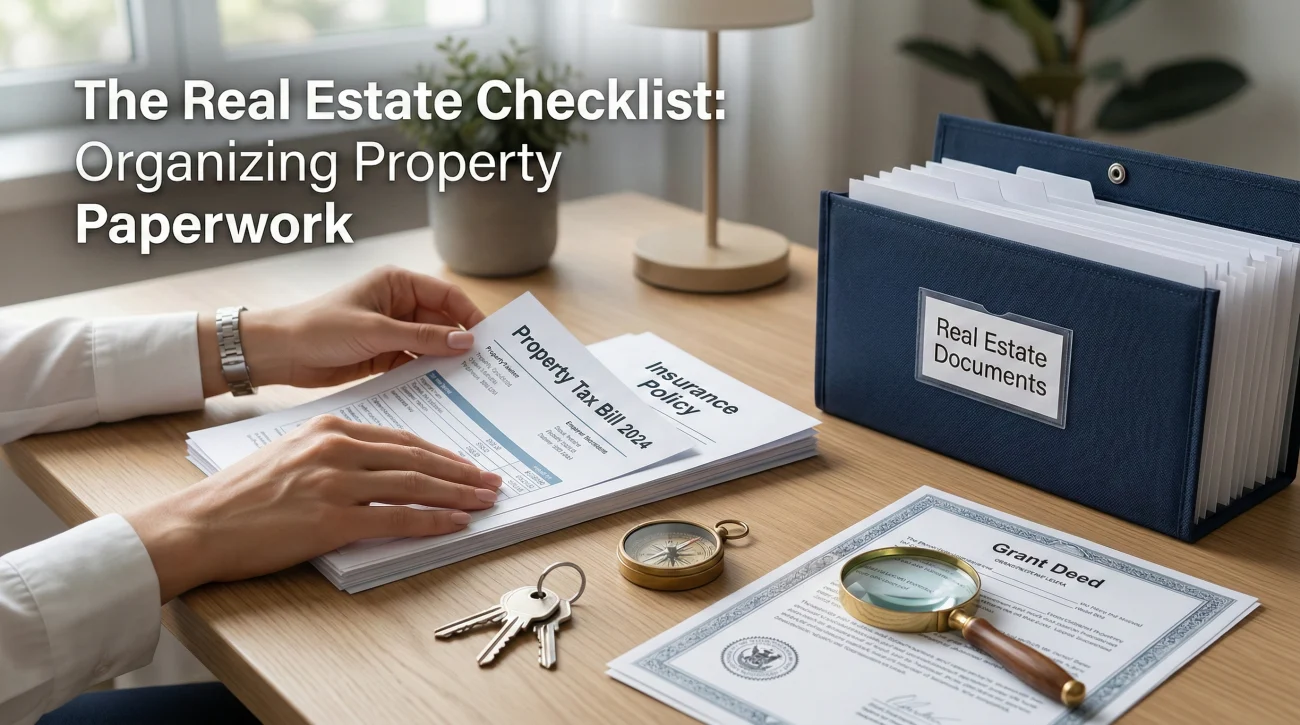
Gather before acting: Collect ownership, mortgage, insurance, and tax documents into a single “property packet” before contacting lenders or title companies. Scope of this step: This is an organization and indexing process. We are locating paperwork, not transferring titles or listing the house for sale. Index everything: Build a master index table to track which … Read more

Home Contents Inventory Checklist: Photos, Categories, and Proof

Home Contents Inventory Checklist

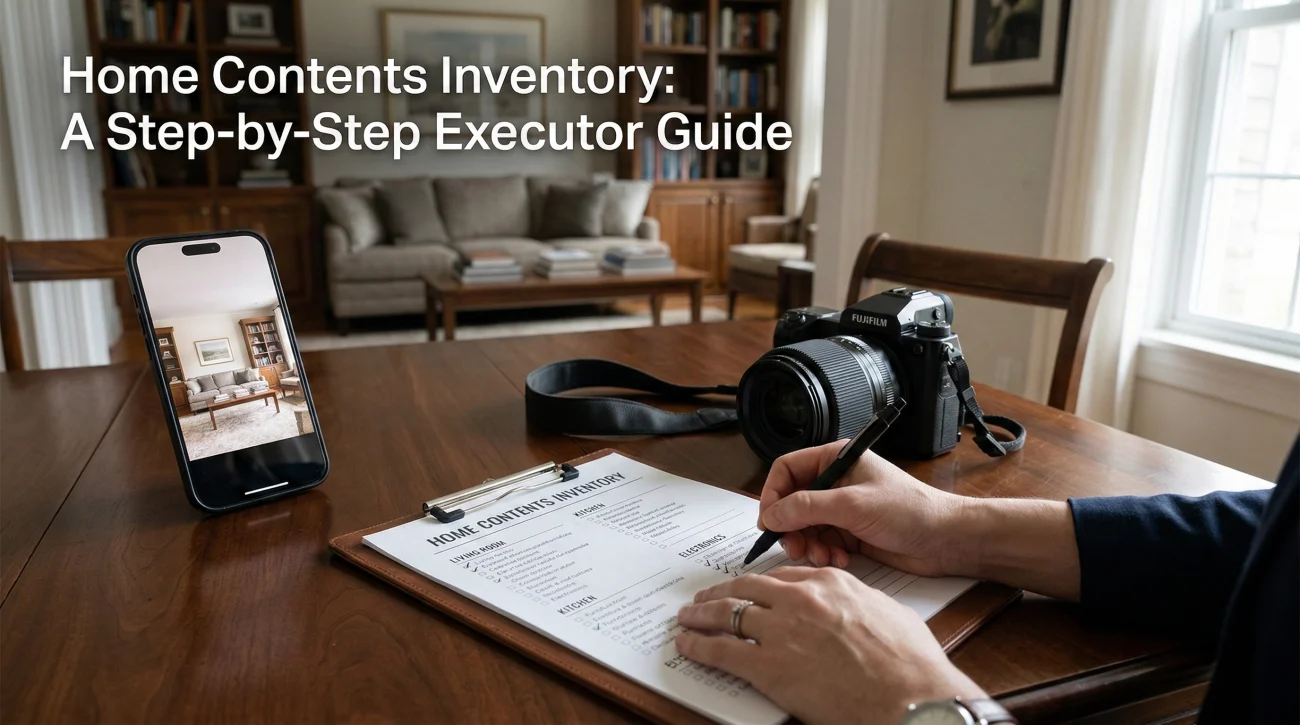
Establish the baseline: Always take wide-angle and detail photos of every room, garage, and storage space before a single item is moved, boxed, or thrown away. Group the ordinary: Do not list every spoon and towel individually; categorize everyday items into logical groups to save hours of administrative time. Map the proof: For high-value items, … Read more

Digital Assets Inventory Checklist: Crypto, Passwords, and Cloud Storage

Digital Assets Inventory Checklist

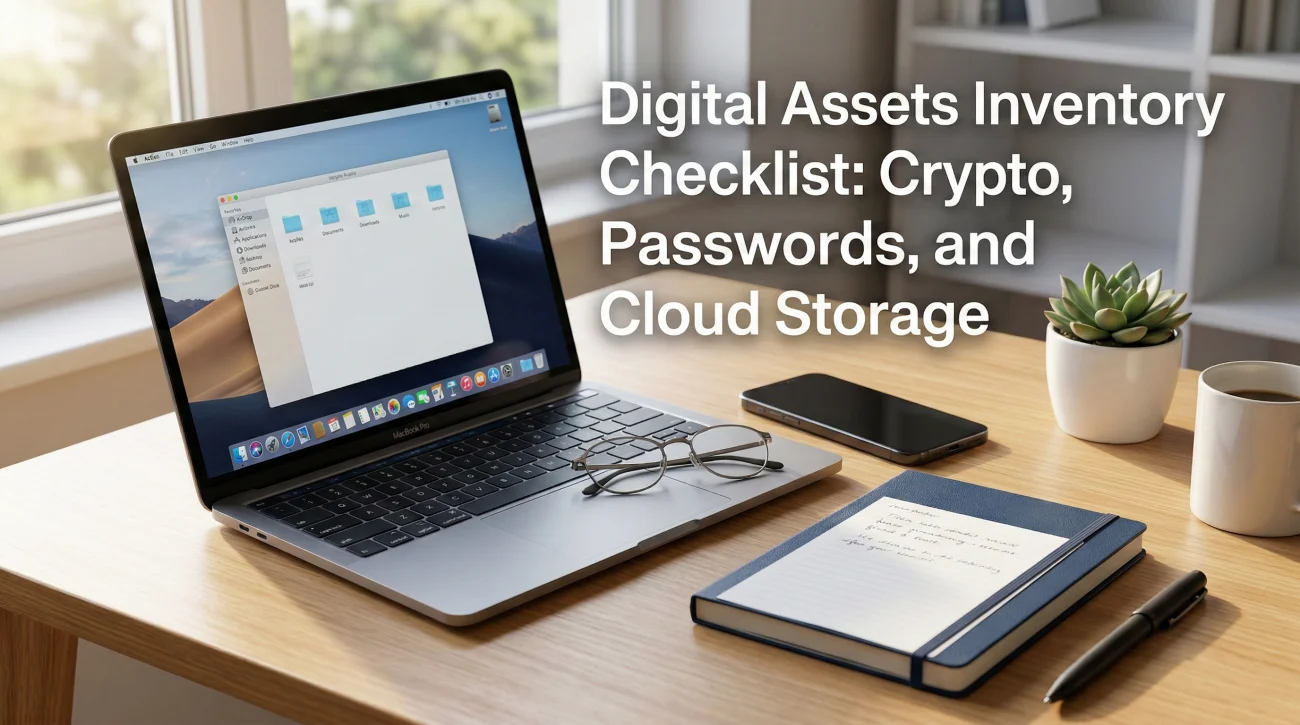
Building a digital assets inventory checklist is about finding footprints through bank statements and physical devices. Never attempt to guess passwords or bypass locks. You will likely trigger fraud alerts or permanently erase the data. Always prioritize securing the physical devices (phones, laptops) and keeping the phone service active to maintain access to two-factor authentication … Read more

Non-Probate Assets Checklist: What Often Bypasses the Estate and How to Track It

Non Probate Assets Checklist

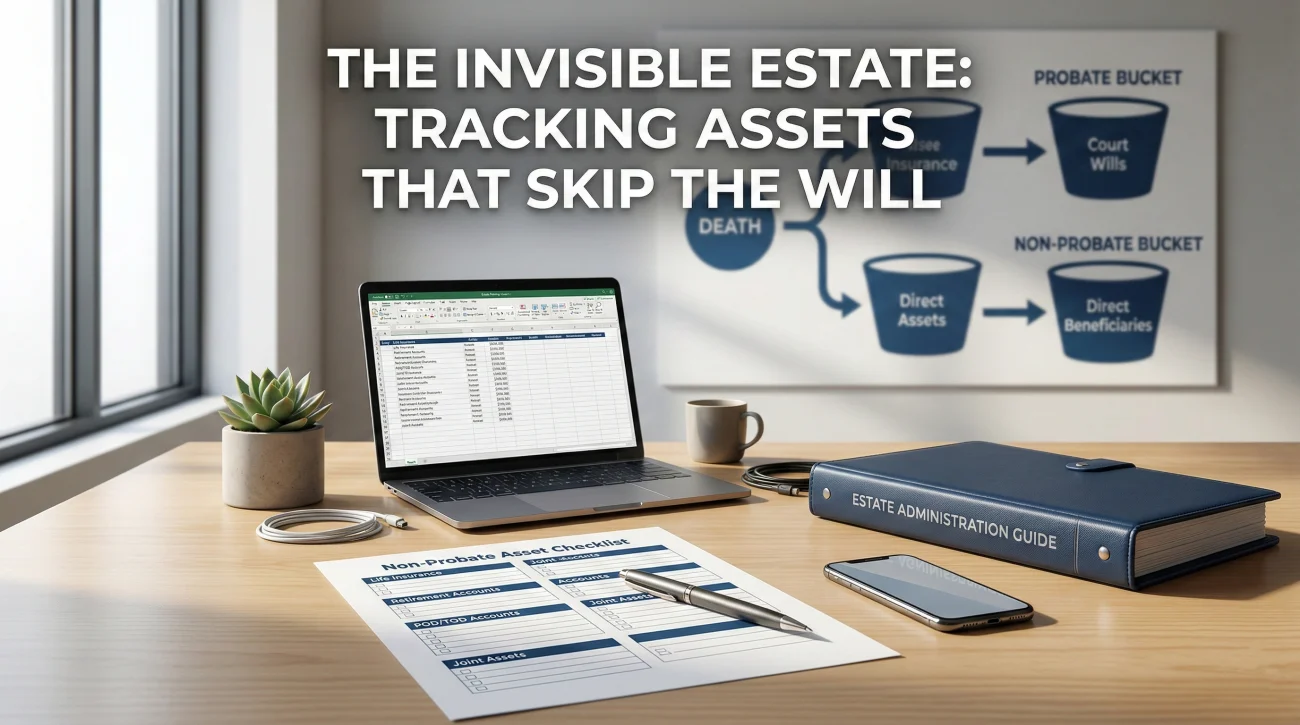
The core separation: A non-probate asset checklist helps you identify accounts and properties that transfer directly to someone else via built-in contracts, completely outside the traditional court process. The printable tracker: Use our structured template below to log the asset type, suspected mechanism, date contacted, and receipt of written confirmation. Red flags to watch for: … Read more

How to Find All Assets: A Practical Search Checklist for Executors

How To Find All Assets Of A Deceased Person

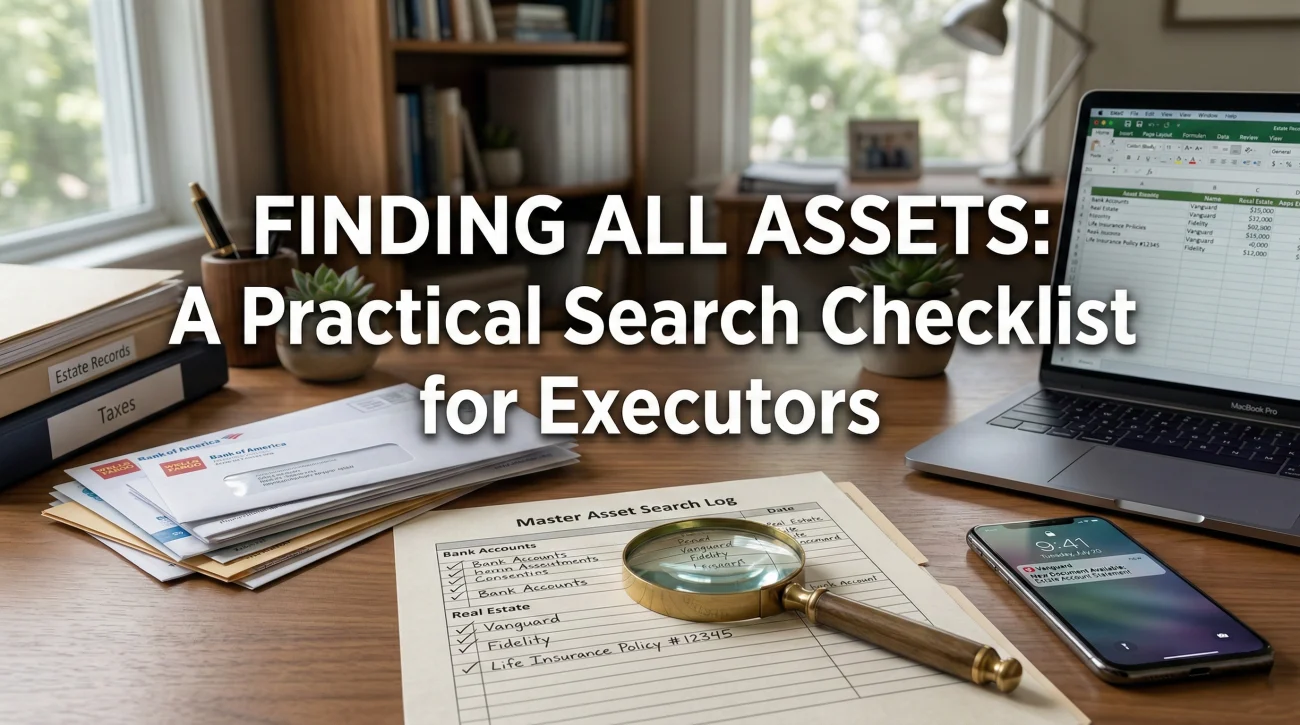
Expect the discovery phase to take three to six months; use a structured timeline rather than rushing to find everything in week one. Never bypass security by using the deceased’s passwords or Face ID; instead, secure physical devices and look for secondary clues like lock-screen notifications. If paper trails are non-existent, pull IRS Form 4506-T … Read more

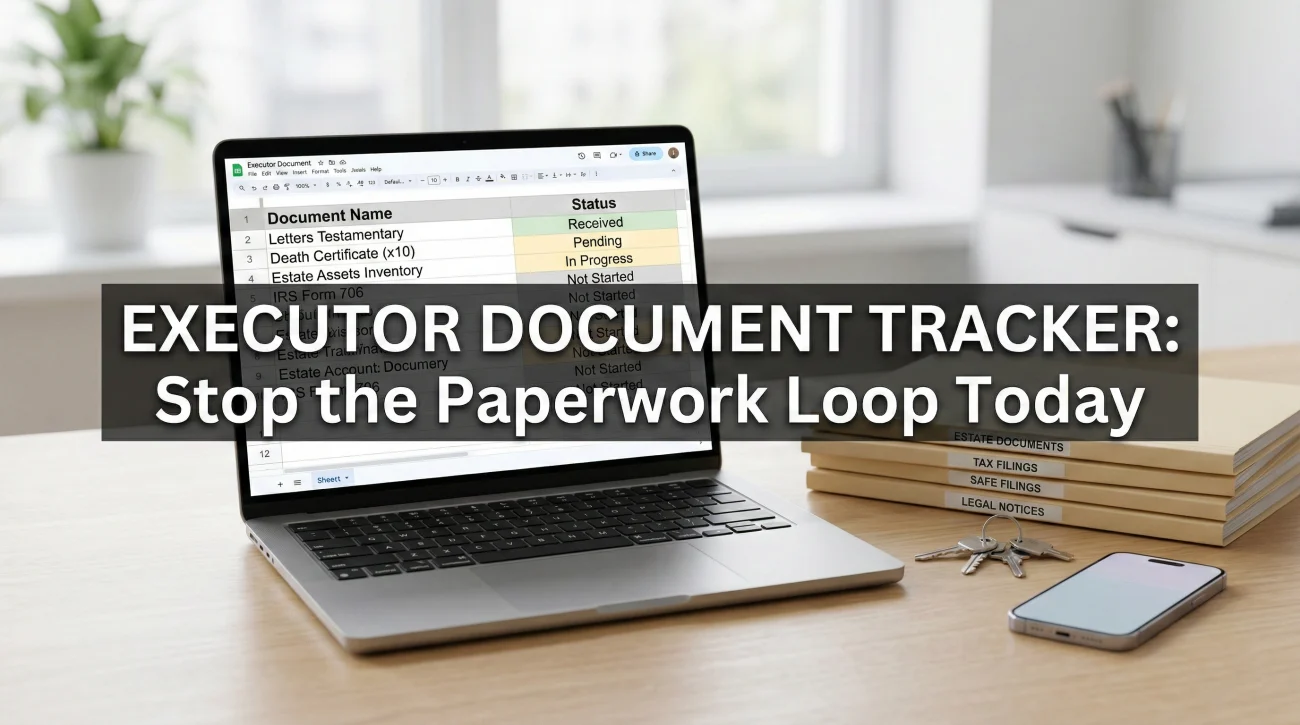
Executor Document Tracker: A Simple System to Stop Repeated Requests

Executor Document Tracker

An executor document tracker records the exact status of every form, letter, and certificate you request or send, preventing the endless loop of “we never received it.” This system focuses purely on the movement of paperwork, separating the act of gathering documents from the broader task of listing estate assets. Using a structured log with … Read more

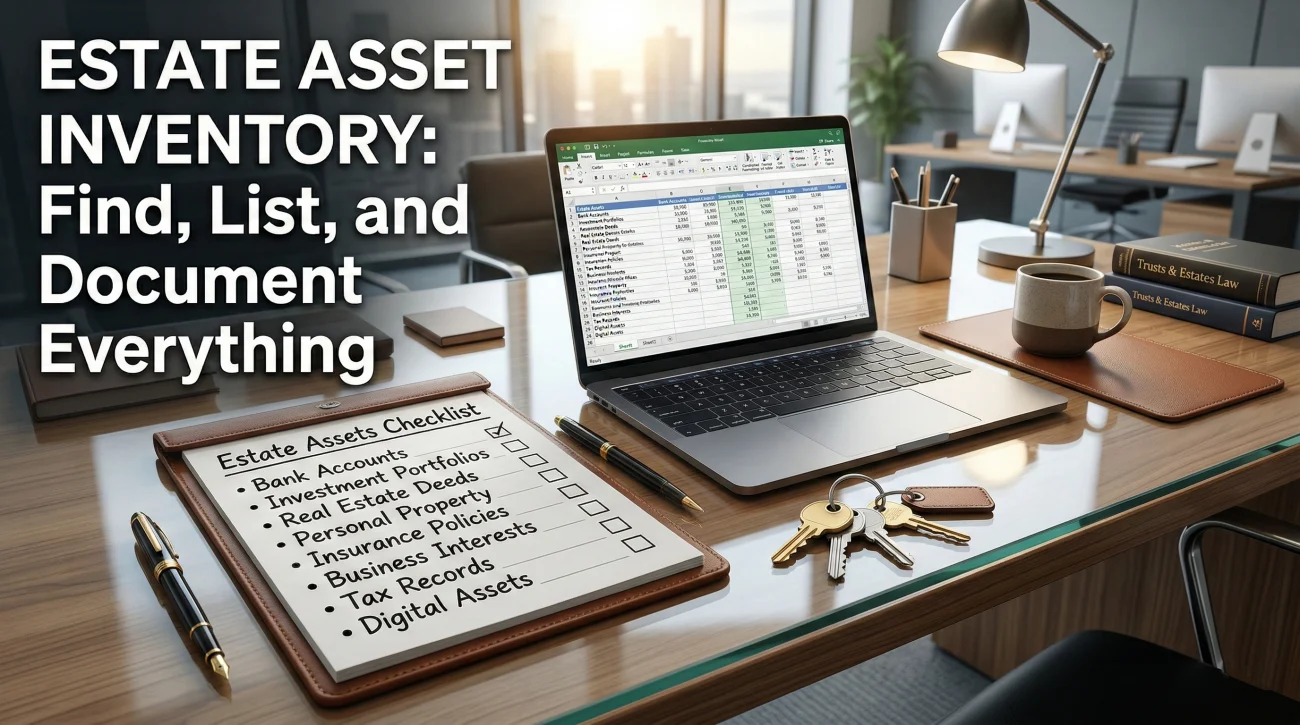
Estate Asset Inventory Checklist: Find, List, and Document Everything

Estate Asset Inventory Checklist

An estate asset inventory checklist is a working document that tracks what exists, where the proof is stored, and the current status of each item. Do not confuse this tracking list with official court forms; this is your personal organizational system to prevent missing items. Always map every listed asset directly to a piece of … Read more