Executor Records Retention Checklist: What to Keep, How to Label, and Where to Store It
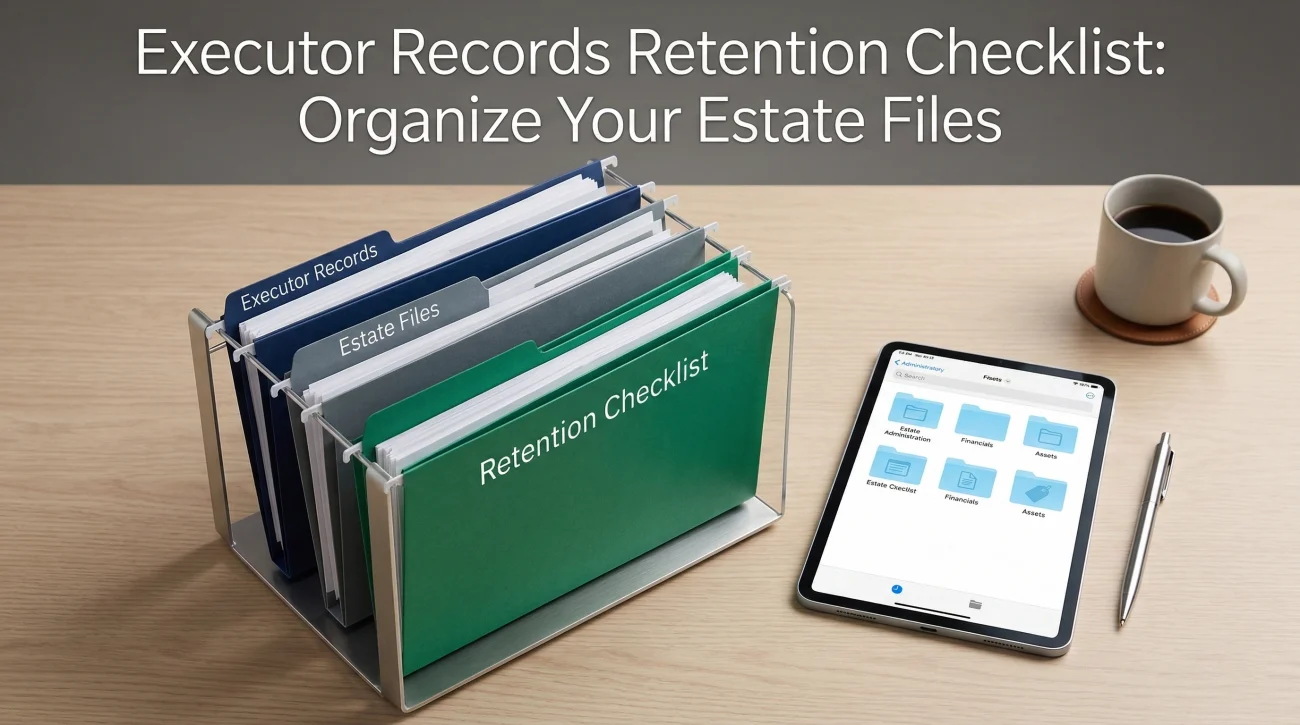
Executor Recordkeeping

Build a simple three-folder system: Authority, Assets, and Transactions. Never name a digital file “scan_1” – use a consistent date-first naming rule so files sort themselves automatically. Keep clear separation between your personal records and the estate’s paperwork to prevent confusion later. Always confirm local record retention timelines with a professional in writing before shredding … Read more
How Many Certified Copies of Letters Do You Need: A Practical Rule of Thumb

How Many Certified Copies Of Letters Testamentary Do I Need

Most executors find that ordering between 5 and 10 certified copies covers a standard estate, while more complex estates may require 15 or more. Timing matters just as much as volume: institutions often reject copies issued more than 60 to 90 days ago, so avoid ordering massive batches too early. You can accurately estimate your … Read more

Business Interests Inventory Checklist: What to List Without Getting Pulled Into Legal and Tax

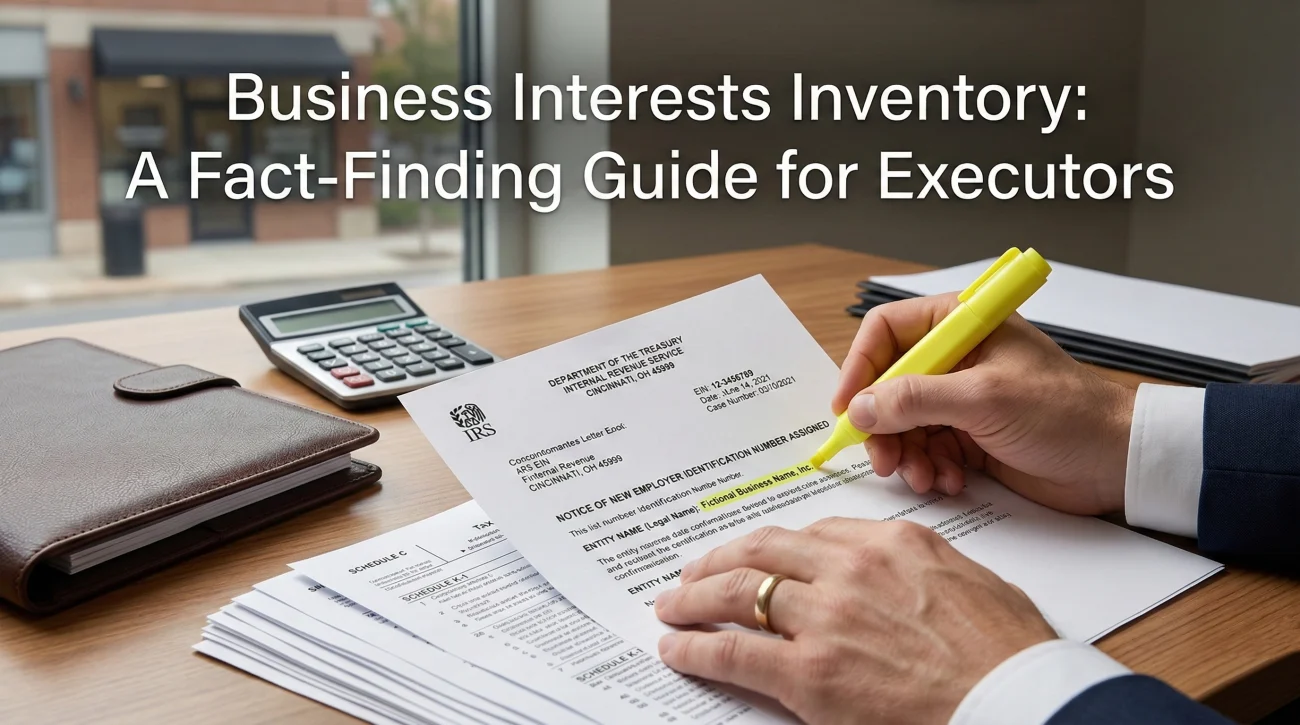
Business Interests Inventory Checklist

Your immediate job is to locate and inventory the business paperwork without accidentally mixing estate funds with operating funds. Start by following the paper trail. Tax returns (Schedule C or K-1 forms) and basic corporate formation documents prove the business exists. Modern estates often include digital businesses. You must actively look for 1099-K forms, merchant … Read more

Unclaimed Property Is an Asset Category Created by Drift, Not Forgetfulness

Unclaimed Property Executor Estate

Unclaimed property is rarely about “forgetting” money. It is usually the direct result of paperwork drift, such as un-updated addresses, corporate mergers, or minor name variations. Proving ownership requires historical documentation. You will need to build an “evidence kit” using old utility bills, expired IDs, or tax records to show the deceased person’s past addresses. … Read more