Letters Reissue or Renewal: When You Need Updated Letters and What to Ask For
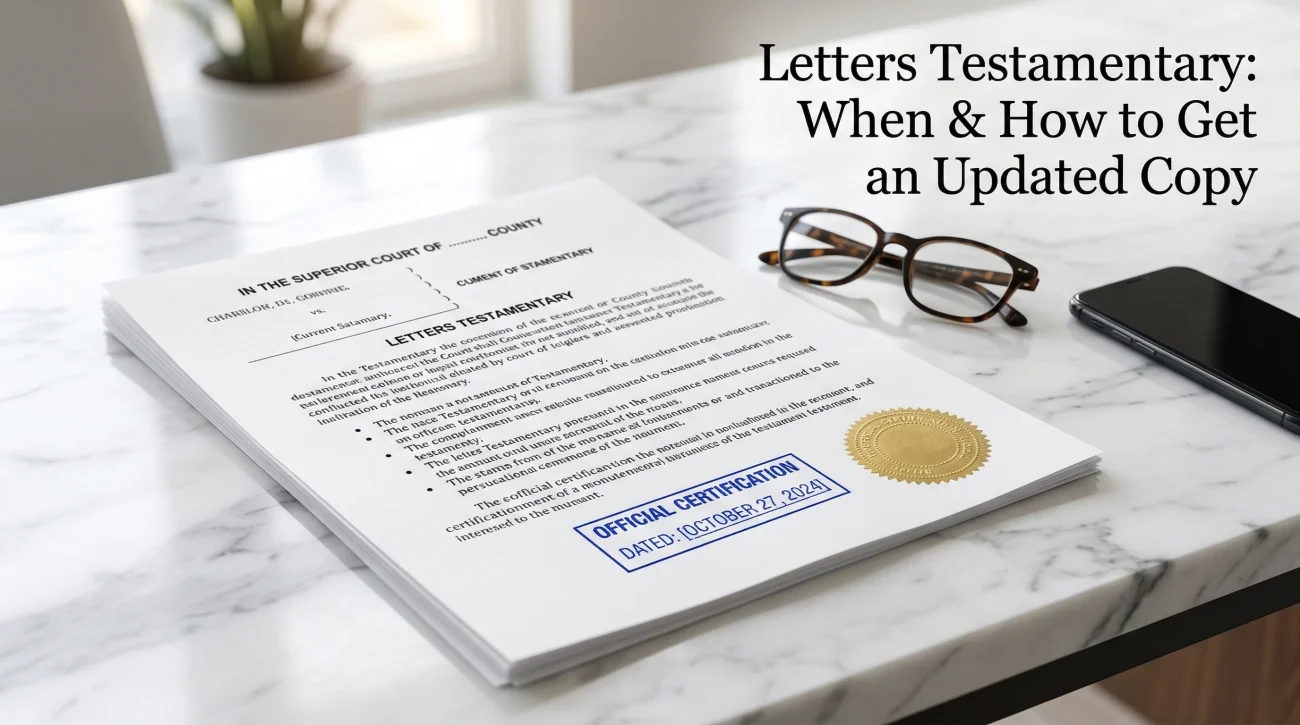
Letters Testamentary Reissue

Institutions often reject perfectly valid court documents simply because the certification date is considered “too old” by their internal compliance rules. Courts do not always set expiration dates, but banks, insurers, and title companies frequently demand a recent letters testamentary reissue based on their own risk policies. When requesting updated letters from the court, always … Read more

How Many Certified Copies of Letters Do You Need: A Practical Rule of Thumb

How Many Certified Copies Of Letters Testamentary Do I Need

Most executors find that ordering between 5 and 10 certified copies covers a standard estate, while more complex estates may require 15 or more. Timing matters just as much as volume: institutions often reject copies issued more than 60 to 90 days ago, so avoid ordering massive batches too early. You can accurately estimate your … Read more

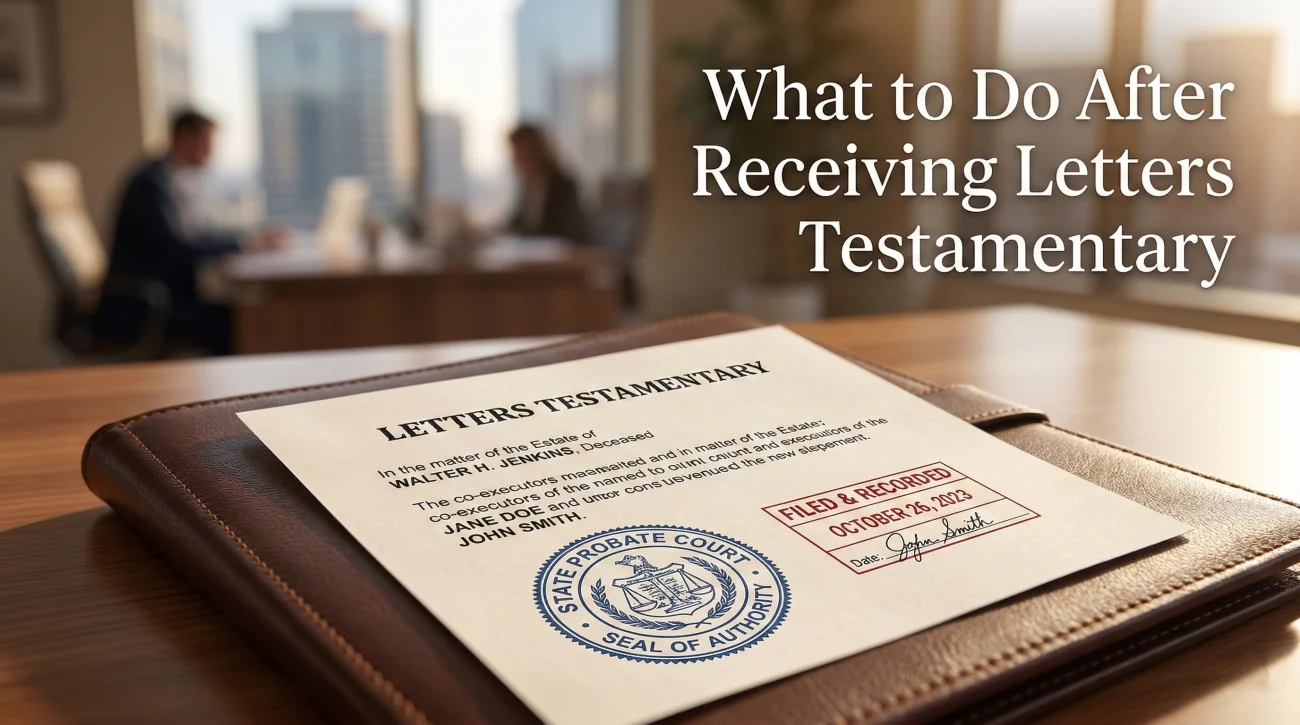
What to Do After You Receive Letters Testamentary: The First 10 Actions

What To Do After You Receive Letters Testamentary

Review and correct: Verify the spelling on your court document immediately and request a clerical amendment if you find any typos before ordering copies. Establish your tracking logs: Create a dedicated call log, document tracker, and decision log before you make a single phone call. Redirect the mail: Go to the post office in person … Read more

How Long Does It Take to Get Letters Testamentary: A Practical Timeline

How Long Does It Take To Get Letters Testamentary

Processing times vary wildly: Depending on the local docket, receiving your letters can take anywhere from a few weeks to a few months. It is rarely immediate. Delays are often avoidable: The most common reasons for a stalled timeline are missing original documents, incomplete notifications to heirs, and unsigned forms. Use the waiting period wisely: … Read more

Letters Testamentary vs Letters of Administration: Which One Applies and What Changes

Letters Testamentary Vs Letters Of Administration

The primary difference is origin: Letters Testamentary are issued when the court validates a will, while Letters of Administration are issued when there is no will or the named executor cannot serve. Administrators usually face a longer, more heavily supervised timeline, often requiring specific court hearings to sell real estate (adding 45 to 90 days … Read more

Executor Bank Documents Checklist: The Bank-Facing Packet

Executor Bank Documents Checklist

An executor bank documents checklist is a highly specific, stripped-down packet designed solely for the bank’s bereavement or legal department. Banks typically look for three stacks of verification: Proof of Death, Proof of Identity, and Proof of Authority. Do not hand the teller your entire executor master file; only provide what they specifically ask for … Read more

Letters Testamentary: What They Prove and Why Banks Keep Asking

Letters Testamentary

The permission slip: Letters Testamentary are the official court documents proving a judge has validated the will and granted you legal authority. Why a will is not enough: Financial institutions require court documents to shield themselves from liability before releasing account access or funds. What desk workers verify: Third parties typically check for your exact … Read more