
- The primary difference is origin: Letters Testamentary are issued when the court validates a will, while Letters of Administration are issued when there is no will or the named executor cannot serve.
- Administrators usually face a longer, more heavily supervised timeline, often requiring specific court hearings to sell real estate (adding 45 to 90 days to a closing).
- When dealing with brokerages, your Letters alone may not be enough; you will often need a Medallion Signature Guarantee to move investments.
- Institutions routinely reject Letters if the court’s certification stamp is older than 60 days. You must build a habit of ordering fresh copies.
- If a compliance department incorrectly rejects your Letters of Administration by demanding “Testamentary” paperwork, immediately move to a written escalation protocol.
Navigating the Two Paths of Estate Authority
In my day-to-day work reviewing document packets and communication logs, I see one roadblock stop progress faster than anything else: the confusion over court-issued authority.
You call a brokerage to report a death, and the representative immediately demands your “Letters.” This single word sends families into a frantic search. When you finally look up the requirements, you are hit with conflicting terminology. Some sites say you need Letters Testamentary, while your attorney or local court clerk might be talking about Letters of Administration.
Understanding the comparison of letters testamentary vs letters of administration is not just a legal exercise; it is a critical operational skill. Knowing exactly which document applies to your situation dictates what you call yourself, how long your tasks will take, and the specific pushback you will receive at the teller window.
In this guide, I will walk you through the practical realities of these documents. We will cover exactly how your administrative timeline changes, how to estimate the copies you need, and the specific escalation scripts to use when a corporate compliance department rejects your paperwork.
The Core Difference: How You Got the Job
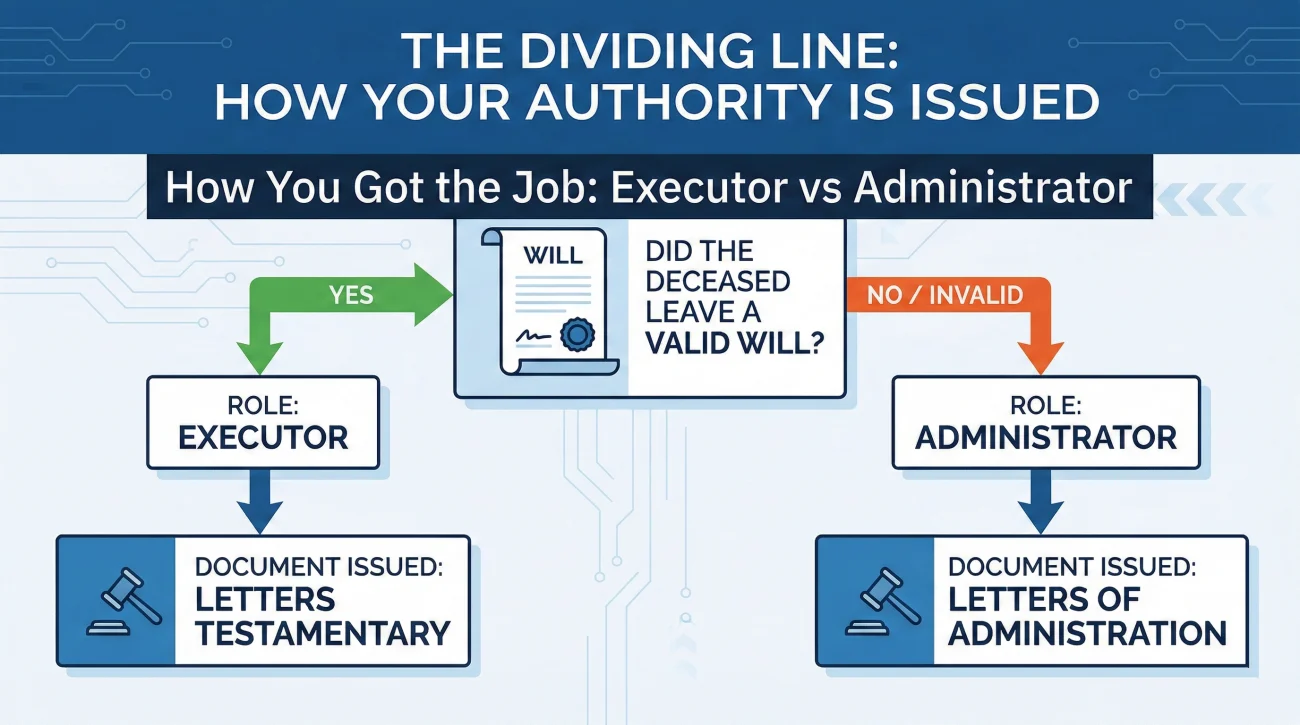
Let’s strip away the legal jargon. Both of these documents are officially stamped certificates from a probate judge proving you have the legal right to manage the deceased person’s assets. The dividing line between the two tracks is simply whether the deceased left a map for the court to follow.
Key Point: Before we look at the specific tracks, there is one universal rule: do not fall into the trap of thinking you can act before the ink is dry. Attempting to close accounts or move funds just because you “know” you are the named executor or sole heir is a compliance violation. Without the physical, court-issued Letters in hand, you have zero legal authority.
The Testamentary Track (With a Will)
If there is a valid will that names you as the representative, the court will issue Letters Testamentary. The court is essentially validating the deceased person’s choice. Because the will usually outlines exactly what you are allowed to do (like selling property or waiving bond requirements), the court allows you to operate with less direct oversight. You are officially called the Executor.
The Administration Track (The Fallback Route)
Most people assume Letters of Administration only apply when someone dies completely intestate (without a will). However, in my experience, many families end up on this track even with a will. If the named executor passes away, declines the role, or is legally disqualified, and no backup is listed, the court must step in.
In these cases, the court appoints someone based on a state priority list (usually a surviving spouse or adult children). Because the court is making the appointment without direct guidance from a will, you are called an Administrator.
Timeline and Workflow Impact Comparison
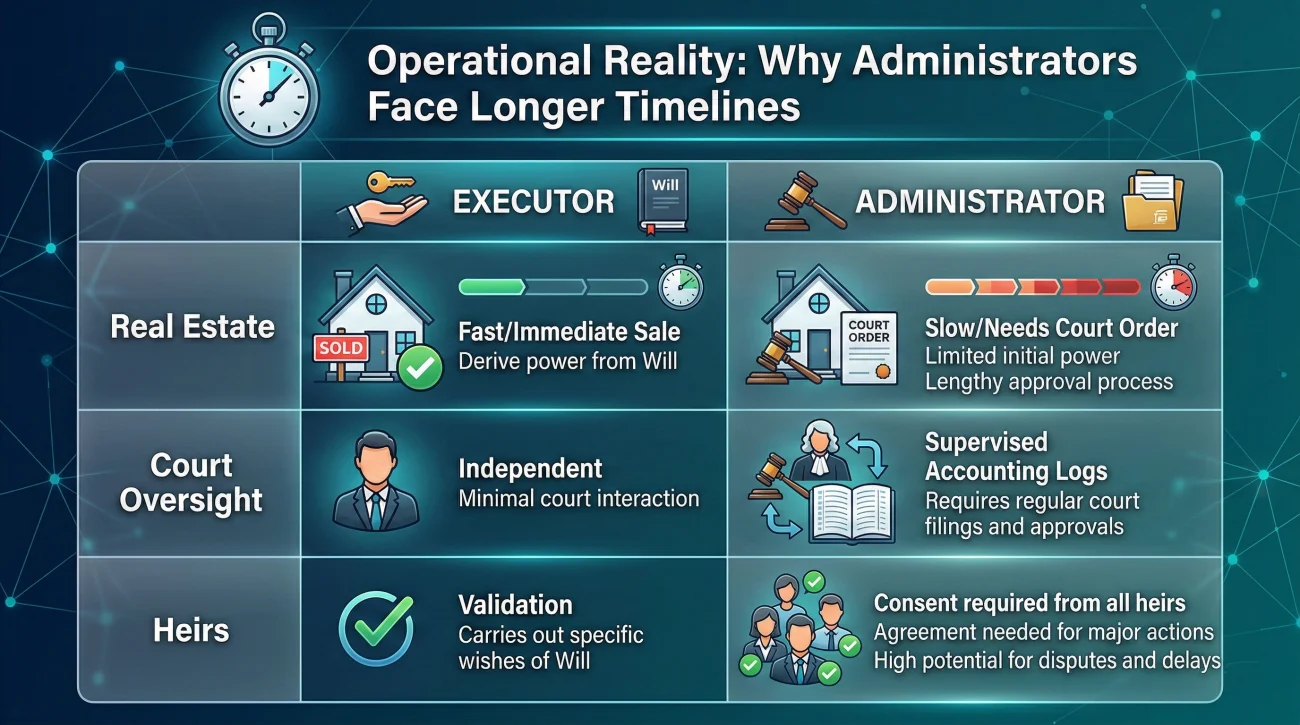
Once you understand which track you are on, the most important thing to grasp is how that track affects your schedule. Administrators almost always face a stricter, longer timeline. Here is a practical look at how the two documents change your operational reality.
| Operational Phase | Letters Testamentary (Executor) | Letters of Administration (Administrator) |
|---|---|---|
| Initial Appointment | Usually faster. The court simply validates the will and confirms your identity. | Often slower. May require tracking down all legal heirs to get their signed consent for your appointment. |
| Real Estate Sales | Can often list and sell the home immediately if the will grants the “power of sale.” | Requires filing a petition, waiting for a hearing, and getting an Order Authorizing Sale. |
| Court Reporting | Often “informal” or independent, requiring fewer check-ins with the judge. | Usually “formal” or supervised, requiring detailed accounting logs submitted to the court. |
Knowing these timeline differences prevents you from making promises you cannot keep. If you are an Administrator, you cannot promise a real estate buyer a quick 30-day closing, because the court system moves at its own pace.
Workflow 1: Banks, Brokerages, and Terminology
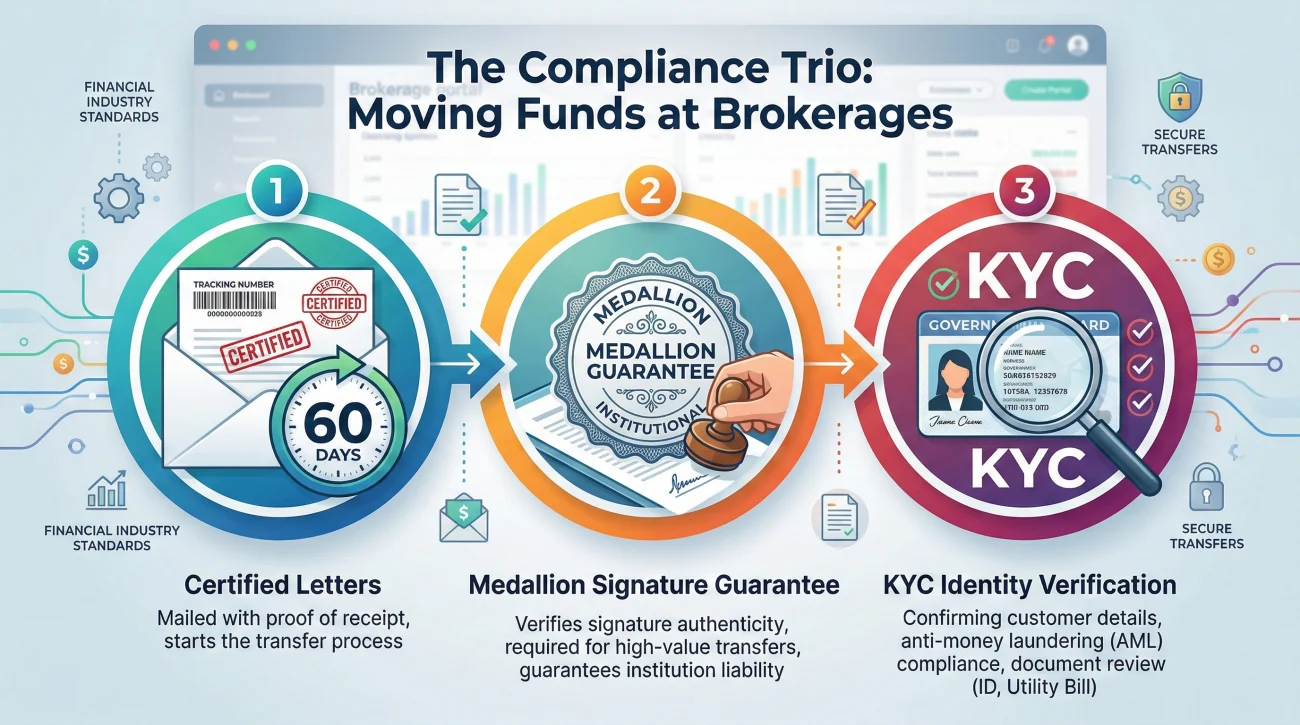
Armed with your correct title and expectations, your first real stress test usually happens at a financial institution. Banks and brokerages operate under strict federal Know Your Customer (KYC) laws. They require absolute proof of authority before releasing funds.
If you hold Letters of Administration, you are walking into a high-friction environment. Most bank training modules use “Executor” and “Letters Testamentary” as the default examples. When you present your Administration paperwork, front-line tellers often panic because the document title does not match the prompt on their screen.
“The court gave me this Administration paper instead. Can you just ask your manager if it works?”
“Because there is no will, the court appointed me as Administrator. This certified copy of the Letters of Administration serves the exact same compliance function as Letters Testamentary. Please scan it for your legal department’s review.”
Furthermore, if you are dealing with major investment brokerages (like Vanguard, Schwab, or Fidelity), your Letters alone might not be enough. Brokerages frequently require a Medallion Signature Guarantee on their internal transfer forms. This is a special certification stamp proving your identity that you can typically obtain at a major bank branch where you already have an existing account. You will need to present this guarantee in addition to your certified court documents.
To prepare your files correctly before facing these institutions, map out your entire court interaction using our Probate Court Checklist for Executors.
Workflow 2: Title Companies and Real Estate Risk
While a bank only needs to know who to write the check to, a title company is underwriting the risk of a future lawsuit. When transferring real estate, title underwriters look at your Letters through a microscope.
If you are an Executor with Letters Testamentary, the underwriter will request a copy of the will to verify you have the authority to sell. If you are an Administrator, the title company knows you are bound by statutory limits.
In most operational scenarios I track, an Administrator cannot simply sign a listing agreement and put a sign in the yard. They must navigate the petition process mentioned in the comparison table. Practically speaking, waiting for the court’s Order Authorizing Sale usually adds a minimum of 45 to 90 days to your closing timeline, depending on how backed up your local county docket is.
⚠️ Warning: If you are on the Administration track, never sign a standard real estate listing agreement without adding a contingency clause that the sale is “subject to final probate court approval.” Failing to do so can leave you personally liable to a buyer for a broken contract if the judge delays the sale.
Workflow 3: The Cross-Border Challenge (Ancillary Probate)
Once you have secured local accounts and safely navigated the real estate listing process, the day-to-day pressure usually drops. However, your focus must eventually shift to the geographic limits of your authority.
A common logistical challenge arises when the deceased owned assets in multiple jurisdictions. It is crucial to remember that Letters Testamentary and Letters of Administration are strictly state-bound. If the court in Texas appoints you, that piece of paper gives you authority in Texas. If you discover a vacation cabin in Colorado, or mineral rights in Oklahoma, your Texas documents hold no direct legal weight there.
To sell or transfer out-of-state real estate, you must initiate a process called “Ancillary Probate.” You essentially have to take your primary certified Letters and file them with the court in the second state. That second court will then issue a new set of local authority documents.
If you identify out-of-state property, your immediate next step is to ask your primary estate attorney for a referral to a probate attorney in that specific county. Do not attempt to navigate a second state’s court system on your own, as you will be managing two sets of court timelines simultaneously.
Managing the 60-Day Clock and Your Copies
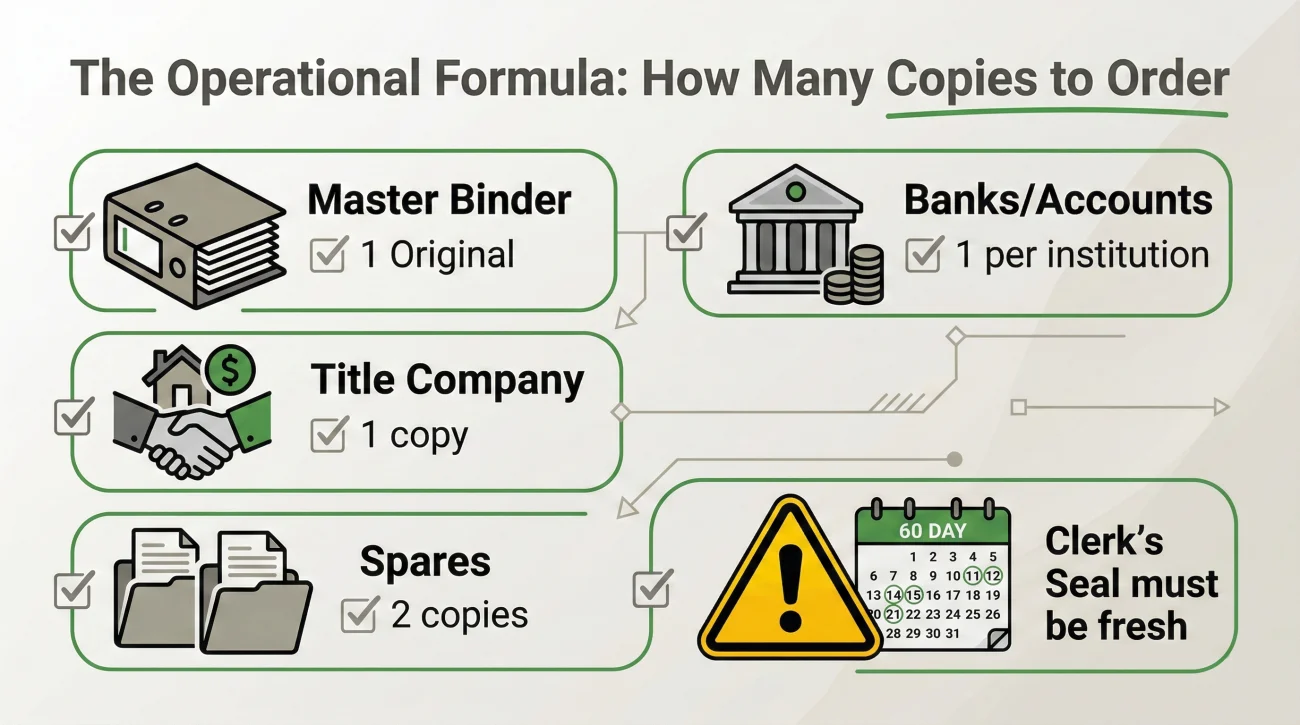
Regardless of which track you are on, institutions hoard these documents. Worse, they constantly demand fresh dates. While your authority does not officially expire until the estate is closed, corporate compliance departments will routinely reject physical certified copies if the clerk’s raised seal or date stamp is older than 60 or 90 days.
To avoid mailing a packet that will automatically be rejected, always send a preemptive email to an insurer or financial institution’s claims department:
Subject: Estate of [Name] – Document Age Requirements
Hello Claims Department,
I am the court-appointed representative for the Estate of [Name]. I am preparing the final claim packet to mail to your processing center.
Before I send the physical documents, please confirm in writing:
1. Do you require an original certified copy with a raised seal, or is a scanned photocopy acceptable?
2. What is your requirement for the document date? (e.g., must the court certification date be within the last 60 days?)
Please provide your written requirements so I can ensure the packet clears compliance on the first review.
Thank you,
[Your Name]
How Many Copies Do You Actually Need?
In my experience, executors usually vastly under-order or over-order. At $5 to $20 per copy depending on your county, you need a smart estimate. My operational formula is:
- 📄 1 original for your master estate binder (never mail this out).
- ✅ 1 copy for every physical financial institution where the deceased held an account.
- ✅ 1 copy for the title company (if selling real estate).
- ✅ 2 floating spares for unexpected creditors or insurers.
When an institution rejects your older copies, you simply contact the probate court clerk’s office, pay the per-copy fee, and request “updated certified copies.” The clerk will print a fresh copy of your original appointment order and stamp it with today’s date, resetting the clock.
The Escalation Protocol: When Your Letters Are Rejected
Even with perfectly dated, correct documents, you will eventually face a company that flat-out refuses to recognize your authority. Usually, this is a front-line customer service rep who lacks the training to understand court variations.
Do not waste hours arguing on the phone. Move to a written escalation protocol immediately to create an audit trail.
❌ Note: Never accept “our policy doesn’t allow this” over the phone from a tier-1 support agent when you hold a valid court order.
Follow this exact sequence:
- Log the refusal: Write down the date, time, and agent ID of the person who rejected your letters.
- Request a supervisor: Ask to be transferred to the “Estate Department” or “Legal Review Team.” Front-line agents rarely have the authority to override the system.
- Demand written rejection: If the supervisor refuses, state clearly: “I am holding a valid court order. If you are refusing to honor it, I require your legal department to provide that rejection, and the specific statutory reason for it, to me in writing by mail.”
- Consult the attorney: In 90% of cases, asking for a written legal rejection causes the company to quietly review and approve the document. If they actually send a written refusal, hand that letter directly to your estate attorney to resolve.
Final Actions to Protect Your Estate Operations
The transition from waiting for your Letters to actually executing your duties is where most administrative errors happen. Whether the court hands you Letters Testamentary to execute a will, or Letters of Administration to navigate an intestate estate, your authority is only as strong as your operational discipline.
Set up a master physical binder today. Put your original court-issued document in a heavy-duty plastic sleeve. This is your anchor. Most importantly, start a document tracking log. Record every certified copy you mail out, including the date it was issued, the recipient’s exact department, and the tracking number.
Ultimately, the difference between these two tracks is simply how the court regulates your steps. By understanding your specific boundaries, anticipating the pushback from compliance departments, and treating your court authority like highly sensitive operational data, you protect yourself from personal liability and keep the estate moving forward without unnecessary delays.
❓ FAQ
🖨️ Can I just use a regular photocopy of the letters?
For initial notifications via email, companies will often accept a standard scan or PDF. However, to actually release funds or transfer assets, nearly all major banks require a formally certified copy with a raised seal or wet ink stamp from the court clerk mailed to their processing center.
💻 Do I need letters to close social media or email accounts?
Yes, major platforms like Google, Apple, and Facebook treat digital assets with high security. To gain access to data or formally delete an account, you will usually need to upload your Letters and your personal ID to their legal portals.
🤝 What happens if co-executors disagree on an action?
If the court appointed multiple people, institutions typically require signatures from all co-executors to move money or sell property. If you disagree, the transaction stalls completely until you reach a consensus or petition the court to intervene.
⏳ Do I have to wait to plan the funeral until I get the letters?
No. Funeral arrangements are generally handled immediately by the next of kin before the probate court is even involved. However, you cannot access the deceased’s frozen bank accounts to reimburse those funeral expenses until the court issues your letters.
🏦 Do I need new letters every time I open an estate bank account?
You do not need a new court appointment, but the bank will likely retain one of your physical certified copies for their legal files. This is why you must order multiple copies upfront.
🔐 Do I need Letters to access a safe deposit box?
In most cases, yes. While some states allow a quick look to search for a will (often supervised by a bank manager), you cannot remove any valuables from the box until you present your official court Letters.
📝 How exactly do I get a replacement if I lose my original letters?
You contact the probate court clerk in the county where the estate was opened. Provide the estate case number and pay the required administrative fee, and they will print and certify a new batch for you.
🛑 Can the court revoke my Letters after issuing them?
Yes. If an executor or administrator mismanages funds, fails to file required accounting reports, or violates a court order, a judge can revoke their Letters and appoint a replacement.
💼 Does the IRS need a copy of my letters to issue an EIN?
If you apply for the Estate EIN online via the IRS portal, you do not need to mail them your letters. However, you are legally certifying under penalty of perjury that you have been granted the authority to obtain the number.
⚖️ Can a bank legally refuse my valid letters?
A bank’s legal department can refuse to act if the letters appear altered, if the court seal is missing, or if they suspect fraud. However, they cannot refuse valid Letters of Administration simply because their internal training manual prefers a will.
⚠️ Disclosure: I'm not an attorney and nothing on this site is legal or tax advice. The content covers process, organization, and workflow—the operational side of estate administration. For legal interpretation, jurisdiction-specific deadlines, contested situations, or tax matters, please work with a licensed professional in your state.