
- Treat utility bills and subscriptions as a triage list: keep for safety, pause to stop the bleed, and review before canceling.
- Do not rush to shut off power or water; an empty house still needs climate control and basic maintenance to preserve the asset’s value.
- Never use the deceased person’s passwords to log in and cancel services. Send written notices to providers instead.
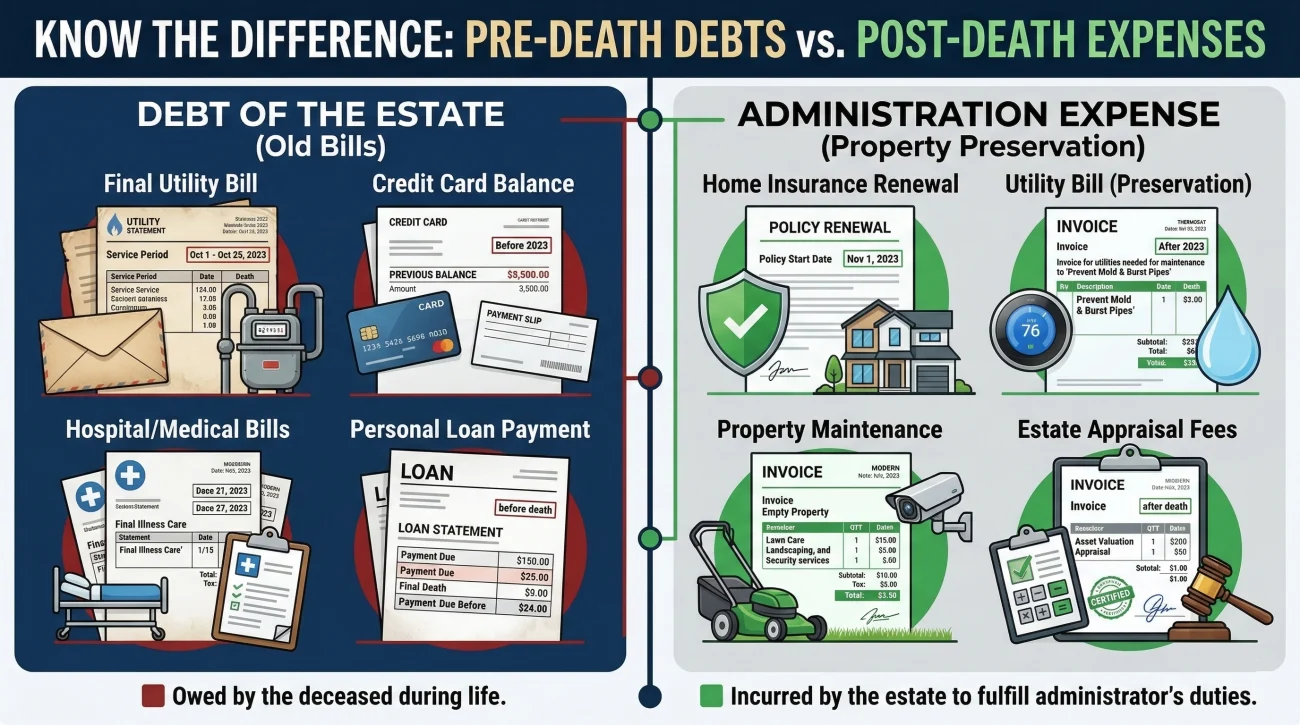
- Understand the gap: Pre-death utility bills are estate debts, while post-death bills to maintain the home are administration expenses.
- Log every cancellation, final bill, and estate payment to prevent beneficiaries from questioning ongoing expenses.
The Empty House Problem: Managing Ongoing Services
When you step into the role of managing an estate, one of the most immediate visual reminders of the work ahead is the mail. You walk into the house, and there is a stack of envelopes on the counter. The internet bill is due. A magazine subscription just auto-renewed. The electric company is sending a notice.
Handling utility bills after death executor duties often feels like you are trying to plug leaks in a boat. Money is quietly draining out through autopay systems, and you are trying to figure out what to stop and what to keep running.
In my experience tracking executor workflows, this is a stage where people easily get overwhelmed. The instinct is usually to grab the phone and start canceling everything to save the estate money. But rushing this process can actually cause more harm than good. If you cancel the wrong service, you might compromise the security of the property or lose access to important incoming communications.
Instead of panicking, I always recommend treating these ongoing services as a simple triage list. You do not have to solve it all in one afternoon. You just need to sort them into clear categories, document your decisions, and follow a paper trail.
The Triage Framework: Keep, Pause, and Review
When I help people organize their estate administration packets, we start by dividing every bill and statement into three distinct buckets. This stops the guesswork and gives you a clear order of operations.
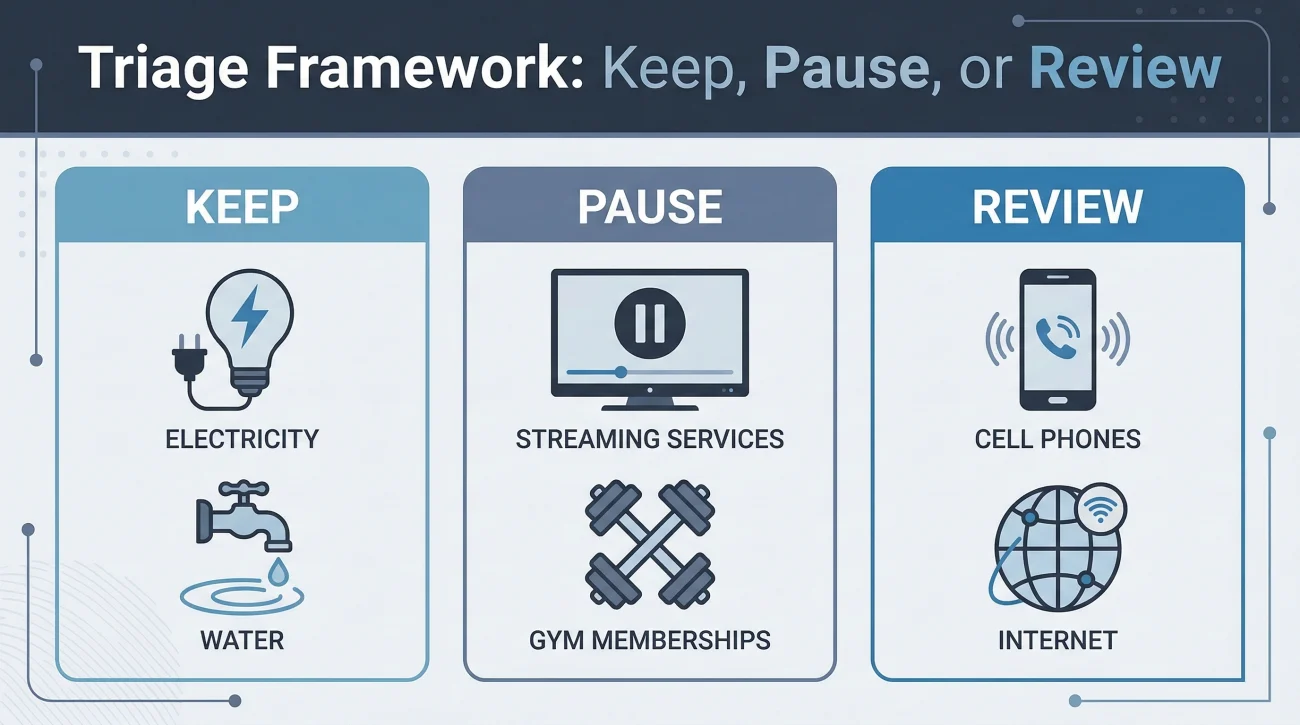
Bucket 1: Keep for Safety (Utilities)
This bucket includes the essential services that protect the physical property. An empty house is highly vulnerable, and maintaining these services is often a core part of preserving the estate’s value for the beneficiaries.
- ⚡ Electricity: You need lights for when you are cleaning out the house, but more importantly, the HVAC system needs power. Without climate control, you risk frozen pipes in the winter or severe mold in the summer. Security systems also rely on a steady power supply. Handling the electric bill after death usually means leaving it on, but notifying the company of the death to update the billing contact.
- 💧 Water and Sewer: While you might turn off the main water valve to prevent flooding, you generally want to keep the account active. You will need water for cleaning the property or if a repair contractor needs to do work. Paying the water bill after death is a standard administration expense. If the house is in a cold climate and will sit empty, paying a plumber to “winterize” and drain the pipes is a smart, defensible expense to prevent catastrophic flooding.
- 🔥 Gas or Heating Oil: Similar to electricity, if the house relies on gas or oil for heat, you must maintain this to protect the plumbing and structure.
Bucket 2: Pause to Stop the Bleed (Subscriptions)
This bucket is for pure “lifestyle” expenses. These provide zero value to the estate and should be stopped as soon as you have the proper documentation (usually a death certificate and your appointment document). Rushing to pause these stops the bleed, especially since most streaming and software services do not offer refunds for unused months.
- 📺 Streaming and Entertainment: Managing a Netflix account after death, along with Hulu, Spotify, cable packages, and premium channels, is a common task. These must be stopped.
- 📦 Delivery Services: Meal kits, Amazon Prime, specialized monthly boxes, or recurring supplement deliveries.
- 🏋️ Memberships: Gyms, country clubs, social organizations, and professional association dues.
- 💻 Software and Cloud Storage: Recurring software licenses or basic cloud storage (though be careful not to delete cloud storage if it holds important financial records you haven’t secured yet).
The goal here is simply to cancel subscriptions after death efficiently. You are stopping unnecessary outflow so the estate’s funds are preserved for valid debts and eventual distribution.
Bucket 3: Review Before Canceling
These are the tricky services. Canceling them too early can create massive headaches, but leaving them running forever wastes money. You must review these case-by-case.
- 📱 Cell Phones: I often see executors cancel the cell phone on week one. The problem? That phone number might be receiving calls from creditors, or it might be the contact number for old friends who do not know the person has passed. Keeping it active for a month or two on a basic plan can be a valuable information-gathering tool.
- 🛡️ Insurance Premiums: Handling insurance premiums after death requires careful review. If the person owned a car, you typically need to keep the auto insurance active until the car is sold or legally transferred, even if it is just parked in the driveway. Property insurance must absolutely be maintained, though you should notify the carrier that the house is now vacant.
- 🌐 Internet Service: Does the house have smart locks? Wi-Fi connected security cameras? A smart thermostat you are using to monitor the temperature? If so, you cannot cancel the internet until you have alternative security measures in place.
Key Point: Do not try to memorize which bills you have sorted. Build a simple “Service Triage Log” (on paper or a spreadsheet) to track the status of every utility and subscription tied to the deceased person.
A Safe Action Timeline for Executors
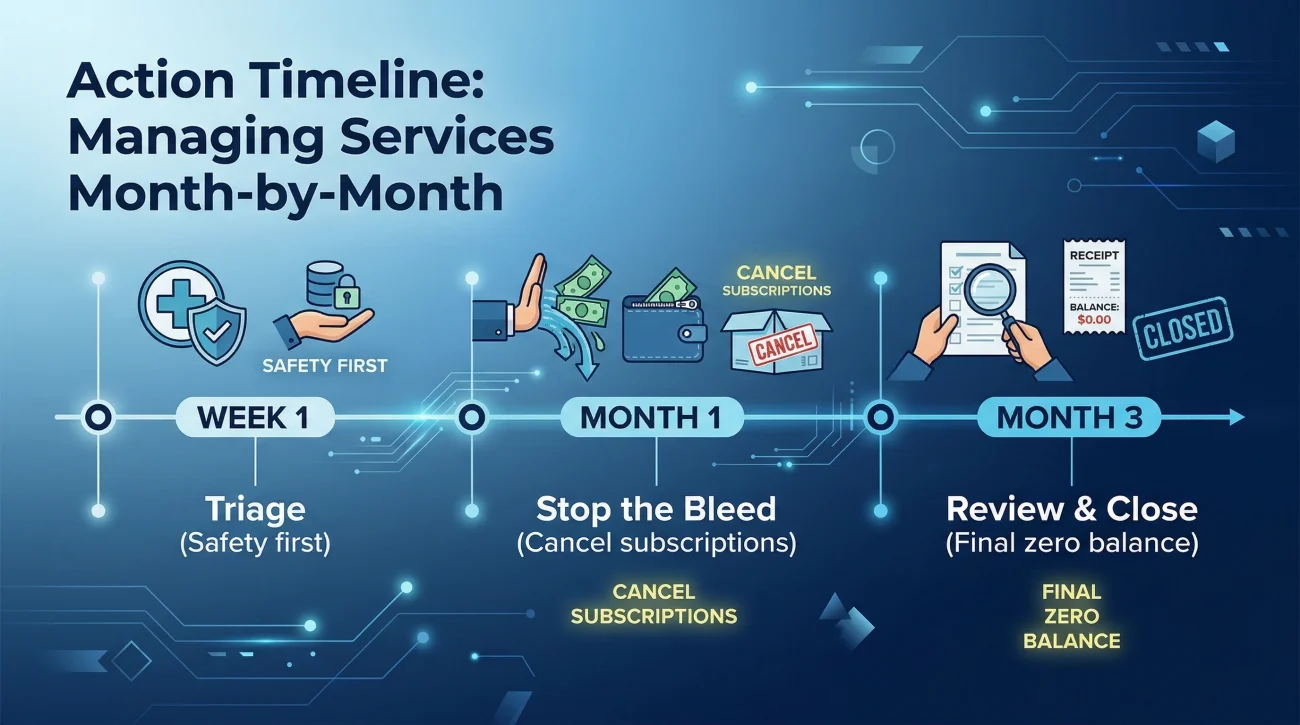
Before diving into how to find hidden accounts and cancel them, I advise breaking this process down into a simple mental timeline. You do not have to fix everything on day one.
- 📅 Week 1 (Triage): Identify the “Keep for Safety” utilities. Ensure the physical property has power, water, and insurance. Let everything else sit in the pile.
- 📅 Month 1 (Stop the Bleed): Once you have court authority, set up mail forwarding and review bank statements to identify autopay subscriptions. Send written cancellation notices to streaming, gyms, and delivery services. Log every notice sent.
- 📅 Month 3 (Review & Close): Review the “Review Before Canceling” bucket. Is it time to shut off the cell phone? Has the house sold, meaning you can finally turn off the internet and utilities? Confirm that all canceled accounts show a final balance of zero.
Finding the Hidden Charges: Paperless and Joint Accounts
It is easy to cancel a bill when the paper envelope arrives in the mail. But in modern estate administration, the biggest leaks are often invisible. People ask me all the time: “How do I find what they were subscribed to if I don’t get paper statements?”
⚠️ Warning: Do not use the deceased person’s login credentials to access their devices or accounts. You are acting as an official representative of the estate, and bypassing security protocols by impersonating the deceased person can create liability issues or violate terms of service.
The First Defense: USPS Mail Forwarding
Before you even begin digging into digital records, take the most critical physical step: file a formal mail forwarding request with the USPS to route the deceased person’s mail to your address. This ensures that stray utility notices, final bills, or warnings about declined autopay cards actually reach you instead of piling up unseen in an empty house.
Tracing the Paperless Footprint
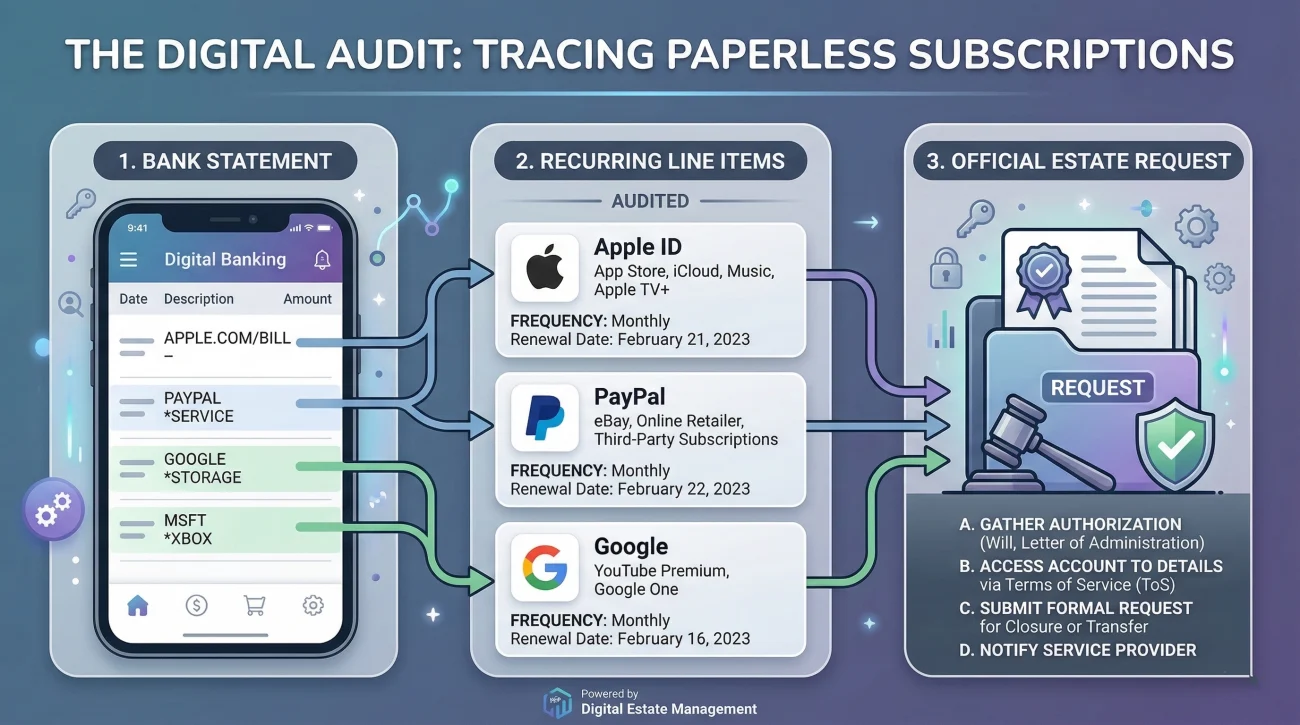
If you cannot log in, you must look at the financial paper trail. Once you have official authority from the court, request the last three to six months of bank statements and credit card statements. Look for recurring monthly or annual charges. If billing goes entirely through a digital wallet (like Apple ID, Google Play, or PayPal), you will see the aggregate charge on the bank statement. You will then need to submit your official estate representative documents to Apple, Google, or PayPal to request a freeze on the account to stop the underlying subscriptions.
The Joint Account Trap
A common pattern that trips up executors involves joint accounts and authorized users. If a Netflix subscription or gym membership is billed to a credit card held jointly by the deceased and a surviving spouse, the surviving spouse is generally responsible for the ongoing charges. The estate cannot simply tell the credit card company “they died, so write this off,” because the joint owner is still bound by the debt.
Always verify whose name is actually on the service contract and whose name is on the payment method. If the deceased was merely an authorized user on someone else’s card, removing them as an authorized user usually stops their specific recurring charges without closing the main account.
Communicating with Providers: Scripts and Escalation
When you contact a utility company or subscription service, keep it strictly professional. You are not negotiating; you are notifying them of a fact and requesting an administrative action. Always try to get confirmation in writing.
The Written Notification Script
Here is a safe, plain-English script you can adapt when mailing or emailing a service provider to close an account:
Subject: Notification of Death and Request to Close Account – [Deceased Name] – [Account Number]
Hello,
I am writing to formally notify you of the passing of [Deceased Name] on [Date of Death]. I am the appointed executor/administrator for the estate.
Please close the following account immediately to prevent any further recurring charges:
– Account Name: [Name on Account]
– Account Number: [Account Number]
– Service Address: [Address, if applicable]
Please send a final statement showing any outstanding balance up to the date of cancellation to my mailing address below. Do not process further automatic payments from the payment method on file.
I have attached a copy of the death certificate and my official appointment document for your records.
Please reply to confirm that this account has been closed and the final bill has been generated.
Thank you,
[Your Name]
[Your Mailing Address]
Notice the structure of that message. It clearly states your authority, gives the exact account details, stops future charges, and asks for the final bill for your records.
[State Authority] + [Identify Account] + [Request Closure & Final Bill] + [Request Confirmation]
When Providers Refuse to Cancel
Sometimes, companies (especially smaller gyms or subscription boxes) will ignore your email or tell you over the phone that “the person must cancel in person” or “we need to speak to the account holder.” This is a frustrating administrative loop. Here is how you escalate safely:
- Step 1: Send the request via Certified Mail with Return Receipt requested. Include the death certificate and court documents. This proves they received it.
- Step 2: If they charge the account again after receiving the certified letter, contact the bank or credit card company that issued the card. Inform them the account holder is deceased, the provider was notified, and you need to dispute the unauthorized post-death charge.
- Step 3: The bank will usually freeze the card and reverse the charge, forcing the subscription company to stop.
Recordkeeping: Debts vs. Expenses
Why do we care so much about documenting a $15 streaming subscription cancellation? Because in estate administration, trust is built on transparency. Furthermore, there is a massive legal difference between a bill generated before death and a bill generated after death.
The Distinction You Must Understand
In the administrative workflow, the electric bill from the month before the person died is considered a debt of the estate. The electric bill from the month after they died (kept on to protect the pipes) is considered an estate administration expense.
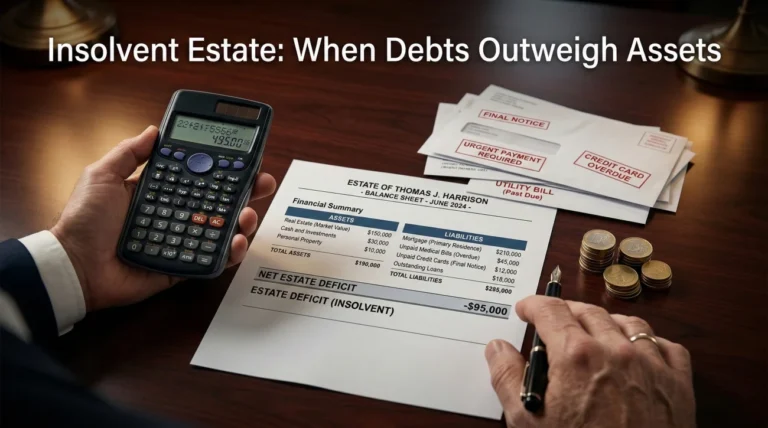
Why does this matter? Because if the estate runs out of money (becomes insolvent), administration expenses generally get paid before old debts. If you mix these up and pay an old credit card bill before paying the current property insurance premium, you could be held personally liable for mismanaging the estate’s funds. Before paying old balances, you must understand the complete executor creditor and debt checklist.
Bridging the Gap Before the Estate Account Opens
It usually takes weeks to get official court documents and open an estate bank account. During this gap, the power company might threaten to shut off the lights. It is very common for an executor to pay a critical utility bill out of their own pocket to protect the house.
This is fine, but the documentation is often terrible. Executors lose the receipt and assume they will just “pay themselves back later.” This causes fights with beneficiaries.
You pay the $80 water bill from your personal checking account and throw away the receipt, hoping the beneficiaries trust you when you reimburse yourself later.
You pay the $80 water bill. You scan the original bill, print the confirmation of your personal payment, staple them together, and write “Advanced by [Your Name] for property preservation” on the top for your reimbursement file.
If you must pay out of pocket, create a dedicated “Reimbursement Pending” physical folder immediately. Keep the original invoice and the proof of your personal payment together. Do not mix these up with your personal household bills. Once you have the official estate account open and are ready to process those reimbursements properly, check your banking procedures for how to move the money safely and transparently.
Final Thoughts
Managing ongoing services is less about saving every penny immediately and more about building a clear, defensible paper trail. Take it one bucket at a time, document your decisions, and always prioritize the services that protect the physical assets of the estate.
❓ FAQ
🎙️ How do I find out what subscriptions someone had if there is no paper mail?
Once you are appointed, request the last 3 to 6 months of bank and credit card statements. Recurring charges here are your most reliable map to hidden digital subscriptions.
📬 Can I forward mail for a deceased person online?
You typically cannot do this online. You must go to the post office in person with proof of your appointment as executor and a valid ID to file the official forwarding request.
💻 Can an executor legally access email to cancel accounts?
You cannot use their personal password. However, most major email providers have a legal process where an executor can request access or a data export by providing a death certificate and court appointment documents.
💳 What if the credit card is canceled but a subscription keeps trying to charge?
The charge will decline, but the subscription company’s internal system will show an unpaid balance. They may eventually send this to collections, which is why you must formally cancel the service in writing, not just kill the card.
🏠 Should I turn off the water completely to a vacant house?
If you live in a cold climate and the house will sit empty for months, it is highly recommended to hire a plumber to drain the pipes and shut off the main valve to prevent catastrophic freezing and flooding.
🤝 If I pay a utility bill from my own account, am I legally responsible for the account forever?
No, paying a bill on behalf of the estate does not automatically assume the debt into your name, provided you do not sign a new contract assuming personal liability. Keep receipts to claim reimbursement from the estate.
📞 Can a debt collector call me about an unpaid cable bill?
Yes, collectors can contact you as the executor to seek payment from the estate. However, they cannot legally pressure you to pay the estate’s cable bill out of your personal funds.
📦 What do I do with subscription packages delivered after death?
Do not open them. Write “Return to Sender – Deceased” on the unopened packages and give them back to the carrier. This helps trigger an automatic refund or cancellation process with many vendors.
💸 Are gym memberships considered estate debts?
Yes, any unpaid balance on a contract signed by the deceased before their death is considered an unsecured debt of the estate, and it goes into the general pool of claims to be evaluated.
📝 Do I need to mail an original death certificate for every single cancellation?
Rarely. For minor subscriptions like streaming or magazines, a clear photocopy or scanned email attachment of the death certificate is usually sufficient. Save your originals for banks and real estate transfers.
⚠️ Disclosure: I'm not an attorney and nothing on this site is legal or tax advice. The content covers process, organization, and workflow—the operational side of estate administration. For legal interpretation, jurisdiction-specific deadlines, contested situations, or tax matters, please work with a licensed professional in your state.