- Clarity over surprise: Executor compensation creates the most conflict when beneficiaries are surprised by it at the very end. Early communication is your best defense.
- Reimbursement is not compensation: Getting paid back for estate expenses (like buying a death certificate) is entirely separate from being paid for your time and effort.
- Three common paths: Executors typically waive the fee, reach a written agreement with beneficiaries, or rely on a court-approved structure.
- Documentation is mandatory: If you intend to take a fee, you must keep a highly detailed log of your time, actions, and the value you provided to the estate.
The Late-Stage Question: Does the Executor Get Paid?
In my experience helping people organize estate administration tasks, there is a very predictable point where executor burnout hits. It usually happens several months into the process. You have spent your weekends cleaning out a house, your lunch breaks on hold with utility companies, and your evenings hunting down missing tax forms. At this point, the primary keyword driving your late-night searches becomes: does the executor get paid?
It is a completely fair question. Serving as an executor is essentially a part-time job, and in complex estates, it can feel like a full-time one. However, because this question often arises late in the process when exhaustion sets in, it can lead to rushed decisions, poor communication, and sudden conflicts with beneficiaries.
When I review estate files where communication has broken down, executor compensation is frequently at the center of the dispute. This is rarely because the fee was undeserved, but almost always due to a lack of transparency. This guide will walk you through the operational side of getting paid without starting a family war, covering the common compensation models, how to accurately track your value, and the boundary lines where you absolutely need local professional guidance.
The Three Common Compensation Models
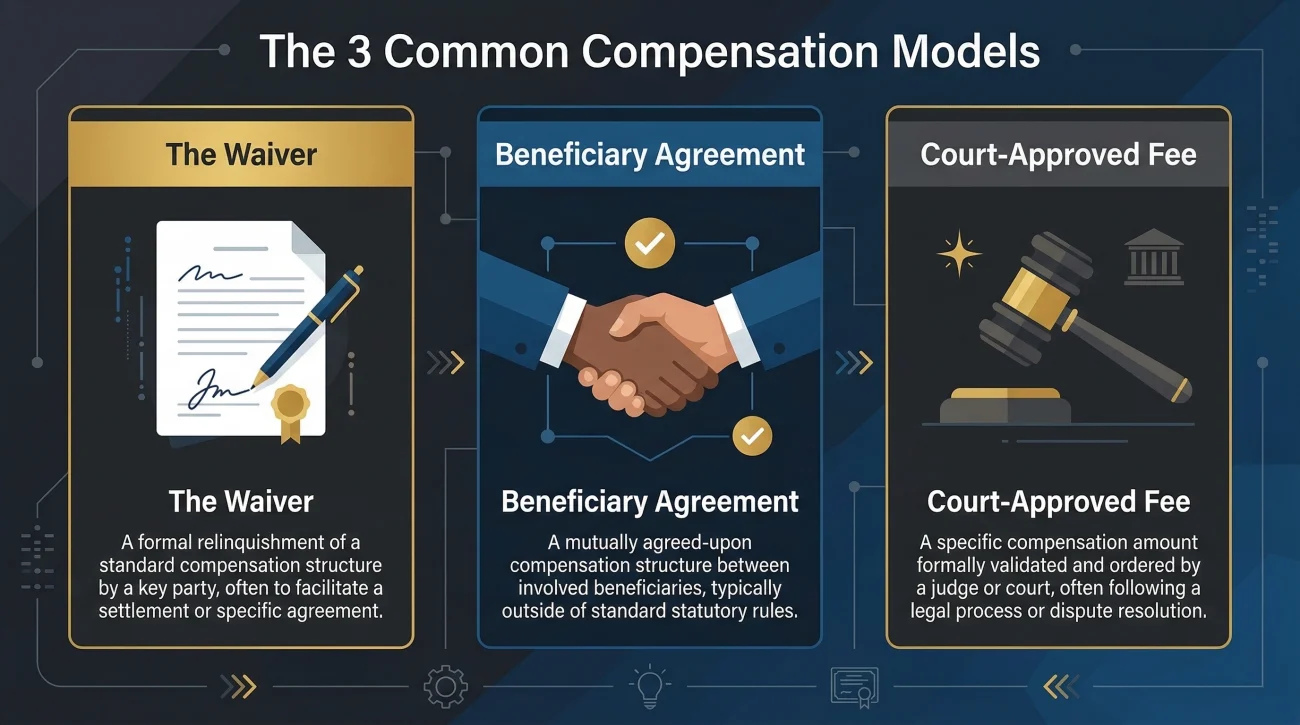
When an executor begins looking into compensation, they often find that the will either dictates a specific rule, or it is entirely silent on the matter. If the will is silent, the approach usually falls into one of three high-level categories. Understanding these categories helps you organize your expectations and your paperwork.
| Compensation Model | How It Generally Works | Common Documentation Needed |
|---|---|---|
| 1. The Waiver | The executor formally declines to take any fee for their time and effort. | A written waiver of compensation (often a specific local form or a signed statement) included in the final packet. |
| 2. Beneficiary Agreement | The executor proposes a fee, and all residuary beneficiaries agree to it in writing before any money moves. | A detailed summary of hours/tasks, transparent communication, and signed consent or release documents from all parties. |
| 3. Court-Approved or Statutory Fee | The executor calculates a fee based on local jurisdictional rules (often a percentage of the estate value or reasonable hourly rate) and submits it for formal approval. | Highly detailed time logs, estate inventory values, and formal petitions prepared with professional local guidance. |
Key Point: Executor compensation is never a secret withdrawal you make in the middle of the night. It must be visible, justifiable, and processed in the full light of day, usually alongside the final accounting.
I often see family-member executors choose the waiver route. They simply want to close the estate cleanly and distribute the assets, feeling that taking a fee from their siblings’ inheritance will create unnecessary tension. There is also a practical tax reason for this: executor compensation is generally considered taxable income for you personally, whereas an inheritance is usually not. This dynamic is a primary reason many family executors simply waive the fee.
However, if you are handling a messy estate, dealing with hostile beneficiaries, or spending hundreds of hours untangling complex assets, you may decide that compensation is necessary. If you go this route, you must transition immediately into a highly organized, documentation-heavy mindset.
What Happens When There Are Co-Executors?
If you are co-executing the estate with a sibling or professional, compensation becomes a shared conversation. Usually, the total maximum fee allowed for administering the estate does not double just because there are two of you. Instead, the total standard fee must be split. How you split it should ideally match the division of labor. If one of you managed the house sale and all the accounting while the other simply signed forms, an even 50/50 split might cause resentment. Hash this out early and put the agreed split in writing.
Compensation vs. Reimbursement: Clearing the Fog
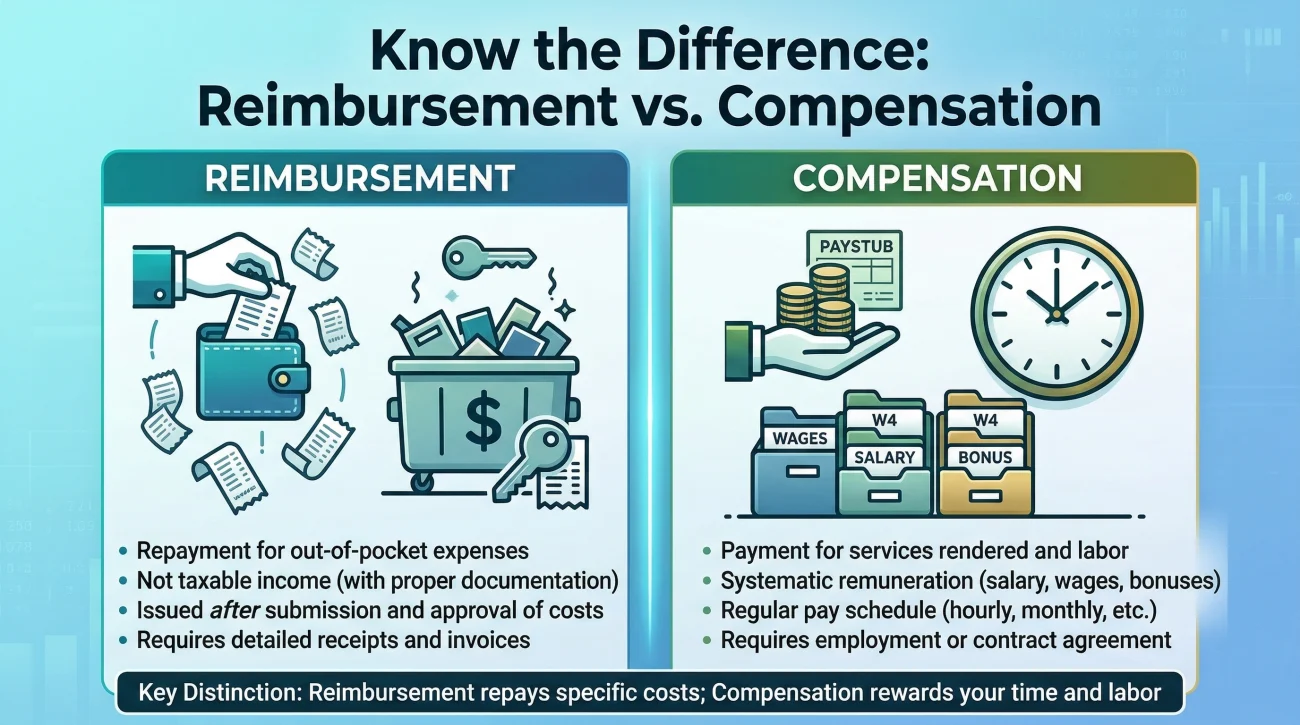
One of the most common mistakes I see in day-to-day admin work is an executor mixing up compensation with reimbursement. If you blend these two concepts together in your records or your communication with beneficiaries, you are practically inviting a dispute.
You must keep these two categories completely separate in your mind, your spreadsheets, and your conversations.
- ✅ Reimbursement is making you whole. This is money you spent out of your own pocket on behalf of the estate. Examples include paying for certified death certificates, renting a dumpster to clean out the house, or paying the final utility bill before the estate bank account was open. You are not making a profit; you are just getting your money back.
- 📄 Compensation is paying for your labor. This is the executor fee. It is payment for the time you spent making phone calls, organizing files, meeting with real estate agents, and dealing with creditors. It is income for your effort.
Why does this distinction matter so much? Because beneficiaries generally understand and accept reimbursements immediately, as long as you provide the receipt. If you show them a receipt for a $400 dumpster, they understand that $400 needs to come out of the estate. But if you tell them you are taking a “$5,000 fee for the dumpster and my time,” they will immediately become suspicious. They will wonder how much the dumpster actually cost and how much you are quietly pocketing.
“Took $1,200 from the estate account to cover the cost of the locksmith, the cleaning supplies, and my time spent cleaning the house.”
“Reimbursement: $200 for locksmith and supplies (receipts attached). Executor Compensation Proposal: $1,000 for 40 hours of property cleanout and vendor management (time log attached).”
Always process reimbursements based on exact receipts. Leave compensation as a completely separate line item that is negotiated, agreed upon, or court-approved later. To successfully navigate that separate line item, however, you need proof of the work you actually did.
The Documentation Habit: How to Log Your Value
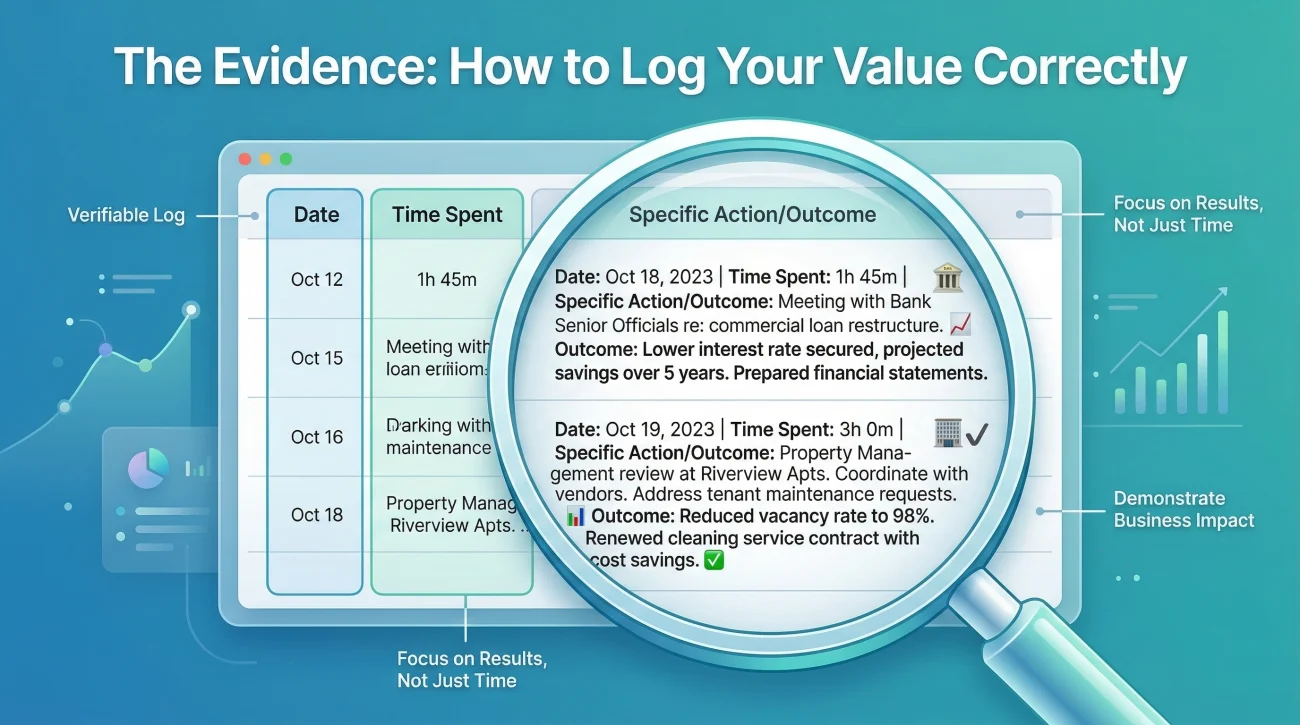
If there is one universal truth about executor compensation rules in general, it is that you cannot simply guess a number at the end of the process and expect everyone to be happy with it. Even if your local jurisdiction uses a percentage-based formula rather than an hourly rate, having a detailed log of your activities is your best defense against accusations that you “didn’t really do anything.”
I always tell executors: if it is not in the log, it did not happen. A beneficiary who lives in another state has no idea that you spent six hours on a Tuesday sorting through dusty filing cabinets trying to find a life insurance policy. They only see the end result. It is your job to document the journey.
A strong executor log does not need to be a complex software system. A simple notebook or a basic spreadsheet works perfectly, as long as you maintain it consistently. Every entry should include three things:
[The Date] + [The Time Spent] + [The Specific Action and Outcome]
⚠️ Warning: Vague entries are dispute triggers. Writing “Estate work – 4 hours” is almost useless if someone challenges your fee. You must be specific about what that work actually entailed.
Example of a Strong Executor Log Entry:
    Date: October 14
    Time: 2.5 hours
    Action: Met with local real estate agent at the property to review comparable sales. Walked the interior to identify necessary repairs prior to listing. Drafted email summary to all beneficiaries regarding the agent's recommendations.

    Date: October 16
    Time: 1.5 hours
    Action: Placed on hold with the main mortgage servicer. Successfully escalated to the bereavement department, provided the death certificate case number, and confirmed a 60-day freeze on late fees.
When you present a log that looks like the example above, beneficiaries rarely push back. They can clearly see the administrative burden you carried. The log transforms your request for compensation from an abstract “fee” into tangible, undeniable work.
What to Do If You Missed Tracking Your Time
A common panic point is realizing you need to take a fee, but you are eight months into the process and haven’t written down a single hour. Do not just make up a blanket number. You can reconstruct a credible log by reverse-engineering your paper trail. Go back through your sent emails, your phone’s call history with the probate court or banks, and your calendar appointments for meeting real estate agents or cleaning the house. It will take you an afternoon, but rebuilding a realistic, line-by-line log from past data is vastly better than handing beneficiaries a vague, unsubstantiated invoice.
Common Misunderstandings That Trigger Conflict
Even with a perfectly reconstructed log and clean reimbursement receipts, dropping the compensation conversation on beneficiaries out of nowhere is a recipe for disaster. The timing of your communication matters just as much as the numbers. When beneficiaries react poorly, the friction often has very little to do with the money itself. Instead, it stems from how the information was handled and from fundamental misunderstandings about how estate administration works.
The “Secret Salary” Fear
Many beneficiaries secretly worry that the executor is siphoning money out of the estate account on a weekly basis as a sort of unmonitored salary. This is why transparency is critical. You should make it explicitly clear early on that compensation is handled transparently and generally at the end of the process, not via random ATM withdrawals.
The “Equal Inheritance” Debate
If you are a sibling executing your parent’s estate, the other siblings may feel that taking a fee disrupts the “equal shares” dictated by the will. It is important to frame compensation neutrally. The fee is an administrative expense of the estate, just like paying a tax preparer or a plumber. It is paid out before the remaining assets are divided into equal shares.
To prevent these misunderstandings from blowing up, you need a communication strategy. Introduce the concept neutrally, much earlier in the timeline.
💡 Pro Tip: If you know you will be seeking compensation, mention it when you send out your early status updates. You do not need to provide a final dollar amount, but planting the seed early removes the element of surprise later.
Subject: Estate Status Update and Next Steps
Hello everyone,
I wanted to provide a quick update. The house is officially listed, and I am working with the accountant to finalize the final tax returns.
As we get closer to the end, I am keeping a detailed log of my time and the administrative tasks required to settle the estate, as I will be submitting a request for executor compensation as an administrative expense before final distribution. I will share that complete log and the proposed fee alongside the final accounting so you can review everything transparently.
Right now, my focus remains on getting the house sold and the tax clearances approved. I will keep you posted.
This approach is calm, professional, and entirely transparent. It treats the fee as standard operating procedure rather than a hidden agenda.
When to Pause and Get Local Guidance
While tracking your time and communicating clearly are universal best practices, there are several scenarios where calculating and taking a fee crosses the line from a simple administrative task into a complex legal maneuver. You should pause and seek guidance from a local estate professional if you hit any of these signals:
- 🛑 The estate is insolvent. If the estate does not have enough money to pay all of its debts, taking an executor fee becomes highly complicated. You cannot simply pay yourself while ignoring secured creditors or government tax liens. The priority of who gets paid first is strictly governed by local rules.
- 🛑 The beneficiaries are actively hostile. If beneficiaries are already threatening to challenge your accounting or hire their own attorneys, attempting to negotiate a fee via email is risky. You will likely need professional help to formalize the request and protect yourself from liability.
- 🛑 The will contains highly specific, unusual fee instructions. Sometimes a will might say, “My executor shall be paid exactly $1,000,” but the estate takes three years and 500 hours to close. Navigating a severely inadequate fee dictated by an old document usually requires local intervention.
In these situations, do not guess. Ask a professional for the exact sequence of steps required to secure your fee safely.
Final Steps: The Finish Line Checklist
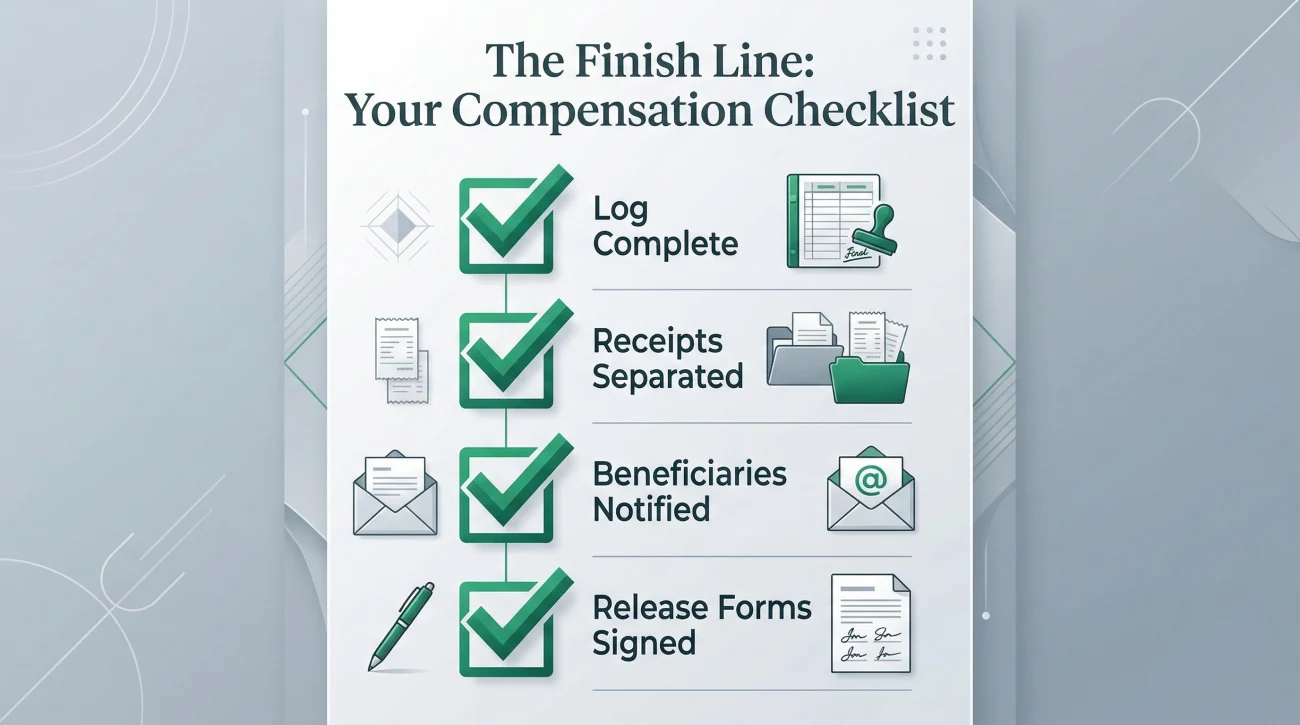
As you approach the end of the process, your executor compensation needs to be woven seamlessly into the broader closing documents. A clean exit means your fee appears clearly as a line item under administrative expenses on your final accounting, never hidden inside a vague “miscellaneous costs” category.
Writing yourself a large check for your fee before the final accounting is approved by the beneficiaries is a massive operational risk. If a dispute arises and the fee is disallowed, you could be forced to pay that money back out of your own pocket. To avoid that stress, ensure you have ticked these boxes before any compensation money actually moves:
- ✅ Log is complete: Your hours and tasks are documented and ready to share.
- ✅ Receipts are separated: Out-of-pocket reimbursements are processed independently from your labor fee.
- ✅ Beneficiaries are notified: The intent to take a fee was communicated early, avoiding final-hour surprises.
- ✅ Release forms are signed: Beneficiaries have reviewed the accounting and signed receipt and release forms acknowledging the fee and final distribution amounts.
Managing your compensation requires a delicate balance of firmness and transparency. You are absolutely allowed to value your time, and managing an estate is undeniably hard work. Keep your records unassailable, respect the sequence of approvals, and you will protect both your relationships and your peace of mind as you finally close the estate.
❓ FAQ
💼 Does the executor get paid before or after beneficiaries?
Executor compensation is generally classified as an administrative expense of the estate. These expenses, along with valid debts and taxes, are typically paid out before the remaining assets are distributed to the beneficiaries. However, the actual payment often happens right at the end, alongside final distributions, once all parties have agreed to the accounting.
🔄 Can I change my mind about taking an executor fee later?
Generally, yes, as long as the estate has not been formally closed or final distributions made. If you initially planned to waive the fee but the estate became unexpectedly complicated, you can usually still claim compensation. However, you must communicate this change immediately and ensure you have reconstructed accurate time logs to justify it.
🤷♀️ How do beneficiaries know how much the executor gets paid?
Beneficiaries should see the exact amount clearly listed on the final estate accounting document. A best practice is to communicate your intent to take a fee early on, and then provide a transparent time log alongside the final accounting so they understand exactly how the number was calculated.
🧾 Can I just pay myself an executor fee whenever I want?
It is generally a very bad idea to take ad-hoc compensation payments throughout the process. Taking early payments without written beneficiary consent or formal approval can lead to severe disputes and accusations of mishandling funds. Compensation is usually calculated and settled at the end.
🏦 Is reimbursement the same thing as executor compensation?
No. Reimbursement is simply getting your own money back for out-of-pocket estate expenses (like buying cleaning supplies or paying a locksmith). Compensation is the actual fee you earn for your time and labor. They must be tracked and reported as completely separate items.
😡 What if a beneficiary refuses to agree to the executor fee?
If a beneficiary formally objects to your proposed fee and refuses to sign a release, the informal agreement path is closed. You will typically need to pause, consult a local professional, and submit your fee request (backed by your detailed time logs) for formal approval according to local jurisdiction rules.
📖 What if the will doesn’t say anything about paying the executor?
If the will is silent on compensation, it does not mean you cannot get paid. In these cases, the fee is usually determined either by a mutual written agreement among all the residuary beneficiaries or by the default rules and formulas established by your local jurisdiction.
📉 Is the executor fee tax-deductible for the estate?
Yes. In many cases, executor compensation is considered a valid administrative expense. This means it can often be deducted from the estate’s tax returns, which is something you should definitely flag for the estate accountant when preparing final filings.
⚖️ How is a “reasonable” hourly rate determined?
If your jurisdiction allows a “reasonable rate” instead of a strict percentage, you cannot simply charge your usual professional salary rate (e.g., if you are a highly paid software engineer). Rates are typically benchmarked against what a local administrative professional or fiduciary would charge for similar clerical and management tasks.
🛑 Can I take my fee if the estate has unpaid debts?
If the estate is insolvent (meaning there is not enough money to pay all debts), you cannot simply take your fee and ignore the creditors. Administrative expenses often have high priority, but navigating an insolvent estate requires strict adherence to local priority rules, and you should seek professional guidance.
⚠️ Disclosure: I'm not an attorney and nothing on this site is legal or tax advice. The content covers process, organization, and workflow—the operational side of estate administration. For legal interpretation, jurisdiction-specific deadlines, contested situations, or tax matters, please work with a licensed professional in your state.