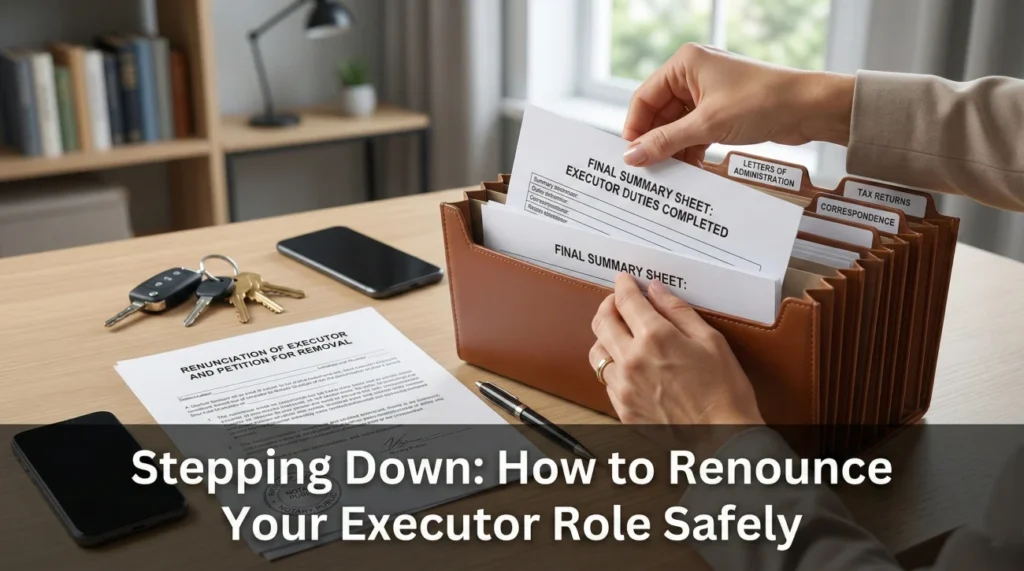
- Declining the role of executor is a valid choice, but it requires a formal exit strategy to protect both you and the estate.
- If you decide to step down, you must immediately pause any actions that could be seen as managing assets or paying debts.
- Even if you live far away or are the only person named in the will, there are legal safety nets to appoint a replacement.
- Passing the baton effectively means organizing physical items, digital access, and known information before transferring them to the successor.
Making the Decision to Step Away
One of the most common questions people ask me behind closed doors is simply, can you refuse to be executor? Often, they whisper it, feeling a deep sense of guilt for even considering it. You might have promised a parent years ago that you would handle their affairs, but now that the time has come, the reality of your life makes it impossible. You might live entirely across the country, be dealing with your own health issues, or foresee a highly fractured family dynamic that you simply do not have the emotional bandwidth to manage.
In my experience supporting estate administration workflows, I see many people try to force themselves into the role out of obligation. What usually happens is a slow, agonizing process. Deadlines slip, mail piles up, and communication with the family breaks down. I often tell people that stepping down cleanly and early is actually a tremendous gift to the estate. It allows someone with the time, proximity, and energy to step in before any real damage is done to the property or the timelines.
If you have not yet been officially appointed by the court, you are not trapped. You have the right to decline. The focus now must shift from feeling guilty to managing the transition like a professional. A structured exit ensures that whoever takes your place has exactly what they need to succeed.
Key Point: Do not just fade out or stop answering emails. A silent retreat creates administrative chaos. You must formally renounce your role so the legal process can move forward.
Recognizing that you need to step away is the hardest part. Once you make peace with that decision, you need to know that your reasons are valid and shared by thousands of others in the exact same position.
Valid Reasons for Declining the Role
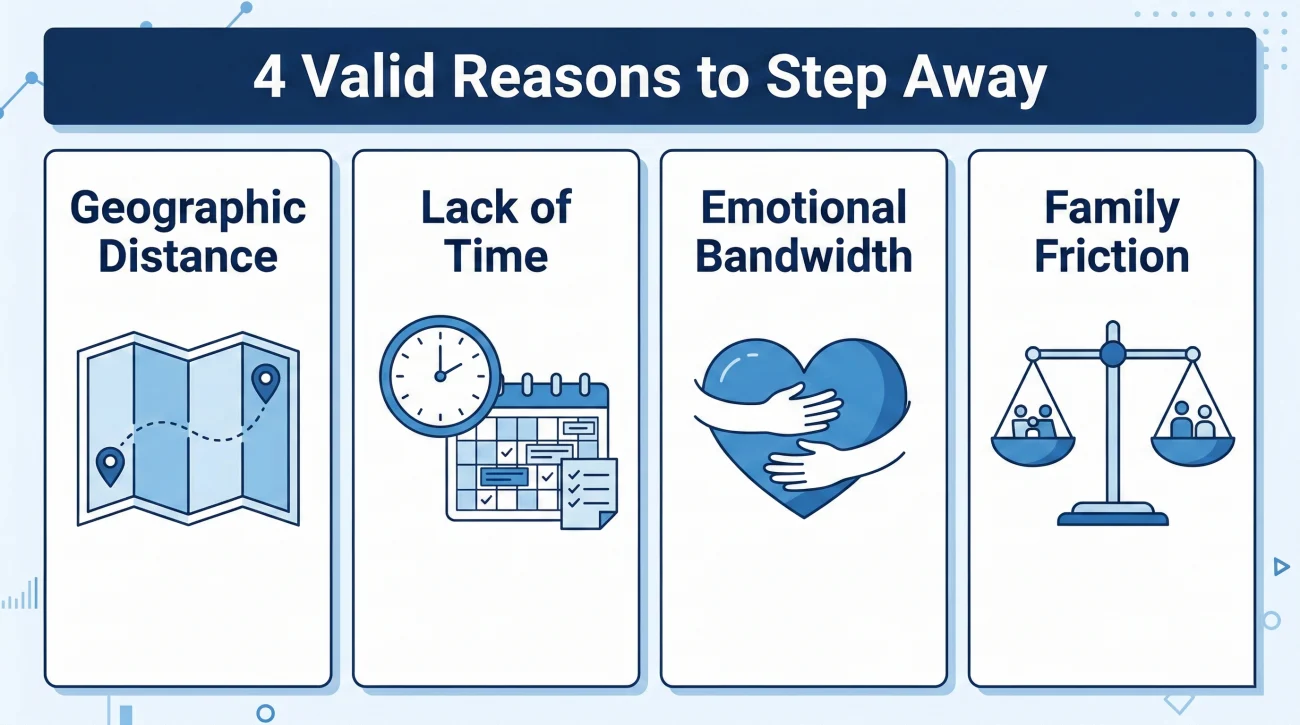
People often worry that they need a complex legal excuse to decline executor of estate duties. In reality, courts and professionals see people step down every single day for entirely practical reasons. You do not have to prove that you are incapable. You only need to communicate that you are unwilling or unable to serve at this time.
Here are the patterns I see most frequently when someone decides to step away:
- 📍 Geographic distance: Managing physical assets, cleaning out a house, and attending local appointments is incredibly difficult from three states away. A local successor can secure the home immediately and handle mail daily.
- ⏳ Lack of time: Estate administration can easily consume ten to twenty hours a week in the early months. If you have a demanding career or young children, the math simply does not work.
- 💔 Grief and emotional bandwidth: Sometimes the loss is too close. You cannot navigate automated bank phone trees and negotiate with creditors when you are struggling to get through the day.
- ⚖️ Family friction: If you know that your siblings will scrutinize your every move and potentially cause disputes, stepping aside for a neutral third party or another sibling is often the smartest preservation of family peace.
Once you recognize your limits and decide to step down, your immediate priority is to hit the brakes on any administrative tasks you might have been tempted to start.
What to Pause Immediately
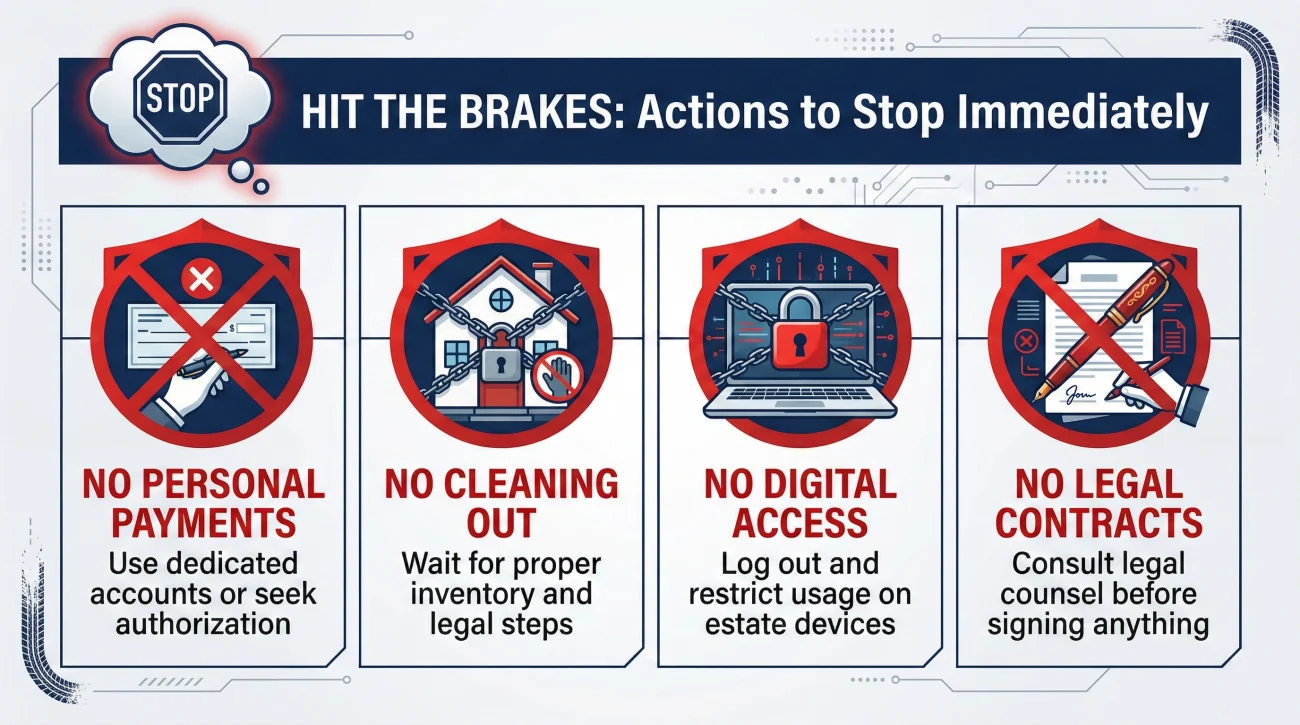
The moment you decide to decline, you must stop acting like the executor. This is a critical boundary. If you continue to manage assets or pay bills, you blur the lines of responsibility. Acting on behalf of the estate without formal authority, or after deciding not to seek it, can complicate the handoff and sometimes make you personally liable for mistakes.
Here is what you must pause right away:
- 🛑 Do not pay the deceased person’s bills from your own personal bank account. The successor will need to handle debts using official estate funds later.
- 🛑 Do not clean out the house and give away personal items, even if you know who is supposed to get them.
- 🛑 Do not attempt to log into the deceased person’s bank accounts to move money, even if you know their passwords.
- 🛑 Do not sign any contracts or agreements on behalf of the estate, such as hiring a real estate agent or a clearing service.
What If You Already Started Doing Things?
This is a major source of anxiety. Many people pay a utility bill or cancel a subscription in the days following a death, only to realize weeks later that the overall job is too big for them. Can you still step down?
In most cases, yes. If you only took minor steps to preserve the estate, like locking the doors, forwarding the mail, or paying a single urgent power bill to keep the pipes from freezing, you can usually still resign as executor before probate officially opens. You simply need to document exactly what you did and hand those records over.
However, if you have already sold a vehicle, distributed money to heirs, or officially opened the estate in court, stepping down becomes much more complicated. In those scenarios, you cannot just walk away; you will likely need to file formal accounting reports with the court to explain everything you handled before resigning. If you are in this deep, consulting an attorney before resigning is essential.
⚠️ Warning: Secure the property, lock the doors, and wait. Taking irreversible actions before the successor is officially appointed creates a massive accounting headache.
With the brakes fully applied to the administrative work, it is time to let the relevant parties know about your decision.
How to Communicate Your Decision
The way you communicate your resignation sets the tone for everything that follows. You want to be clear, neutral, and definitive. If you sound hesitant, family members may try to pressure you into changing your mind. If you sound defensive, it can spark unnecessary arguments.
I always recommend putting this in writing. You will likely need to communicate with two groups: the family (or named heirs) and any professionals who are currently involved, such as an estate attorney.
Scripting the Message to the Family
Keep it brief and focused on the best interest of the estate. You do not need to list every personal reason why you cannot do the job.
Hello everyone,
As we navigate this difficult time, I have been looking closely at what is required to manage [Name]’s estate. After careful consideration, I have realized that due to my current [location/work schedule/family commitments], I cannot dedicate the time and attention this role requires.
I want to ensure the estate is handled efficiently, so I will be officially declining the role of executor. I am currently organizing the documents I have found so I can hand them over smoothly to whoever takes over.
Thank you for understanding.
💡 Pro Tip: If you are sending this email, bcc yourself. Having a timestamped copy of exactly when you informed the family is a smart organizational habit.
Communicating with the Attorney
If the deceased person had an attorney holding the original will, or if the family has already contacted a legal professional, notify them immediately. They will guide you on the specific paperwork required to make your resignation official with the local system. There is no strict calendar deadline to sign a renunciation form, but the rule of thumb is the sooner the better, ideally before the estate is formally opened in court.
When you reach out, keep it strictly professional. You do not need to justify your personal life choices or family drama to the lawyer. I always recommend using a simple, three-part framework for this message to keep things moving efficiently:
[State your intention clearly] + [Ask for the required form] + [Offer to hand over documents]
Here is what that framework looks like in a real email. Notice how it gets straight to the point while still showing that you are organized and ready to cooperate with the transition:
Dear [Attorney Name],
I am named as the executor in the will for [Deceased Name]. Please accept this email as notice that I am unable to serve in this capacity and wish to formally decline the role.
Could you please provide the necessary renunciation form or advise me on the next steps to make this official? I currently have some physical documents (including a copy of the will and house keys) and am ready to hand them over to the successor once they are established.
Thank you.
The attorney will usually reply with a document for you to sign (often requiring a notary). Once everyone is informed, your final active duty is to gather what you have and pass it along properly.
The Executor Handoff Checklist: Passing the Baton
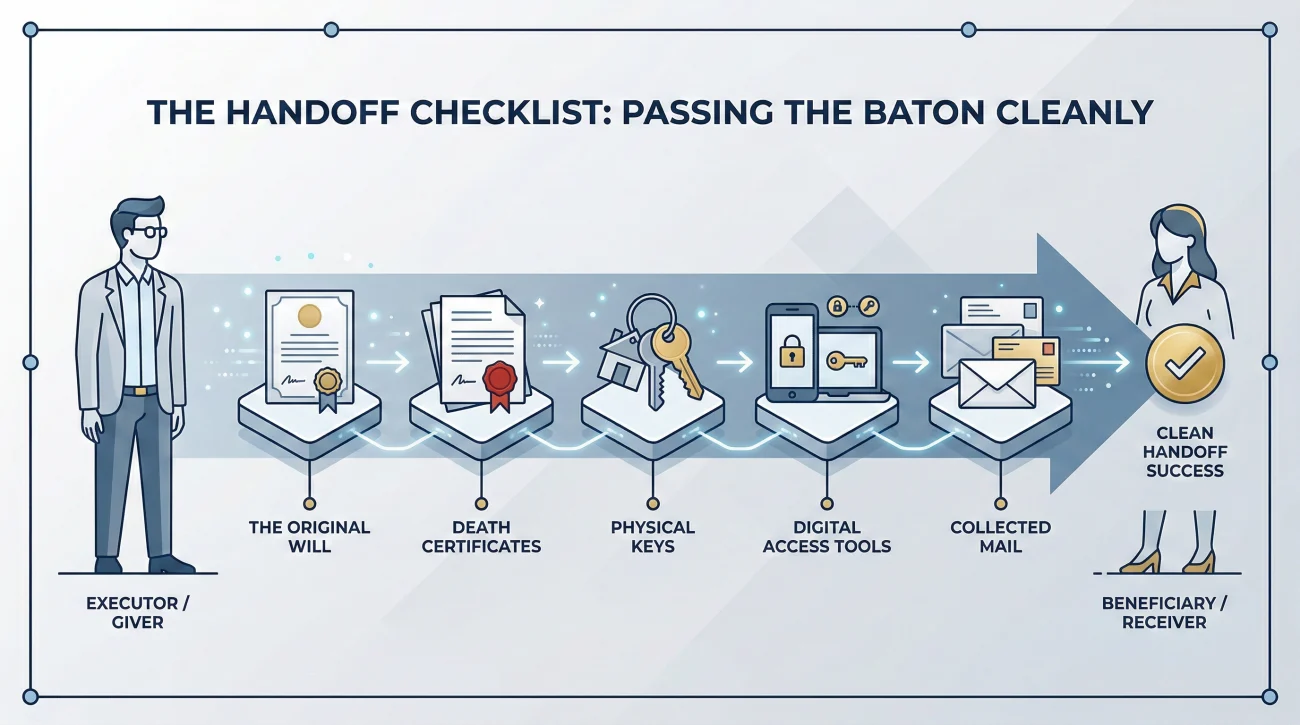
Just because you are stepping down does not mean you can drop everything on a table and walk away. In many cases, you are the person who was closest to the deceased, which means you might be holding critical items. A disorganized handoff is one of the most common reasons an estate gets stuck in neutral for months.
In day-to-day admin work, I see a clear difference between a messy exit and a clean one. A messy exit involves handing the next person a plastic bag full of unopened mail. A clean exit involves a structured transfer of knowledge, physical assets, and digital access.
Physical Items and Digital Assets to Transfer
You need to locate and secure any items that belong to the estate. If you are stepping down due to geographic distance, do not mail original, irreplaceable documents without using certified, tracked shipping. Keep a list of exactly what you are handing over.
- 📄 The original will, if it was in your possession.
- 📄 Any original death certificates you ordered or received.
- 🔑 All physical keys to real estate, vehicles, or safe deposit boxes.
- 📱 Digital access tools: The deceased person’s mobile phone, laptop, and chargers. These are crucial for the successor to bypass two-factor authentication or find contacts.
- 💻 Password managers: If you know the master password to their digital vault, or have a physical notebook of passwords, secure this immediately.
- ✉️ Any physical mail you have collected from their residence.
The Knowledge Transfer
Write down what you know. You do not have to do a full inventory, but a one-page summary can save the next person weeks of detective work. List any known bank accounts (just the institution name is fine), ongoing bills that might need attention like a mortgage, and the contact information for their accountant or financial advisor.
Handing over a stack of loose papers and saying, “I think there is a life insurance policy somewhere in there, and the water bill is probably due soon.”
Handing over a single folder and saying, “Here is the mail from the last two weeks, the keys to the house, and a typed list of the three bills I know arrive every month.”
With the physical and digital items handed over, you might wonder who actually takes on the burden next.
What Happens to the Estate After You Decline?
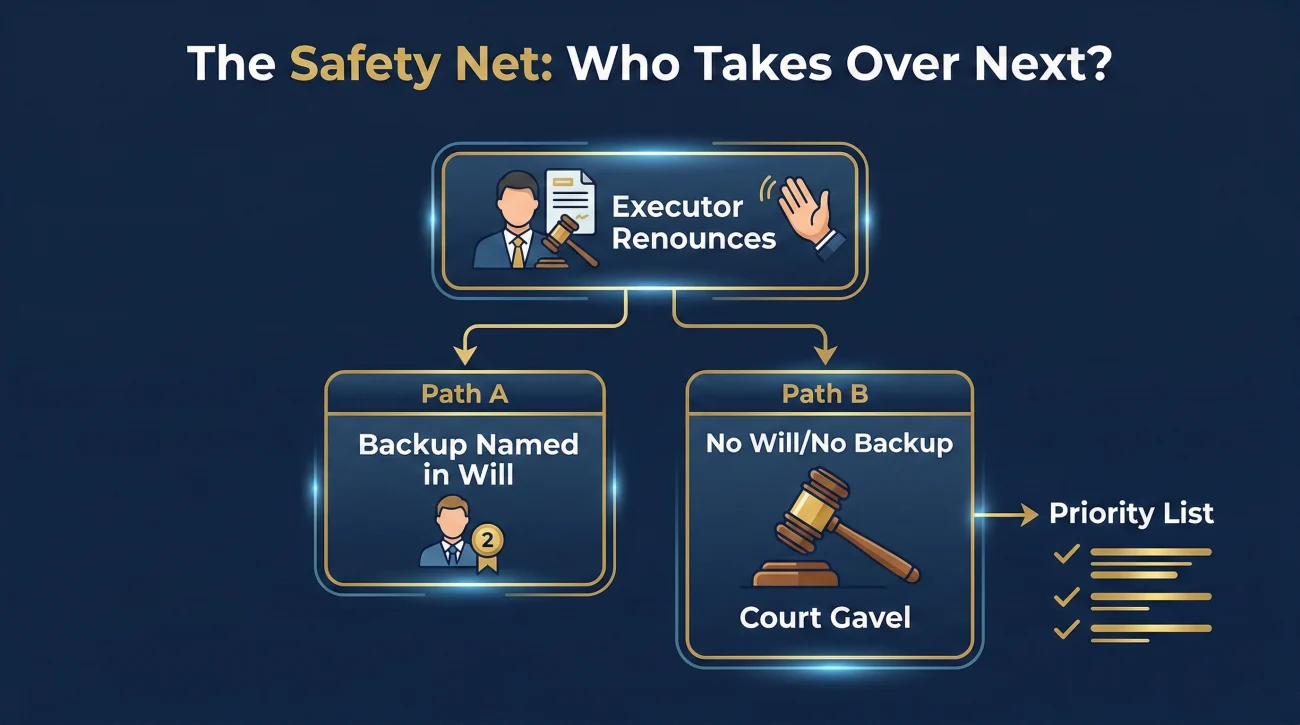
Many people hesitate to step down because they fear the estate will fall apart. Usually, the legal system has built-in safety nets for exactly this scenario. When you formally renounce your role, a predefined chain of events takes over depending on the documents left behind.
If There Is a Backup Executor
If there is a will, the document almost always names a backup or successor executor. Once your written refusal is filed, this backup person steps up to the plate. You do not have to train them. They will go through the standard legal process to get their authority. If the family is unsure how the new person will actually get their legal authority, they can map out the process using our probate court checklist for executors.
What If You Are the Only Executor Named?
This is a major source of guilt. People think, “If I do not do it, no one will.” If you are the sole executor and you step down, or if the deceased passed away without a will entirely (an intestate estate), the system does not freeze.
When there is no will or named backup, state law simply provides a clear priority list of who has the right to step up next, usually starting with a surviving spouse or adult children. The court will appoint an administrator from that list who volunteers for the job. The court process for appointing an administrator is slightly different, but the end result is the same: someone else gets the legal authority to manage the estate.
Can You Choose Your Replacement?
Sometimes. If you are stepping down, you might be asked to sign a document that not only renounces your role but also consents to a specific person taking over, like your sibling or a professional fiduciary. You cannot rewrite the will to force a replacement, but courts often respect the agreement of the family if everyone consents to the new administrator.
Regardless of who takes over, your final step is making sure you have proof that you walked away cleanly.
Creating a Clean Break: Documenting Your Exit
You need to protect yourself. A year from now, if an heir claims that a valuable watch went missing, you want to be able to show exactly what you handed over and when you officially stepped away.
The formal renunciation document you sign for the court is your primary protection. However, creating a simple “Exit Log” for your personal records provides an extra layer of security.
Whenever you hand items over to the successor executor or the attorney, use a receipt format. It does not have to be a legal document; a simple email confirming the exchange is often enough.
To: [Successor Name]
Subject: Confirmation of handed-over items
Hi [Name],
Just to keep our records straight, I am confirming that we met today and I handed over the following items:
– Two sets of house keys
– One file folder containing the original will and three death certificates
– The mail collected between Oct 1 and Oct 12
Please reply to confirm you received these. Thank you.
Save their reply in a digital folder on your computer along with your emails to the attorney and a copy of your signed renunciation form. You hope you never need to look at this folder again, but having it brings immense peace of mind.
Final Thoughts on Stepping Down
Choosing not to serve as an executor is not a failure; it is a highly responsible choice. It is far better to recognize your limits early than to take on a massive administrative project that you cannot finish.
When you pass the baton cleanly, you give the estate the focused attention it requires. But more importantly, you give yourself the grace to step back and simply be a grieving family member. You do not have to act as the administrator of the estate to honor the memory of the person you lost.
❓ Frequently Asked Questions About Declining the Executor Role
🛑 Can you refuse to be executor if you already said yes years ago?
Yes. Promising a family member you would manage their affairs years ago does not legally bind you to the role today. Circumstances change, and you are free to decline when the time actually comes.
⏳ Is there a time limit to decline being an executor?
You should step down as soon as you make the decision, ideally before the estate is formally opened in court. If you wait months while doing nothing, or if you start heavily managing assets and then try to quit, the exit process becomes much more complicated and may require court accounting.
📝 Do I need to hire my own lawyer just to say no?
In most routine cases, no. If the estate already has an attorney, they can provide the standard renunciation form for you to sign. You typically only need independent counsel if family disputes are actively escalating.
💰 If I renounce my role, do I lose my inheritance?
No. Your job as an administrator is completely separate from your status as a beneficiary. Refusing the job does not erase your name from the will or reduce your inheritance.
🔄 Can I suggest someone else to take my place?
Yes. Many court forms allow you to decline the role while simultaneously consenting to the appointment of another specific person, such as a sibling or a professional fiduciary, though the court makes the final decision.
🤝 Can I step down but still help organize things?
You can help as a family member by sorting mail or cleaning the house. However, you cannot sign official documents, negotiate with creditors, or direct bank transfers once you have stepped away.
🏦 Should I notify the bank that I am not going to serve?
You do not need to contact the deceased person’s banks. The successor will handle notifying all financial institutions once they receive their official legal authority from the court.
📄 How do I formally decline executor of estate duties?
You will sign a renunciation form, which is then filed with the local probate court. The estate attorney or the local court clerk can provide the exact document needed for your jurisdiction.
👥 What if my siblings are angry that I will not do it?
You cannot be forced into the job. Keep your communication firm and in writing. Hand over the necessary items to the next in line and distance yourself from arguments about the administration.
⚖️ Will the state take the money if nobody wants to be executor?
No. The assets remain with the estate. If family members refuse, the court will eventually appoint a public administrator or a professional fiduciary to distribute the assets according to the law.
⚠️ Disclosure: I'm not an attorney and nothing on this site is legal or tax advice. The content covers process, organization, and workflow—the operational side of estate administration. For legal interpretation, jurisdiction-specific deadlines, contested situations, or tax matters, please work with a licensed professional in your state.