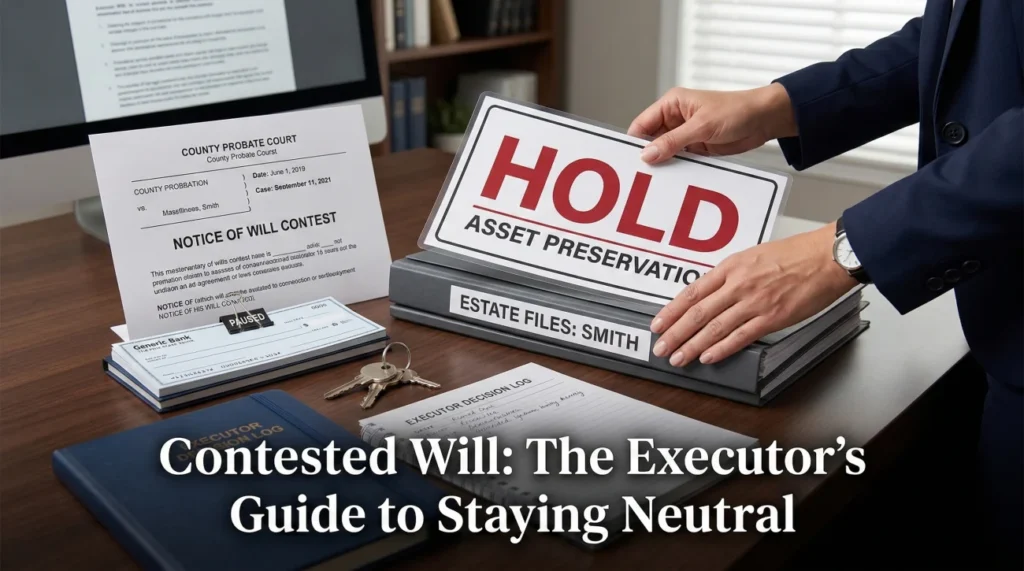
- The immediate shift: A will contest changes your job from “moving the estate forward” to “maintaining the status quo.”
- The pause list: Halt all irreversible actions, including major asset sales, property cleanouts, and any form of inheritance distribution.
- The continuity plan: Keep paying essential upkeep bills (utilities, insurance) to prevent the property from losing value, and secure digital accounts.
- The operational shield: Move all communication to writing, maintain a strict and factual decision log, and separate your “executor hat” from your “beneficiary hat.”
When Family Friction Turns Into a Formal Dispute
When someone formally challenges the validity of a will, the quiet task of organizing paperwork suddenly feels like walking through a minefield. Over the years of helping people build estate administration systems, the moment a dispute arises is the most common point of panic. The predictable timeline goes out the window, communication channels tighten, and your documentation habits are suddenly put under a microscope.
People often ask me what this means in practical terms. Administratively, a contest acts as a massive roadblock. The court is essentially pausing your authority to execute the will’s instructions until a judge determines if that document is actually valid.
We are not going to cover legal strategies or litigation tactics here. That is strictly territory for an attorney. Instead, we are focusing on the operational reality. We will look at what actions you must freeze immediately, how to keep the estate from falling apart during a long delay, and how to build a factual record-keeping system that protects you from liability.
The Immediate Operational Shift: Embracing Neutrality
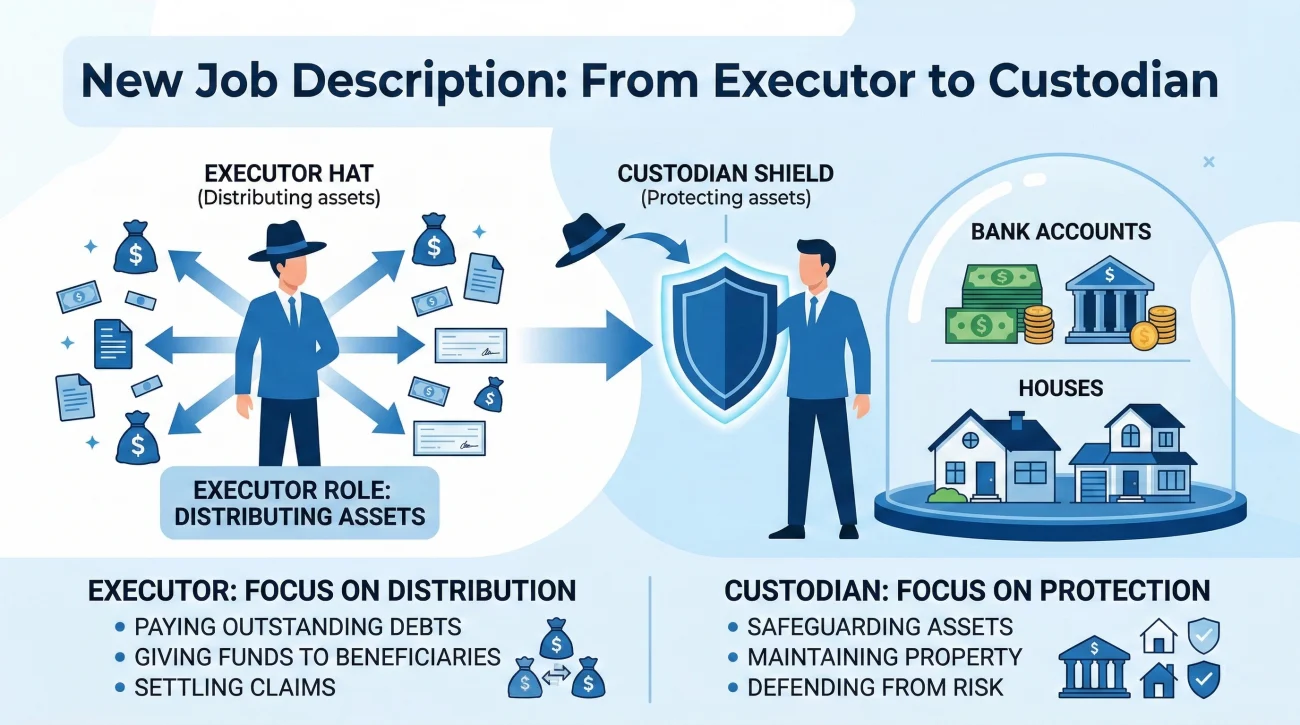
In a standard administration, your goal is to efficiently gather assets, clear debts, and distribute the remainder to the heirs. A contest flips that objective. Your primary job is now simply safeguarding the assets.
In my experience, the biggest mental hurdle an executor faces right now is stepping back from the family drama. It is incredibly common to feel defensive, especially if you were close to the person who passed away or if you drafted the will with them. However, administratively, your job is not to take sides. Your job is to act as a neutral caretaker. If you are still trying to understand the baseline rules of your role, review the overall Probate Court Checklist for Executors. A contest halts your progress on that map until the court issues new orders.
Key Point: A will contest legally changes your job description. You are no longer actively executing the will; you are acting as a temporary custodian to prevent the estate from losing value.
Timelines, Scrutiny, and the “Beneficiary Trap”
If you previously told family members that they might see a resolution in six to nine months, you need to mentally reset. A contested process rarely ends quickly. Instead of standard processing times, your timeline is now dictated by legal discovery phases, mandatory mediation scheduling, and backlogged court dockets. Expect a long delay.
Beyond the timeline, the level of scrutiny on your actions increases exponentially. In a peaceful estate, choosing a specific junk removal company to clear out a garage happens without anyone asking twice. In a contested scenario, every dollar spent might be questioned by the opposing attorney.
This scrutiny is especially dangerous if you are navigating the “Executor as Beneficiary” conflict. Often, the person named as executor is also receiving a large share of the estate. When a dispute hits, you must strictly separate your “executor hat” from your “beneficiary hat.” You cannot use your administrative access to the house to secure items you personally want, nor can you use estate funds to hire a lawyer to defend your personal inheritance. The estate’s lawyer defends the estate; your personal lawyer defends your share. Blurring these lines is a common way executors get removed for breach of fiduciary duty.
The “Pause List”: What to Stop Doing Right Now
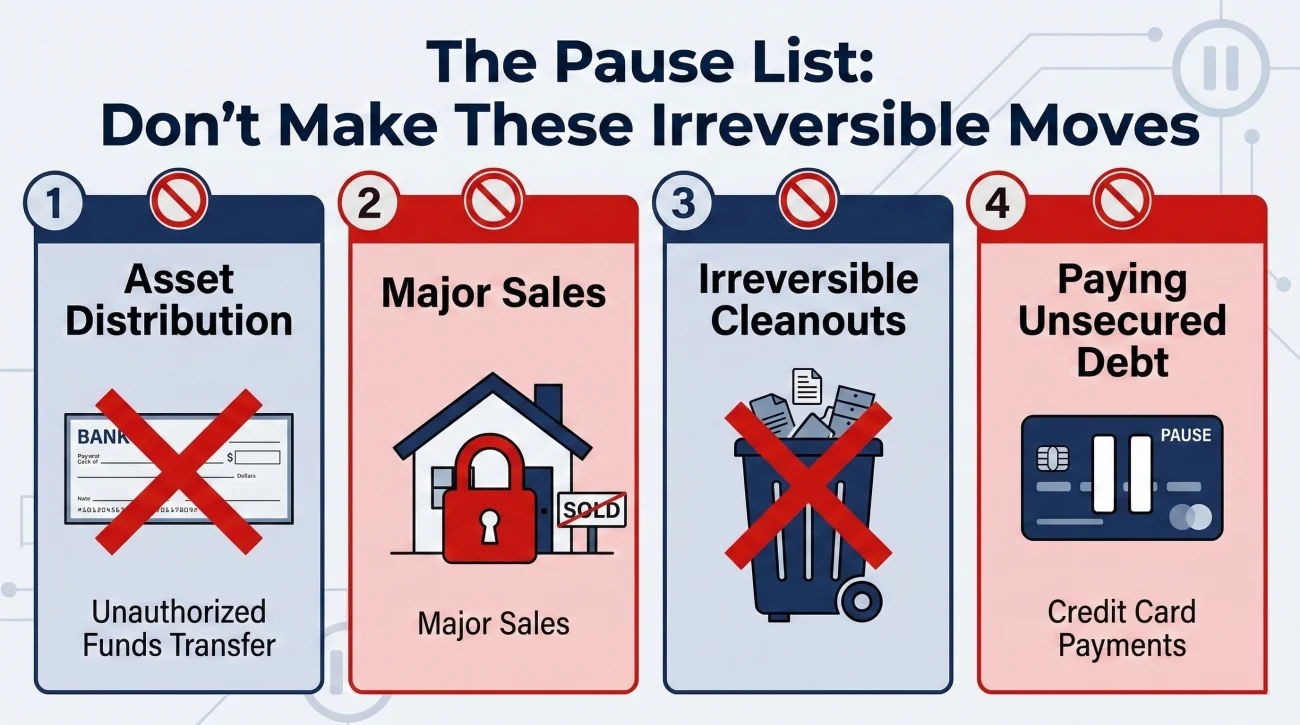
When the validity of the will is questioned, you must halt any actions that cannot be easily undone. Proceeding with major, irreversible decisions during a dispute is one of the fastest ways to create personal liability.
Here is a practical list of administrative actions that generally need to be paused immediately:
- 🛑 Asset distributions: No checks written to heirs, no handing over family heirlooms, no transferring vehicle titles, even if the disputed will explicitly states who gets what.
- 🛑 Major asset sales: Pause the sale of real estate, businesses, or large investment portfolios unless there is an emergency risk of foreclosure (which requires immediate court intervention).
- 🛑 Irreversible cleanouts: Do not donate the contents of a house or throw away paperwork. You might accidentally dispose of something that is later deemed legally relevant to the dispute.
- 🛑 Paying unsecured debts: Pause paying credit card bills or personal loans until you have clear legal guidance on how the contest impacts the estate’s solvency and creditor priority.
What Can (and Usually Must) Continue Safely
Freezing distributions does not mean abandoning the property. You are allowed, and usually required, to keep the estate from losing its baseline value.
| Category | What is Paused | What Continues (Safeguarding) |
|---|---|---|
| Real Estate | Listing the home for sale, major cosmetic renovations. | Paying home insurance, property taxes, basic lawn care, keeping utilities on to prevent frozen pipes. |
| Digital Assets | Deleting social media profiles, permanently closing email accounts. | Securing passwords, downgrading paid subscriptions to free tiers to stop recurring charges. |
| Finances | Paying off credit cards, closing core accounts. | Filing the deceased’s final tax return (deadlines don’t pause), collecting incoming mail. |
What if the estate account runs out of money?
A common operational nightmare during a prolonged dispute is that the estate runs out of liquid cash to pay the property taxes or insurance, but the accounts are frozen or the assets are tied up in a house. Do not automatically start paying estate bills from your personal checking account. While you might think you will be reimbursed later, a dispute makes reimbursement uncertain. If cash flow is critically low, notify your attorney immediately; they may need to petition the court for a special order to liquidate a specific asset just to cover upkeep.
Information Hygiene: Building Your Single Source of Truth
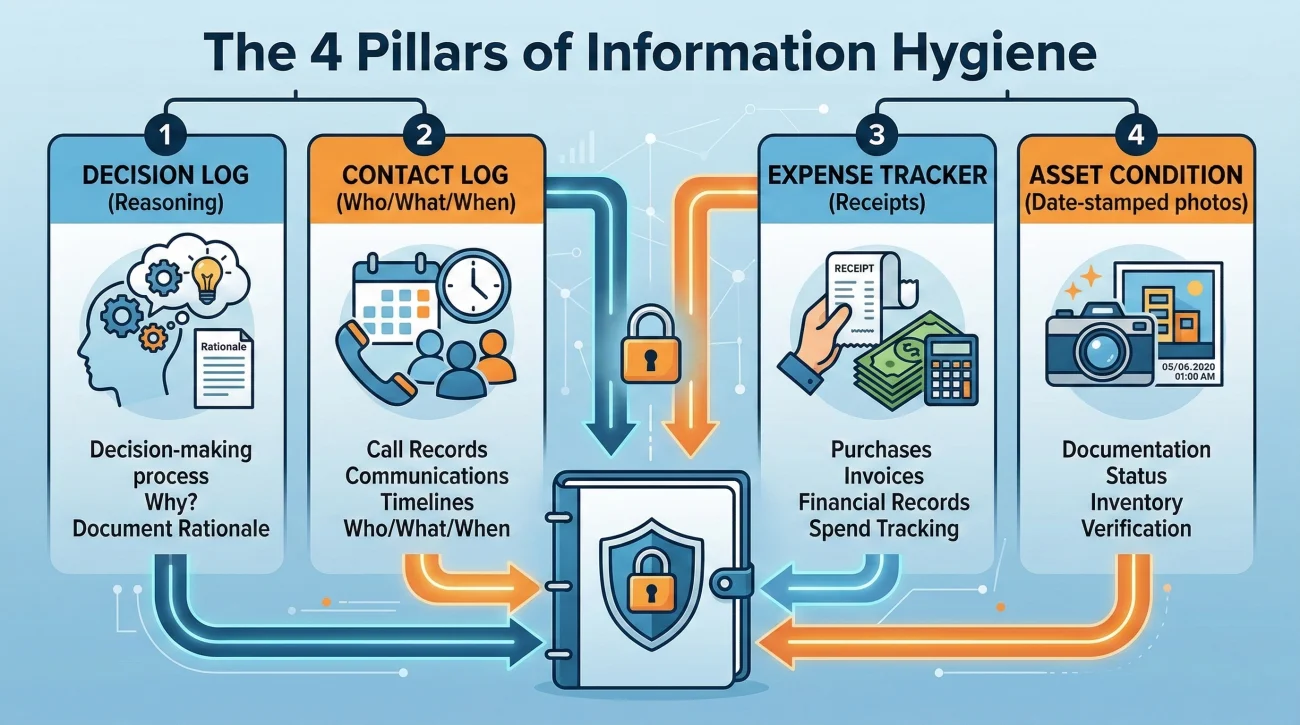
In a disputed environment, memory is your enemy. You cannot rely on “I think I told him that on Tuesday.” You need a rigorous system of information hygiene. I recommend setting up a dedicated binder or a secure digital folder exclusively for the estate, containing four specific logs.
- ✅ The Decision Log: A running list of administrative choices. If you hire a plumber to fix a leak at the estate property, log the date, the reason (preventing water damage), and the vendor chosen.
- ✅ The Contact Log: A spreadsheet tracking every phone call, email, or letter received. Log the date, the person’s name, their request, and your exact response.
- ✅ The Expense Tracker: Every penny that leaves the estate account for upkeep needs to be logged with a corresponding receipt. Never mix personal funds with estate funds.
- ✅ The Asset Condition Log (Photos): Before the dispute drags on, take date-stamped photos of every room in the house, the exterior, the vehicles, and any visible valuables.
A common mistake I see is blending emotional reactions with these administrative facts. When you log a phone call, it must read like a sterile incident report. Stick entirely to who, what, when, and where.
“Sarah called and was being totally unreasonable again about the jewelry. I told her to stop bothering me because she knows the court froze everything.”
“Oct 12, 3:00 PM. Phone call from Sarah. She requested access to the house to retrieve a necklace. I declined the request, stating that all property access is currently paused due to the ongoing dispute.”
I have seen cases where simply presenting a highly organized contact log stopped an accusation of “the executor is secretly ignoring the family” dead in its tracks. Good records are your armor.
Communication Rules When Dealing with Family and Creditors
Because your records are so vital, the way you communicate must change to support those records. Family members anxious about their inheritance may pressure you for updates. Simultaneously, creditors may continue calling because their automated billing systems don’t care about family disputes.
The best approach is to move all communication to writing. If someone calls you with a demand, listen politely, do not argue, and follow up with an email summarizing the call. This creates a clean paper trail.
Here is a safe, practical formula you can use when someone makes a request you cannot fulfill due to the dispute:
[Acknowledge the request] + [State the factual limitation] + [Offer the next administrative step]
If a family member emails you asking for an advance on their expected inheritance, you might reply like this:
Subject: Re: Request for preliminary distribution
Hello [Name],
I received your message requesting a check from the estate account.
Because there is a formal dispute pending regarding the will, my authority to make distributions is legally paused. I cannot release any funds or property while this court process is ongoing.
Once the court resolves the matter and provides updated orders, I will notify everyone of the new timeline.
Thank you for understanding,
[Your Name]
💡 Pro Tip for Creditors: If bill collectors call, use the exact same formula. “I acknowledge the debt claim. The estate is currently frozen due to a formal dispute in probate court. Please submit your claim in writing to [Address], and it will be reviewed once the court lifts the freeze.”
Preparing for a Professional Consult: The Packet to Bring
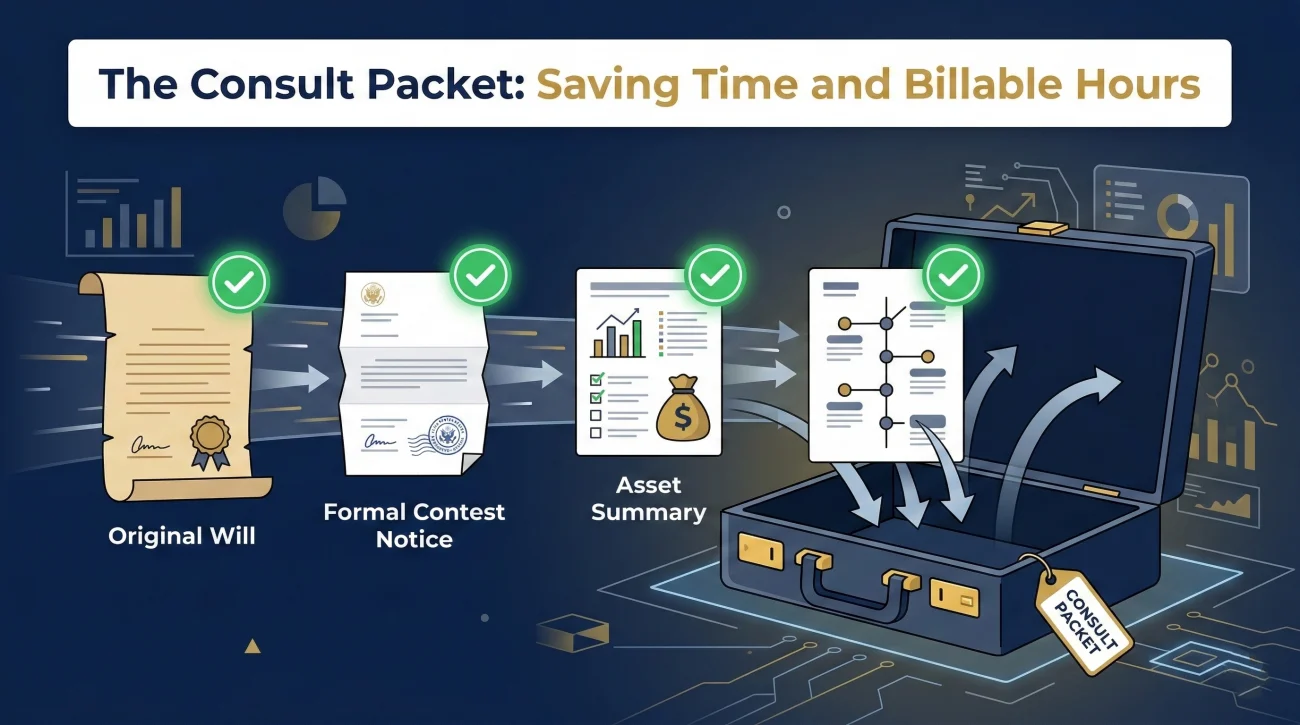
All the strict communication rules and factual logs you just built serve a dual purpose: they protect you, and they become the exact raw materials you need for legal guidance.
A will contest is not something you navigate alone using internet research. You must sit down with a legal professional. However, walking into an attorney’s office highly emotional and disorganized will cost you unnecessary billable hours. Your job is to package the administrative reality of the estate so they can quickly assess the situation.
Before you make that appointment, build a clean “consult packet.” Gather the original will (if you have it), the formal notice of the contest (the legal paperwork you received), and a one-page summary of the estate’s current assets and known liabilities.
Most importantly, bring a timeline of events. Write down exactly when the person passed away, when the will was found, what administrative actions you took before the dispute arose, and when the contest was formally filed. Having this chronological map allows the professional to see the whole board instantly, rather than spending an hour extracting the scattered story from you.
Final: The Value of the Administrative Shield
Managing an estate during a dispute tests your endurance. It is exhausting to deal with aggressive family dynamics while also keeping track of utility bills for an empty house.
When you feel overwhelmed, remember that your administrative systems are your shield. You cannot force family members to agree, and you cannot force the legal system to move faster. But by refusing to engage in emotional arguments, maintaining pristine factual logs, and sticking strictly to property preservation, you build an undeniable record of responsibility. That operational discipline not only protects the estate’s value, but it ensures that when the dust finally settles in court, your actions as executor remain completely above reproach.
❓ FAQ
🛑 Can the court force me to pay for the challenger’s lawyer?
Generally, no. In most jurisdictions, the person contesting the will must pay their own legal fees. However, if the court finds the executor acted in bad faith, costs can sometimes be shifted, which is why maintaining neutral, factual records is critical.
⏳ Do we still have to file the final tax return on time?
Yes. The IRS and state tax agencies do not pause their deadlines just because the family is arguing. You or the temporary administrator must ensure tax filings and payments are handled to avoid estate penalties.
💻 Should I cancel their internet and digital subscriptions?
Cancel entertainment subscriptions (Netflix, magazines) to save money, but keep the internet on if it powers the home’s security system or smart thermostats, which are vital for property preservation.
📝 What if I find a newer will during the dispute?
Do not hide it, and do not try to evaluate its legality yourself. Immediately inform your attorney and provide the original document. Finding a newer will drastically changes the legal landscape of the contest.
🗣️ How do I deal with creditors calling while everything is frozen?
Inform them in writing that the estate is subject to a formal probate dispute and all payments are legally paused. Request that they send all further communication and formal claims via mail to the estate’s address of record.
🏡 Can a family member live in the estate house during the contest?
If they were already living there before the death, do not attempt to force them out yourself. Eviction during a probate dispute crosses into tenant rights and estate litigation, which requires immediate attorney intervention. If the house is empty, absolutely do not let anyone move in. An occupied house creates immediate liability and complicates eventual sales or distributions.
🚫 How exactly do I resign if the stress is too much?
You cannot simply walk away. You must file a formal petition to resign with the probate court and provide a full accounting of every action you took and every penny spent up to that point. If you abandon the role without a formal court discharge, you remain personally liable for any damage or loss of value the estate suffers while unattended.
📸 Do I need to be present if the challenger wants to inspect the house?
If the court orders an inspection or an appraisal, you or your representative should absolutely be present. Do not grant unsupervised access to anyone challenging the estate.
✉️ Will the post office still let me forward the mail?
If the court has granted you temporary or restricted letters of administration to preserve the estate, you can use those documents to set up mail forwarding. If your authority is completely frozen, you may need a specific court order.
📁 Does a small estate affidavit work if there’s a dispute?
No. Small estate affidavits are designed specifically for uncontested, simple estates. The moment a formal dispute is filed, the shortcut is disqualified, and the estate is pushed into formal court proceedings.
⚠️ Disclosure: I'm not an attorney and nothing on this site is legal or tax advice. The content covers process, organization, and workflow—the operational side of estate administration. For legal interpretation, jurisdiction-specific deadlines, contested situations, or tax matters, please work with a licensed professional in your state.