- Do not let anyone drive the vehicle or attempt a title transfer until you have captured all current data, photos, and paperwork.
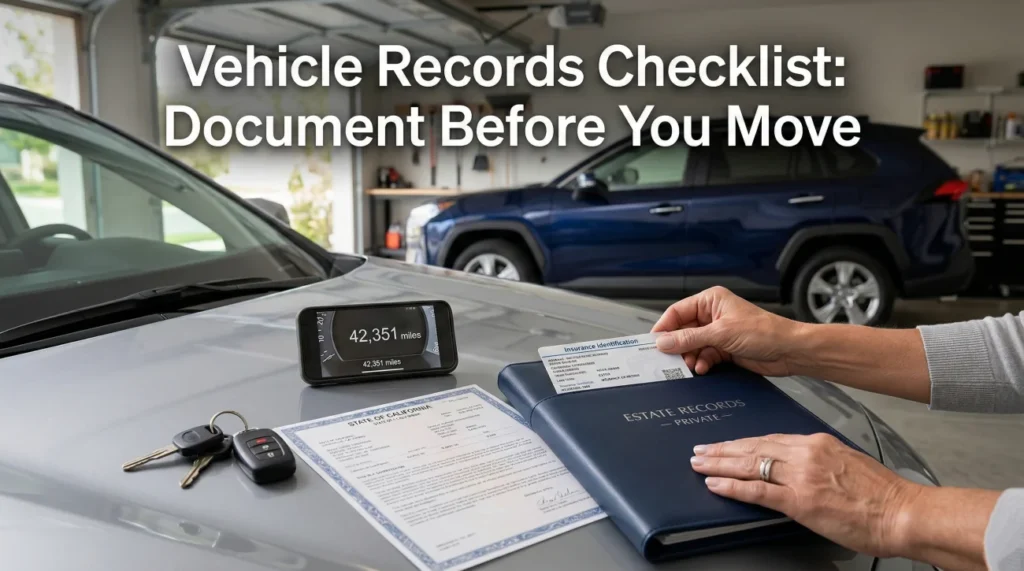
- Locate the physical title, current registration, and insurance policy, and map these documents to your master inventory table.
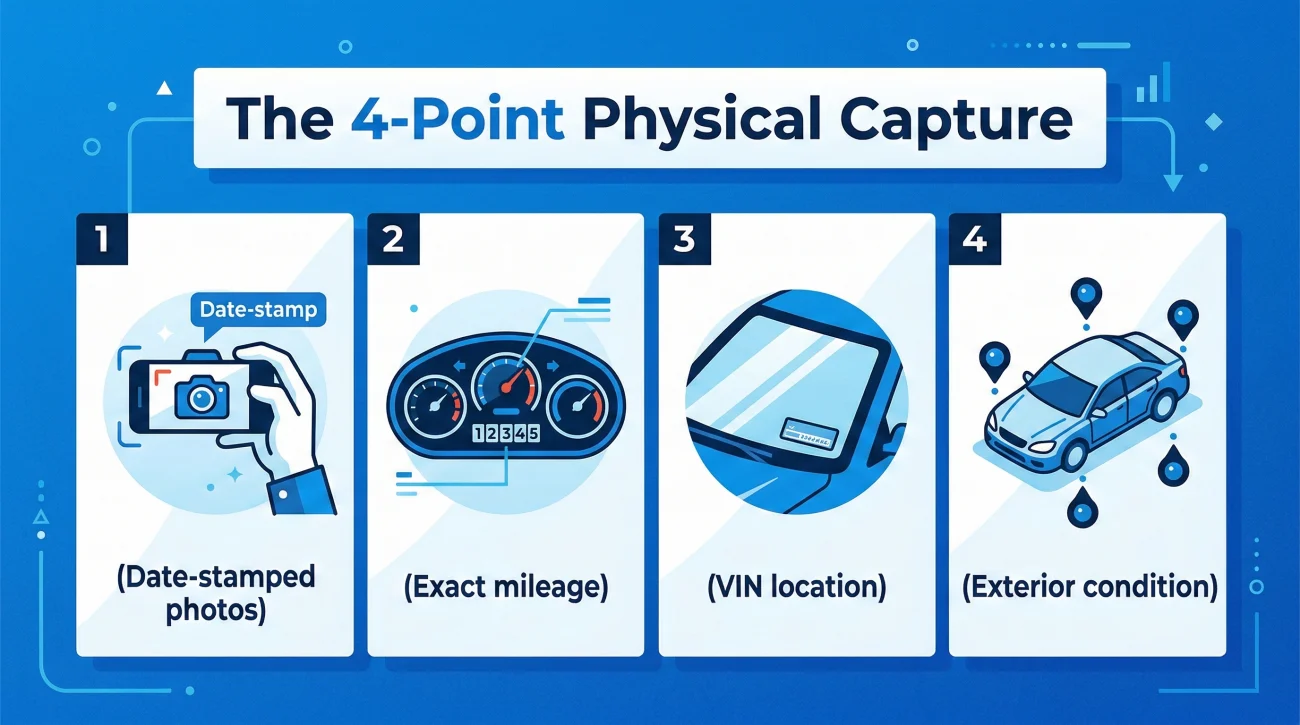
- Take date-stamped photos of the odometer, VIN, and exterior/interior condition to freeze the asset’s status in time.
- Establish a documented trail of insurance coverage immediately, as policies often change status upon the policyholder’s passing.
- Use standard pricing guides to capture the valuation on the exact date of passing, and save these as PDF records.
The Danger of Moving a Vehicle Before Documenting It
When I help families sort through estate paperwork, vehicles are almost always the first assets that people want to deal with. A car is visible, it takes up driveway space, and family members often want to move it, sell it, or drive it right away. However, in my day-to-day admin work, I see this rush cause massive headaches down the line.
Before you ever step foot inside a motor vehicle department, and before you promise the car to a relative, you need an airtight executor vehicle checklist. If a vehicle is moved, damaged, or transferred before you have documented its exact state on the date of passing, you lose your baseline proof. You may find yourself unable to prove what the car was worth, or worse, dealing with an uninsured accident claim.
My goal here is to help you build a complete record packet. We are going to capture the physical reality of the car, map out the paper trail, secure valuation evidence, and get everything cleanly logged. This is about documentation and protection, not legal procedures.
Key Point: Treat the vehicle like a sealed file. Your job right now is to document what is there, what condition it is in, and who holds the paperwork, before any physical or legal changes are made.
Phase 1: Physical Vehicle Capture
The first step is capturing the physical state of the vehicle. Memories fade, and if a dispute arises later about whether a dent was already there or if someone put unauthorized miles on the car, your photos will be your only defense.
Locating the VIN and Mileage
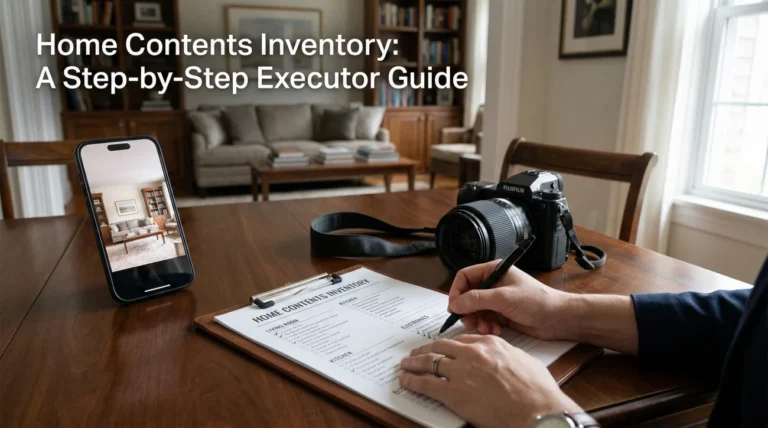
Start by gathering the hard data directly from the source. Grab your phone or a camera and head out to the vehicle. You are looking to capture two critical pieces of information: the Vehicle Identification Number (VIN) and the exact mileage. The VIN is typically found on the driver’s side dashboard, visible through the windshield, or on the sticker inside the driver’s side door jamb.
Turn the key just enough to illuminate the dashboard and take a clear picture of the odometer. I always advise against simply writing the number down on a scrap of paper. You want that photographic proof with a digital timestamp to show exactly when the record was taken.
⚠️ Warning: If you find the keys, secure them immediately. A common pattern I see is keys being left on a kitchen counter, allowing well-meaning relatives to “take the car for a spin to keep the battery charged.” This introduces massive liability if the insurance has lapsed.
Condition Photos
Next, document the condition. You do not need to be a professional photographer, but you do need to be thorough. Walk around the vehicle and take photos from all four corners. Take close-ups of any existing damage, scratches, or interior wear and tear. This proves the condition of the asset at the start of your administration.
Taking one blurry photo of the car in a dark garage and writing “Looks fine” in a notebook.
Taking well-lit photos of the odometer, VIN sticker, all four exterior sides, and interior seats, then saving them in a folder named “Vehicle_Condition_Date.”
Phase 2: Mapping the Paper Trail
Once the physical car is documented, you need to find the paperwork that proves ownership and status. A car without a clear paper trail is an asset you cannot manage. You will eventually need to map all these documents into your estate asset inventory checklist so you have a centralized view of everything.
The Title and Registration
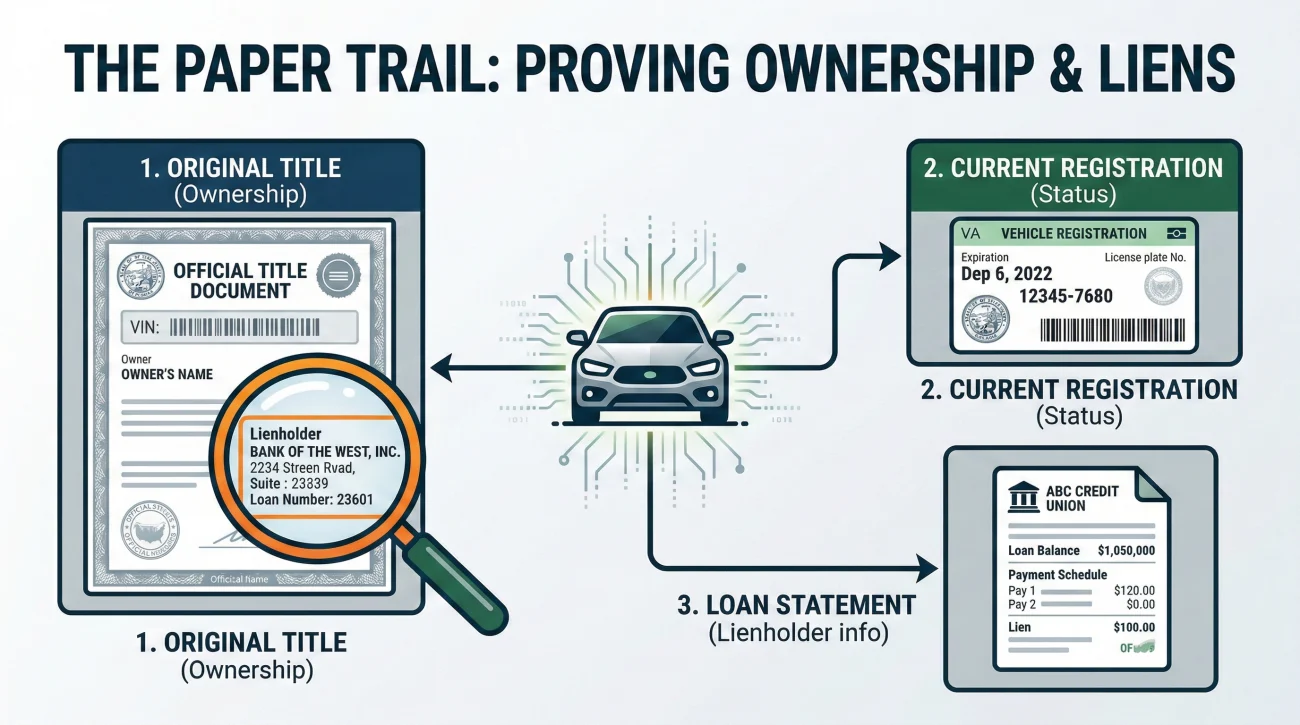
The Certificate of Title is the most critical document. You need to locate the original, physical title. Look in safe deposit boxes, home filing cabinets, or fireproof safes. Check the front of the title: whose name is exactly on it? Is there a co-owner listed? Is there a lienholder, like a bank or credit union, printed on the front?
Next, find the current registration. Often, this is sitting in the glovebox. If you take the registration out of the glovebox to scan it, make sure you put a copy back in the car. You need to know when the registration expires so it does not lapse while the estate is being settled.
Checking for Liens and Loans
If there is a loan on the car, the bank technically holds a major interest in that vehicle. Often, the bank holds the physical title until the loan is paid off. You need to locate the most recent auto loan statement. Do not guess the payoff amount. You need the exact statement showing the account number and the balance on the date of passing.
❌ Note: Never assume a car is fully paid off just because the deceased person said it was. Always verify by looking at the physical title to see if a lienholder is listed, or by checking bank statements for monthly auto payments.
Phase 3: Communication Hygiene with Auto Insurers
Once you have the physical title and loan documents sorted, you understand who owns the car. But ownership is only half the puzzle. You also must protect the asset from liability, which brings us to insurance. Auto policies do not automatically continue indefinitely after the policyholder passes away. In many cases, the policy becomes void or severely restricted. If a tree falls on the car, or if someone drives it and causes an accident, the estate could be fully liable.
Confirming Coverage and Establishing a Trail
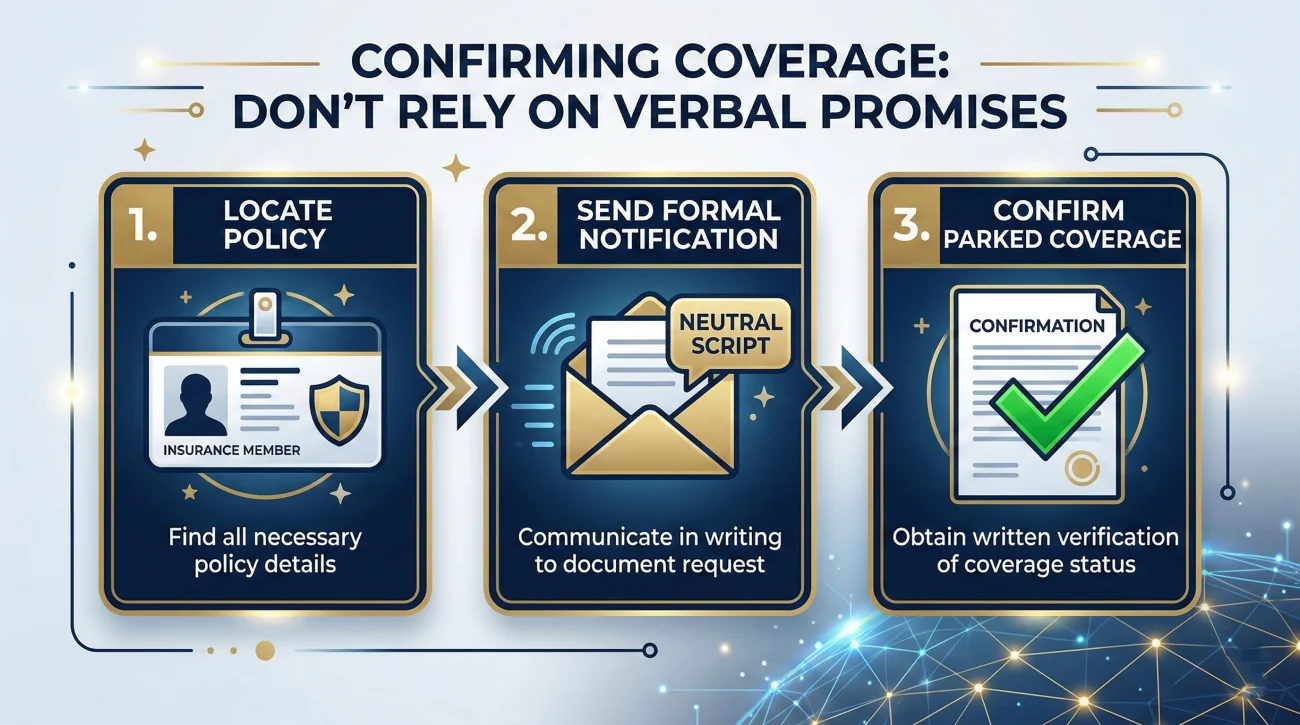
You must locate the current insurance declarations page or insurance card. Find the policy number and the contact information for the agent or the main company. You need to notify them of the passing and ask exactly what is required to maintain parked and storage coverage on the vehicle while the estate is settled.
Here is a safe, neutral script you can use to initiate this conversation via email or a secure portal. This ensures you create a clear paper trail of your request.
Subject: Estate Notification and Coverage Inquiry – Policy #[Insert Policy Number]
Hello,
I am the executor for the estate of [Name], who passed away on [Date]. I am writing to formally notify you of their passing and to verify the status of the auto insurance policy #[Policy Number] for the [Year/Make/Model].
The vehicle is currently parked, secured, and not being driven.
Please provide a checklist of what documents you need from me to maintain comprehensive coverage on this vehicle during the estate administration process.
I look forward to your official reply for my records.
Thank you,
[Your Name]
[Your Contact Information]
Notice the structure of that message. Whenever you communicate with an insurance provider, you never want to leave the conversation open-ended. I always stick to this simple formula to ensure I get a clear, binding response:
[Action: Send Notification] + [What you need: Status and Requirements] + [Confirmation request: Ask for a verifiable reply]
When you use that structure, you are actively protecting yourself. One of the most frequent gaps I notice is an executor calling the insurance hotline, getting a verbal reassurance that everything is fine, and then discovering weeks later that the policy was cancelled due to a frozen bank account missing an auto-pay draft. Secure that digital or paper confirmation so there is no confusion later.
Phase 4: Securing Valuation Evidence
You need to record what the vehicle was worth on the exact date the person passed away. This is critical for the inventory and future accounting, regardless of whether you plan to sell it or give it to a family member.
The Quick Documentation Method
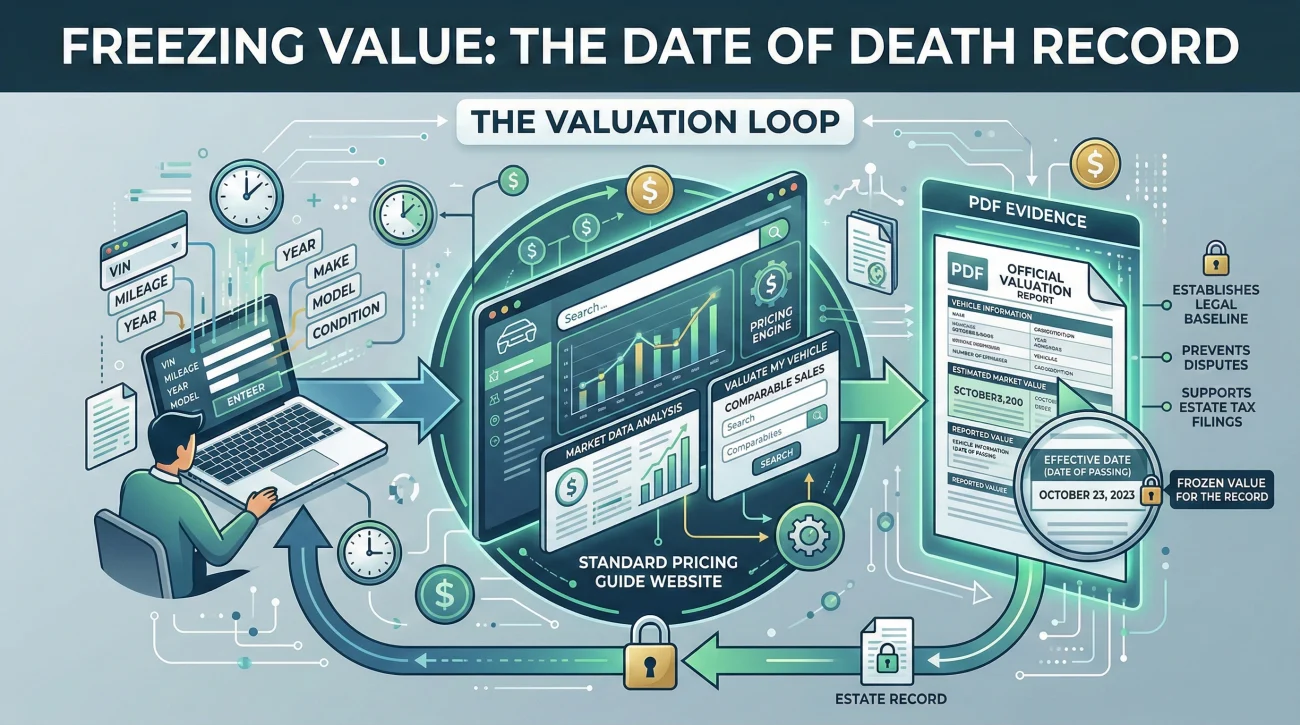
For standard, everyday vehicles, you usually do not need to hire a professional appraiser. The easiest way to document value is to use standard online pricing guides. Input the exact Year, Make, Model, VIN, Mileage, and Condition that you recorded in Phase 1.
Once the website gives you the private party or standard value, do not just look at it. Print the page to a PDF file. Name the file clearly, such as “Vehicle_Valuation_Guide_DateOfDeath.pdf”. This creates a permanent piece of evidence that shows exactly how you arrived at the number you put on your inventory spreadsheet.
💡 Pro Tip: If the vehicle is a classic car, heavily modified, or extremely rare, an online guide will not be accurate. In those specific cases, log a note in your tracker to contact a specialized appraiser, and do not guess the value.
The Executor Vehicle Inventory Row
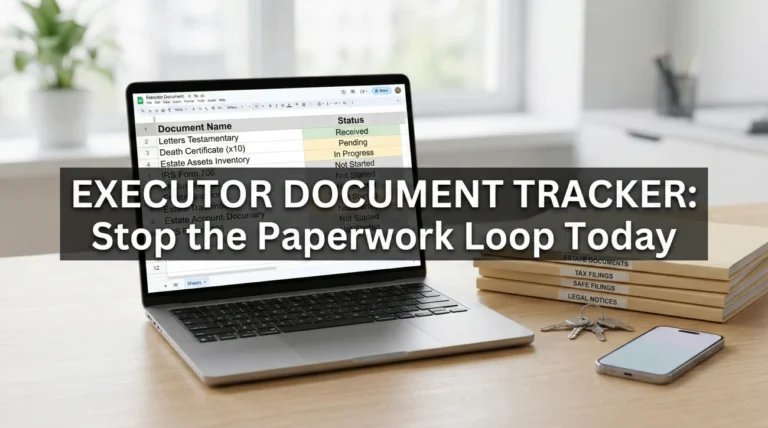
Now that you have gathered the physical data, the paperwork, and the valuation, you need to log it so you do not have to keep looking up the same information. You can add these specific columns to your master tracker or keep a dedicated vehicle log.
Here is an example of what a clean, well-documented vehicle record looks like. Notice how it tracks the proof, not just the details.
| Asset / Vehicle | VIN & Mileage | Title Status | Insurance Status | Valuation Evidence | Action / Status |
|---|---|---|---|---|---|
| 2015 Honda Accord | VIN: 1HGCR… Miles: 68,420 | Original located in safe. No lien listed. | Confirmed parked coverage via email 10/12. Paid through Dec. | PDF saved: $12,500 (Online Guide, Date of Death) | Parked at house. Keys secured. |
| 2021 Ford F-150 | VIN: 1FTEW… Miles: 22,100 | Not found. Statement shows active loan. | Emailed request for status 10/14. Awaiting reply. | PDF saved: $38,000 (Online Guide, Date of Death) | Awaiting loan payoff quote. |
When your records look like this, you have total clarity. If a beneficiary asks about a car, you have the exact data. If you need to fill out a form later, you are not digging through gloveboxes again.
Common Failure Modes and How to Avoid Them
In estate administration, the same documentation mistakes happen repeatedly with vehicles. Being aware of these traps will save you hours of frustration.
- ❌ Missing the auto-pay trap: Many people have their auto insurance drafted directly from a checking account. When the bank learns of the passing, they freeze the account. The auto-pay fails, the insurance cancels, and the executor never knows until it is too late. Always secure a manual payment method for the insurance.
- ❌ Cleaning the car out too soon: Well-meaning family members often detail the car and throw away every piece of paper inside. They accidentally throw away current registrations, repair receipts, or toll tags. Do a targeted paper retrieval before anyone cleans the vehicle.
- ❌ Relying on old appraisals: Using a valuation from two years ago when the deceased person bought the car is useless. Values fluctuate. You must capture the value based on the date of passing.
Final
Handling a vehicle during an estate process is an exercise in patience and documentation. The urge to act, to sell it, or to give it away will be strong, especially from family members who want closure or need transportation. Your job is to pump the brakes and build the file first.
By following this record capture process, you build a protective wall around yourself and the estate. You have the photos to prove the exact condition, the valuation to prove worth, and the documented communications to prove insurance is active. When the time comes to finally hand the keys to a buyer, a beneficiary, or a dealership, having this complete packet stops arguments in their tracks and makes the actual transfer process significantly smoother.
❓ FAQ
🚗 What do I do if I cannot find the car title after someone dies?
Log the title as “missing” in your tracker first. You will eventually need to request a duplicate title through the official motor vehicle department forms, but do not guess ownership until you pull the official record.
🛑 Can family members keep driving the deceased person’s car?
In many cases, no. Driving the car introduces massive liability, and insurance policies often restrict coverage to the named insured. Secure the keys until you have verifiable proof of coverage and authority to transfer.
🔑 What if someone else has the keys and will not give them back?
Keep a detailed log of your requests for the keys. Documenting when you asked and their refusal proves you attempted to secure the asset, which is vital if you need to involve a professional later.
📝 Do I need a special executor form to look up the VIN?
No, the VIN is physically visible on the vehicle itself, usually on the lower driver’s side windshield or the door sticker. You can capture it immediately without any legal documents.
🔄 What happens if the vehicle is currently leased?
A leased car is not an estate asset; it belongs to the dealership or financing company. You must contact the leasing company immediately to arrange an early return or find out their specific estate payoff procedures.
🗺️ What if the car has out-of-state license plates?
If the deceased lived in one state but the car is registered in another, you usually have to follow the motor vehicle rules of the state where the car is officially titled. Keep the out-of-state registration card safe as proof of origin.
🚤 Do I use this same checklist for boats, RVs, or motorcycles?
Yes, the core process of capturing data and securing paperwork is identical. However, boats and RVs often have separate titles for the trailer and the vessel itself. Make sure you locate the documents for both pieces.
📦 The car is locked in a paid commercial storage unit. What now?
Storage fees accrue quickly and can drain estate funds. Prioritize getting a copy of the death certificate to the storage facility manager to secure access, then photograph the car exactly as you found it before moving anything.
🏷️ Can a family member keep the personalized vanity plates?
Vanity plates are often treated as personal property rather than part of the vehicle, but transfer rules vary heavily by jurisdiction. Remove and secure the plates if you sell the car, and ask the local department about reassignment.
🔢 How do I handle an estate with a large collection of multiple vehicles?
Group them logically in your master tracker. Process the daily drivers first, as they carry the highest immediate liability and insurance risks. Then, take your time cataloging the classic or project cars which may require specialist appraisals.
⚠️ Disclosure: I'm not an attorney and nothing on this site is legal or tax advice. The content covers process, organization, and workflow—the operational side of estate administration. For legal interpretation, jurisdiction-specific deadlines, contested situations, or tax matters, please work with a licensed professional in your state.