
- The Core Rule: Never substitute or distribute a missing person’s share to other family members without explicit local legal authorization.
- Documentation is Your Shield: Build a strict tracking log of bounced mail and unanswered calls. This paper trail is your proof of diligence when you eventually need court intervention.
- Asset Complications: A missing heir forces you to recalculate cash holdbacks and often prevents the simple transfer of real estate, forcing a property sale instead.
- Unresponsive vs. Missing: Treat someone who is ignoring your letters differently than someone whose mail is physically returned as undeliverable. Both require a written trail, but different escalation paths.
The Sudden Stop: When the Paper Trail Goes Cold
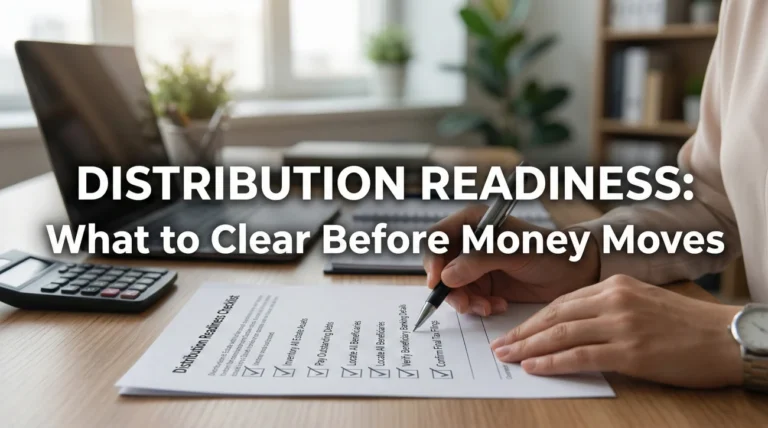
In my experience helping executors organize their administration files, there is a specific moment when the momentum of closing an estate suddenly hits a brick wall. You have gathered the assets, paid the final debts, and you are reviewing your estate distribution checklist to prepare the final payouts. You send out the preliminary notices or request for tax forms, and a few days later, a thick envelope comes back in the mail stamped “Return to Sender: Not at this address.”
Suddenly, you have a missing beneficiary. Whether it is an estranged sibling, a nephew who moves constantly, or an heir-at-law you have never actually met, the reality of a missing person changes the entire trajectory of your distribution phase. As an executor, your instinct might be to panic, or worse, to let the pressure from the other beneficiaries rush you into making a bad decision.
When you cannot locate a beneficiary, your job temporarily shifts from being a distributor of assets to being a meticulous compiler of a search effort. I often see executors waste energy stressing about the legal outcome, when their primary focus should be on building a bulletproof timeline. You do not have to be a private investigator, but you do have to be highly organized so that when you hand the problem over to a local professional, they have a solid foundation to work from.
Why You Should Never Guess or Substitute
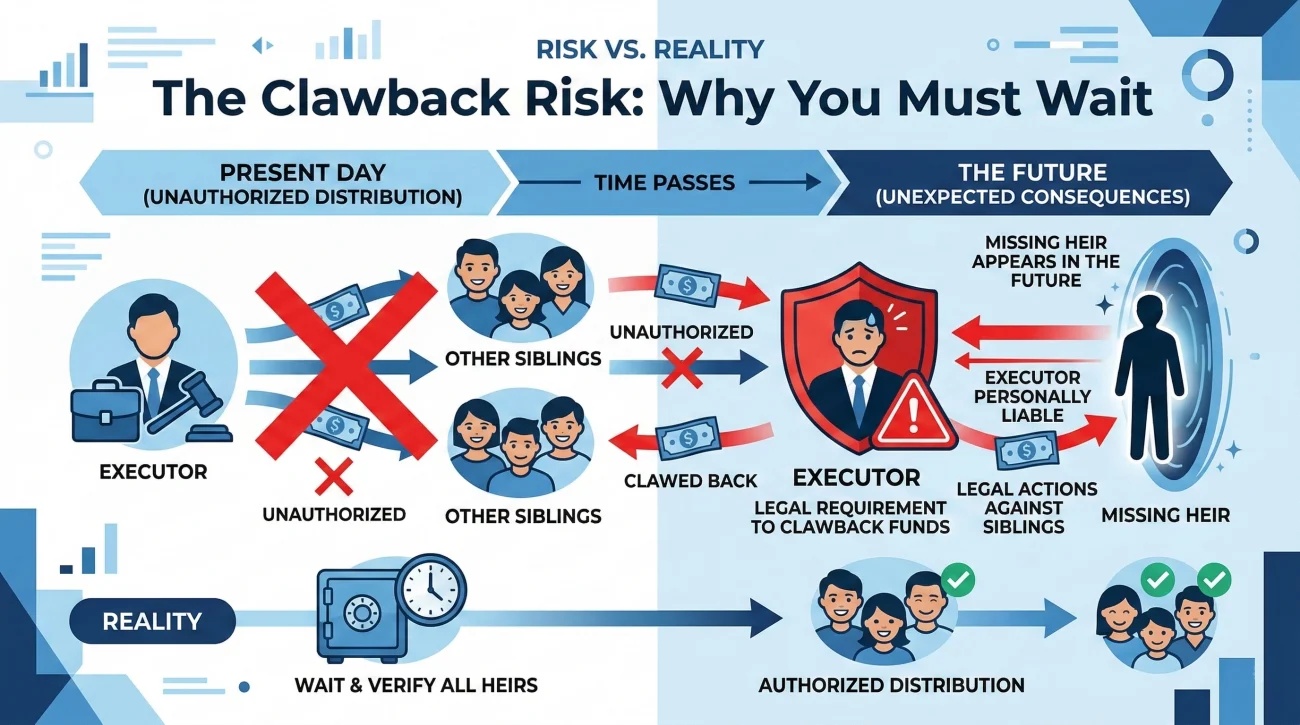
The most common, and often the most dangerous, mistake I see in these situations comes from a place of common sense that completely clashes with estate administration reality. When a beneficiary cannot be found, the remaining family members often try to offer helpful solutions to speed up the process.
They might suggest dividing the missing person’s share among the rest of the group, or handing the check to the missing person’s adult child. You must resist this pressure completely. The estate’s governing document or the local laws of intestacy dictate who gets what. You do not have the authority to rewrite those rules just because someone is hard to find.
“I couldn’t find my brother, so I let the other two siblings convince me to just split his share three ways so we could close the bank account.”
“I cannot locate one beneficiary. Their exact calculated share must remain in the estate account or be handled according to local legal rules until the situation is officially resolved.”
If you distribute a missing person’s share to someone else, and the missing person surfaces two years later demanding their inheritance, you could be held personally liable for that missing money. This is known as clawback risk. It is incredibly difficult to force family members to return money they have already spent, which is why absolute rigidity is your safest operational stance.
Building Your “Attempt to Locate” Log
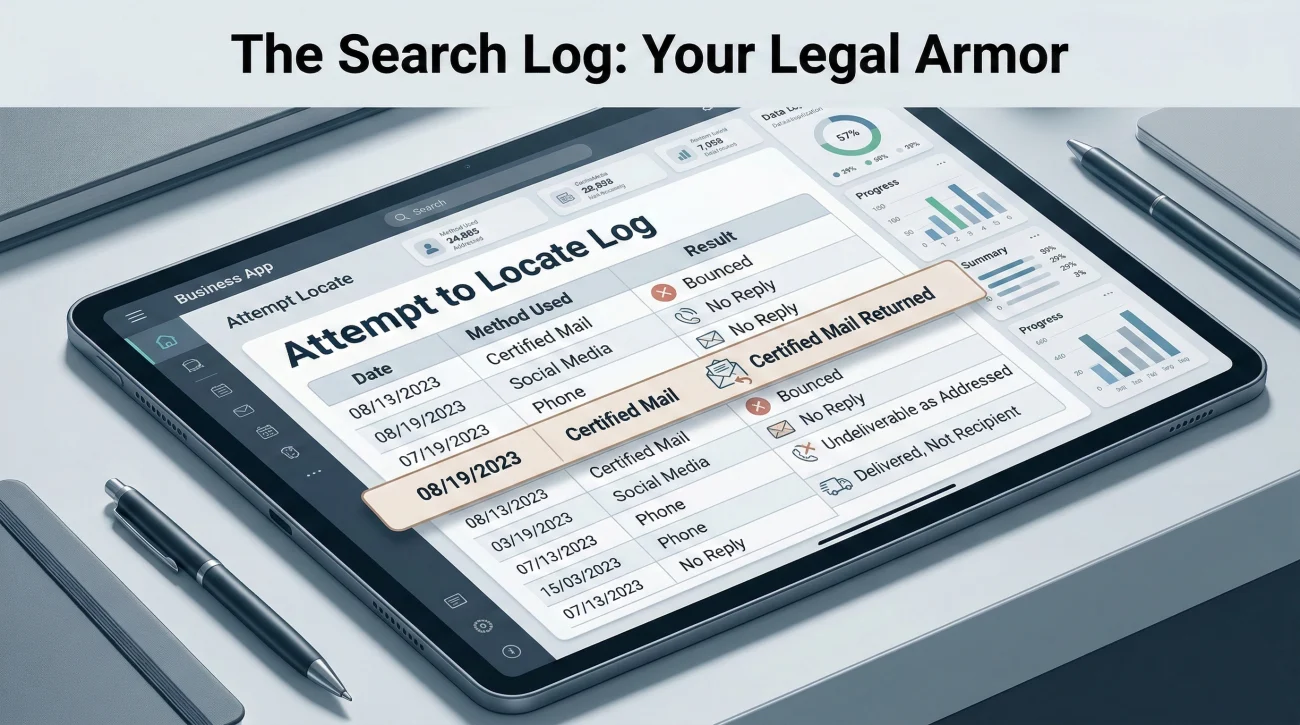
If you eventually need to ask a judge or a legal professional what to do with the unclaimed funds, the very first question they will ask is about your search efforts. Simply saying you asked around is rarely sufficient. You need a structured, written log.
When I review file setups with executors, I always recommend starting a dedicated tracking sheet the moment you realize someone is unreachable. Every single action you take to find the person must be recorded as a single line item.
| Date of Action | Method Used | Target / Details | Result / Outcome |
|---|---|---|---|
| Oct 12, 2024 | Certified Mail | Mailed initial notice to 123 Elm St. | Returned to Sender on Oct 20. Kept sealed in file. |
| Oct 22, 2024 | Phone Call | Called last known cell (555-0199) | Number disconnected. No forwarding. |
| Oct 25, 2024 | Emailed [email protected] | No bounce back, but no reply after 14 days. | |
| Nov 02, 2024 | Family Inquiry | Emailed cousin Sarah asking for updated contact | Sarah replied in writing: “I haven’t seen him since 2019.” |
💡 Pro Tip: Keep physical evidence of failures. If a letter is returned by the postal service, do not open it. Place the entire sealed, stamped envelope into your executor folder. The post office stickers showing “Undeliverable” are excellent physical proof that you tried the last known address.
Digging Deeper: Where Executors Actually Find Last Known Information
Before escalating the issue to an attorney or a skip-tracer, you need to compile a dossier of everything the estate actually knows. Gathering a name and a stale address is usually not enough. The most successful executors look in specific, often overlooked places within the deceased person’s own paperwork to find breadcrumbs.
First, check the deceased person’s old tax returns. If the missing beneficiary was a dependent or a co-signer at any point, their Social Security Number might be listed on a past filing, which is the golden key for any professional investigator. Next, look through the deceased person’s physical address books, old holiday card lists, or beneficiary designation forms on old 401(k)s or life insurance policies. These documents frequently list alternative contact numbers or secondary addresses that the rest of the family forgot about.
If you know the general county where the missing person used to live, running a free search on that county’s property tax assessor website can sometimes reveal if they still own a home there. Pulling these concrete details together saves an immense amount of billable hours when you finally hand the file over to legal counsel.
How a Missing Heir Changes Estate Math and Assets
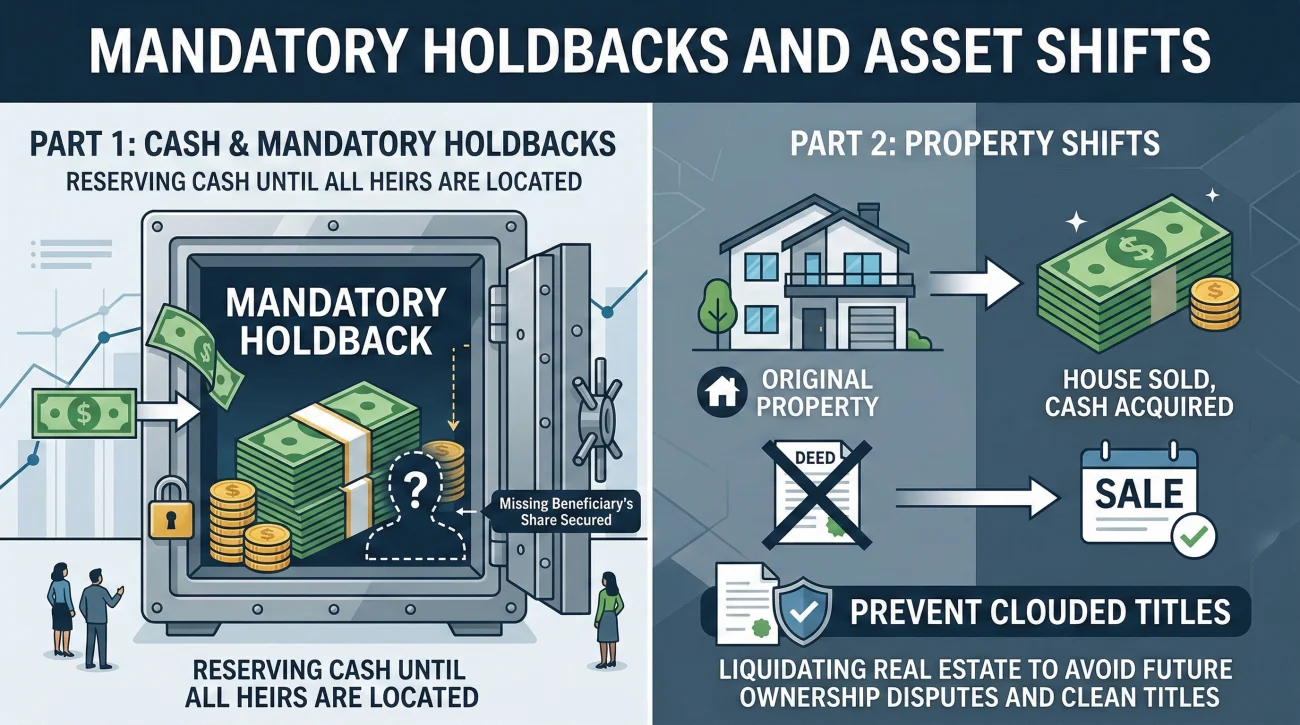
A missing beneficiary creates a significant ripple effect on the financial side of the estate. The friction usually peaks when the other beneficiaries demand their inheritance, but the executor cannot finalize the exact numbers.
The Impact on Cash Distributions
Normally, an executor calculates an estate reserve holdback, which is a buffer of cash kept in the account to cover final taxes or unexpected late bills. When a beneficiary is missing, their entire calculated share essentially becomes a mandatory extension of that holdback.
If you choose to make a partial distribution to relieve family pressure, the math must be meticulously symmetrical. If you distribute 50% of the available cash to the three beneficiaries you can locate, you must explicitly document that the exact same 50% equivalent for the missing fourth person is being securely held in the estate account.
The Impact on Real Property
While cash can sit in a bank account, physical assets cannot easily be put on hold. If the estate includes a house meant to be divided among four siblings and one is missing, you typically cannot just transfer the deed to the other three. The missing sibling’s ownership right creates a cloud on the title. In my experience, a missing heir almost always forces the executor to sell the real estate, convert it to cash, distribute the known shares, and hold the missing person’s cash portion securely.
The Difference Between “Missing” and “Just Ignoring You”
One of the most frustrating patterns I see involves a beneficiary who is not actually missing, but is completely unresponsive. You know exactly where they live. The mail is not bouncing. They are simply refusing to sign the receipt and release forms or provide instructions on how to send their funds.
This often stems from family estrangement or a suspicion that signing a receipt means they are giving up a right to complain later. Do not guess their motives. When dealing with someone who is ignoring you, shift your communication from asking for a favor to establishing a firm timeline of events. Keep it polite, neutral, and highly specific.
Subject: Action Required: Final Distribution for the Estate of [Name]
Hello [Name],
I am preparing to finalize the distributions for the estate. I sent the required receipt and release documents to this address on [Date] and followed up on [Date].
To process your portion of the distribution, I need the signed documents returned by [Date]. If I do not receive them, or hear from you regarding a delay, I will have to consult with the estate’s legal counsel on how to deposit your share so that the rest of the estate can be officially closed.
Please let me know if you need another copy of the paperwork.
Regards,
[Your Name], Executor
⚠️ Warning: Never threaten an unresponsive beneficiary with losing their inheritance. You do not have the power to cancel their share. You are simply informing them that their delay will force you to take alternative administrative steps.
Escalation: Death Discoveries and Unclaimed Property
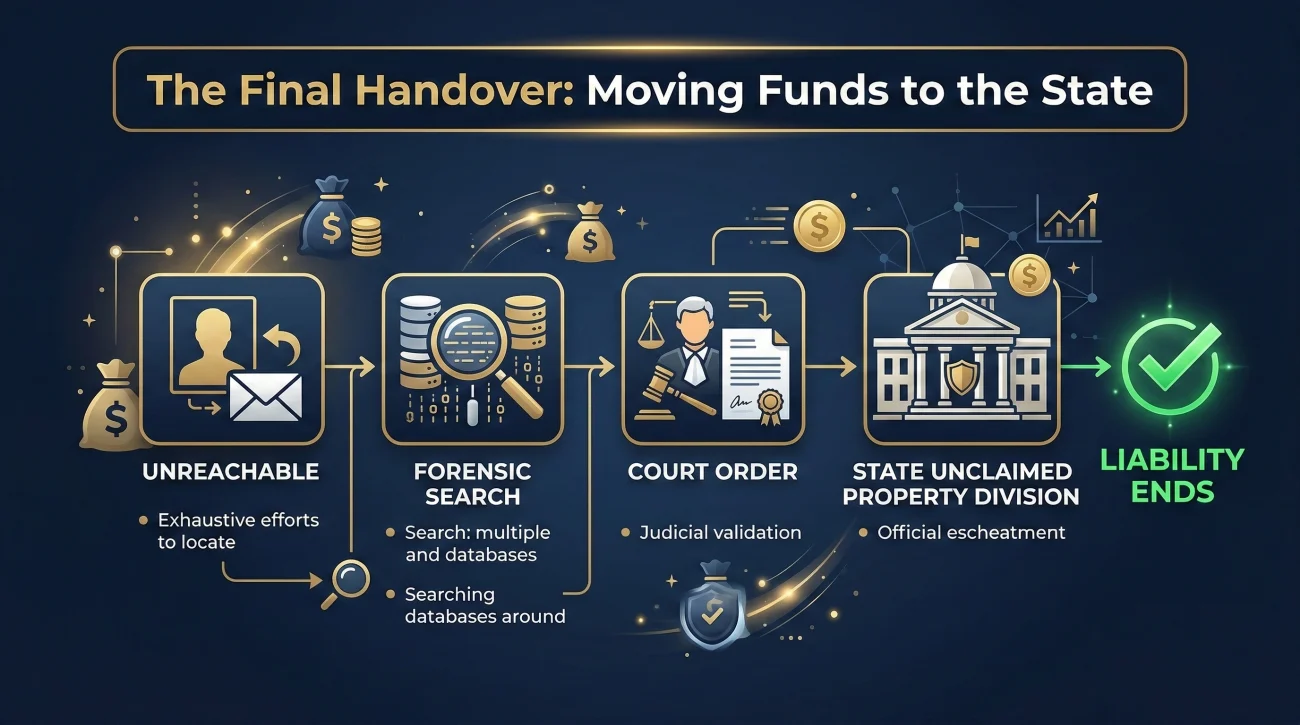
At a certain point, updating your tracking spreadsheet yields diminishing returns. If you have exhausted basic methods, it is time to get local guidance to initiate formal search procedures, such as hiring a forensic genealogist. The results of that search typically fall into one of two outcomes.
Sometimes, the formal search reveals that the “missing” person actually passed away years ago. This discovery completely alters your distribution map. Depending on the will or local law, that deceased person’s share might now flow to their own children (per stirpes) or to their separate estate. You are no longer looking for one missing person; you are navigating a new branch of the family tree.
Alternatively, if the professional search confirms the person is simply unreachable, the attorney will typically guide you through depositing the funds with the local court or the state’s unclaimed property division. Once those funds are legally accepted by the state registry, your liability for that specific share usually ends. The estate can finally be closed, and if the missing person surfaces a decade later, their dispute is with the state treasury, not with you.
Final Thoughts on Managing the Unknown
A missing beneficiary is an operational delay, not a personal failure on your part. While the immediate frustration usually comes from the other heirs who want their funds, you must remember who you are protecting.
The rigid documentation and holding procedures outlined above are your personal armor. Doing this correctly protects you from two distinct legal threats: the current beneficiaries who might accuse you of holding up the process, and the missing beneficiary who might suddenly appear years from now demanding their rightful share. By refusing to cut corners, preserving the exact estate math, and relying on formal legal pathways, you ensure that you can step away from the estate safely and permanently.
❓ FAQ
🎯 What happens if the missing beneficiary actually passed away years ago?
If they died before the estate owner, their share usually passes to their descendants (per stirpes) or returns to the main estate, depending on the will. If they died after the estate owner, their share belongs to their own estate, and you will have to deal with their executor.
🌍 How do I handle a beneficiary who lives in another country and won’t respond?
International distribution adds complex tax and banking layers. If they are unresponsive, treat them like a domestic missing heir by documenting your outreach, but consult an attorney early, as international unclaimed property laws are highly specialized.
🏠 What if the estate includes a house and one heir is missing?
You generally cannot transfer a fractional deed to the known heirs while leaving a missing person on the title. In most cases, the executor must sell the property, divide the cash, and isolate the missing person’s share of the proceeds.
💼 What actually happens to the money when it goes to the state?
When funds are sent to a state’s Unclaimed Property Division, the state acts as a custodian. The money sits in a secure registry indefinitely. The missing person, or their eventual heirs, can search the state database years later and claim the funds without involving you.
⏳ Is there a legal time limit I have to wait before giving up?
There is no universal countdown clock. Local laws vary, but courts typically look for proof of a thorough, documented search over a period of months before they will issue an order allowing you to deposit the funds with the state and close the estate.
👶 What if the missing person is a minor?
Minors cannot directly inherit cash anyway. If a minor is missing (e.g., you cannot locate their custodial parent), a court will often appoint a guardian ad litem to protect the child’s financial interests while the search continues.
💻 Can I use their social media to prove I tried to contact them?
Yes. Sending a direct message on a platform where they appear active is a valid, modern search step. Take a screenshot of the sent message and add it to your tracking log, even if it is left on “read.”
🛑 Can the other beneficiaries sue me for the delay?
Beneficiaries can complain, but if you are following local laws and maintaining clear records of why the delay exists (and keeping their funds secure), you are generally protected. Executors are penalized for negligence, not for the existence of a missing heir.
🕵️ Does the estate pay for the private investigator or skip tracer?
Yes, hiring a professional to locate a missing heir is typically considered a valid administrative expense. The cost is usually paid out of the general estate funds before the final distributions are calculated.
📄 If they are found later, do they get interest on their held funds?
If the funds were held in a standard non-interest-bearing estate checking account, or deposited with the state registry, they usually just receive the principal amount. They are generally not entitled to claim lost investment gains due to their own absence.
⚠️ Disclosure: I'm not an attorney and nothing on this site is legal or tax advice. The content covers process, organization, and workflow—the operational side of estate administration. For legal interpretation, jurisdiction-specific deadlines, contested situations, or tax matters, please work with a licensed professional in your state.