
- Disputes grow in silence and shrink in transparent, written summaries.
- Use a consistent, neutral bi-weekly update routine to prevent beneficiaries from feeling ignored.
- Show your math clearly before distributing funds so there are no surprises about final expenses.
- Move emotional arguments to formal channels by utilizing a read-only document approach and strict email updates.
- Avoid making promises about timelines; always default to waiting on written clearance rather than guessing dates.
The Finish Line Friction: Why Distributions Spark Conflict
If you have made it to the distribution phase of an estate, you have already done a massive amount of invisible work. You have tracked down accounts, dealt with creditors, filed paperwork, and organized a lifetime of records. But as an estate administration support writer, I can tell you that the final stretch is often where the most intense friction happens. This is where beneficiary disputes over estate distribution typically ignite.
In my experience tracking executor workflows, the root cause of these disputes is rarely intentional theft or malice. Usually, it comes down to a communication gap. As the executor, you are exhausted and just want to finish the job. The beneficiaries, on the other hand, have been waiting patiently (or impatiently) for months, and they are highly focused on the outcome. When those two mindsets collide in a void of information, anxiety turns into suspicion.
I always remind the executors I work with that you cannot control how a family member reacts, but you can control the transparency of the process. A calm, documented approach is your best defense. This guide is not about legal maneuvers or courtroom tactics. Instead, it is about the administrative hygiene and communication habits that prevent inheritance distribution conflict from taking root in the first place.
Where Most Beneficiary Disputes Actually Begin
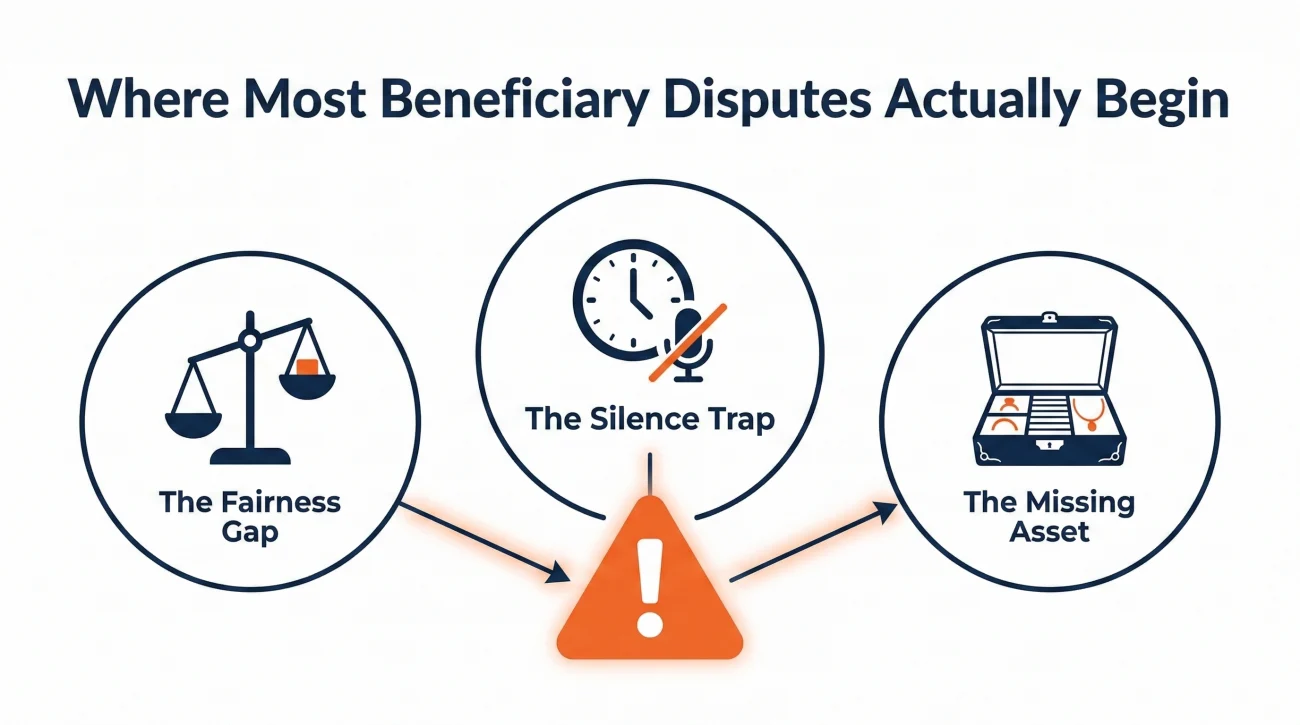
To prevent a fire, you need to know where the sparks usually land. When beneficiaries start raising their voices or sending demanding emails, the issue usually falls into one of three buckets: fairness, timing, or missing physical items. Understanding these triggers helps you build a strategy that neutralizes them before they escalate.
The Illusion of Unfairness
Beneficiaries often have a preconceived notion of what they are supposed to receive. If a parent told them for twenty years that the estate was worth a certain amount, they expect exactly their percentage of that specific number. They rarely factor in the reality of final medical bills, property maintenance during the administration period, or professional fees.
When the final distribution check arrives and it is smaller than expected, the immediate assumption is often that the executor mismanaged the funds. This is why a sudden, unexplained payout is dangerous.
The Void of Silence on Timelines
We live in a world of instant tracking. People expect to know exactly where their packages are and when their food will be delivered. Estate administration operates on a completely different timeline, governed by institutional processing speeds and required waiting periods.
Key Point: When you stop communicating because nothing has happened yet, beneficiaries do not assume you are waiting on the mail. They assume you are hiding something.
Silence breeds suspicion. If you go six weeks without sending an update because you are simply waiting for a tax clearance letter, a beneficiary’s imagination will fill that silence with worst-case scenarios.
The Missing Physical Asset Suspicion
Sometimes the biggest fights are not over bank accounts, but over personal property or non-cash assets. If a beneficiary remembers a specific piece of jewelry, a tool collection, or a vehicle that is not listed in the final inventory, accusations fly quickly. Even if the deceased person sold the item five years ago, if there is no documented record of it, the executor is often blamed for its disappearance.
⚠️ Warning: Never brush off a question about a missing physical item. Dismissing a beneficiary’s concern about a sentimental object is the fastest way to invite scrutiny over the entire estate accounting.
The Routine Update Approach: Shrinking the Silence
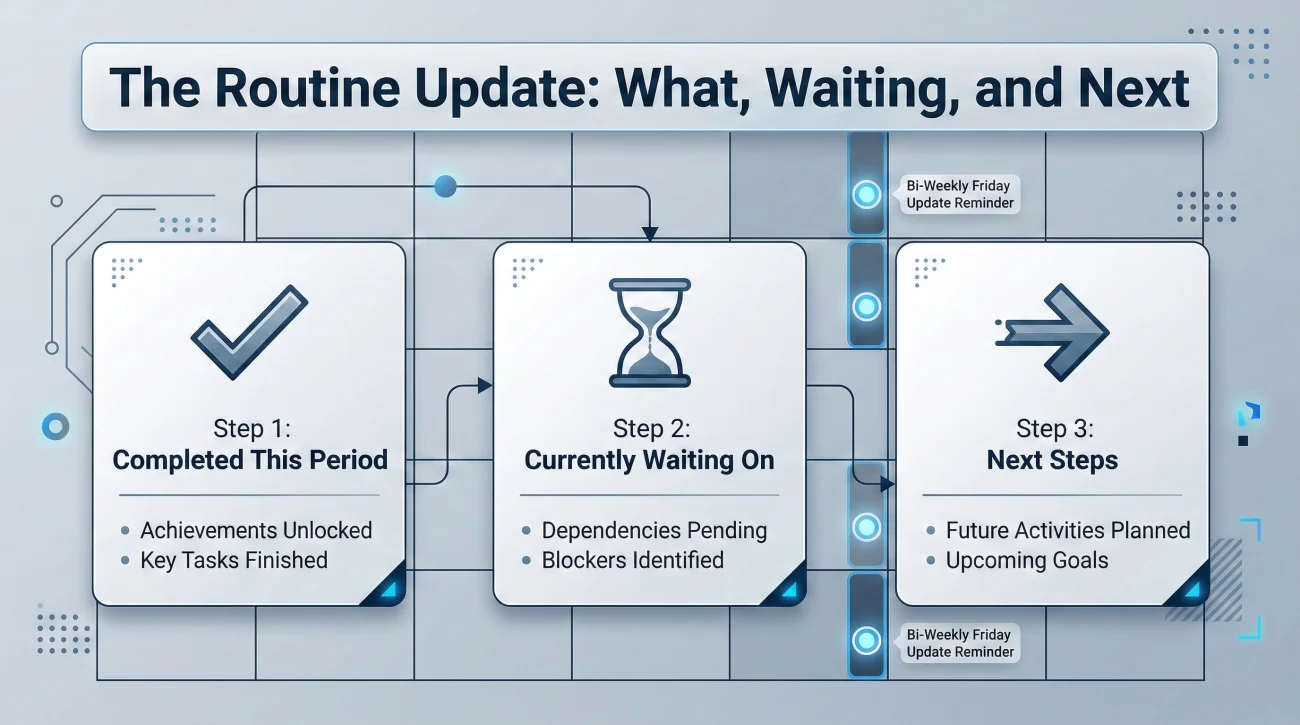
The single most effective tool I have seen for reducing executor disputes with beneficiaries is the routine update message. It does not need to be a long, formal letter. It just needs to be consistent and neutral.
In day-to-day admin work, I usually suggest setting a recurring calendar reminder, perhaps every two weeks on a Friday morning. On that day, you send a brief email to all beneficiaries. By sending it to everyone at the same time, you eliminate the suspicion of secret side-conversations.
How to Structure the Update
Keep the update completely factual. Remove all emotion, frustration, and personal opinions. A solid update follows a simple three-part framework: what is done, what you are waiting on, and what the next step is.
Here is a common pattern I see work incredibly well to lower the temperature in a tense family dynamic:
Subject: Estate Update – [Date] – Routine Status
Hello everyone,
As part of my ongoing duties as executor, here is our routine status update for the estate.
Completed this period:
– The final utility bills for the main house have been paid and the accounts are closed.
– The remaining balance from the savings account has been consolidated into the primary estate checking account.
Currently waiting on:
– We are still waiting to receive the written release document from the state regarding final taxes.
Next steps:
– Once that written release is received, I will prepare the final summary of expenses for everyone to review before any funds are distributed.
I will send the next routine update on [Date in two weeks]. Thank you for your continued patience.
Regards,
[Your Name]
Notice what this script does not do. It does not promise a payout date. It does not complain about how hard the job is. It simply states the facts and sets a clear expectation for when they will hear from you next.
A beneficiary texts asking why it is taking so long. You immediately text back: “I am working as fast as I can, the court is just backed up.” (This invites them to argue about the court or check in again tomorrow).
A beneficiary texts asking why it is taking so long. You reply: “I understand the wait is frustrating. I will include the exact status of the court delays in Friday’s email update to everyone.” (This sets a boundary and moves them to the formal channel).
Show Your Math: Building a Transparent Distribution Summary

When a beneficiary questions accounting records, it is usually because they are seeing the final number for the first time without understanding the journey to get there. As an executor, you have been living with the expenses for months. The beneficiaries have not.
Before you even think about writing a distribution check, you must share the math. This is a crucial step in the overall estate distribution checklist. It acts as a buffer, allowing beneficiaries to see the deductions and ask questions before the funds are actually moved.
Simplifying the Categories
You do not need to send a shoebox full of receipts right away. Instead, start with a high-level summary that is easy for a non-financial person to read. Break the estate down into clear phases: Starting Value, Money Out, and Net Remaining.
Here is an example of how executors commonly categorize a simple distribution summary for clarity:
| Category | Description | Impact on Estate |
|---|---|---|
| Starting Inventory Value | The total estimated value of all cash, property, and assets at the date of passing. | Baseline amount |
| Secured Debts Paid | Mortgages, vehicle loans, or other debts attached to specific property. | Deduction |
| Unsecured Debts Paid | Credit cards, medical bills, and personal loans that required settlement. | Deduction |
| Administration Expenses | Costs to run the estate: utilities, insurance, maintenance, attorney fees, accountant fees. | Deduction |
| Net Distributable Value | The actual remaining pool of funds available to be split among the beneficiaries. | Final Pool |
Once you have categorized these numbers, you need to present them in a way that feels routine rather than confrontational. Delivering this math through a clear, standardized email ensures beneficiaries focus on the facts rather than their emotions.
💡 Pro Tip: One of the most common handoff gaps I see is an executor forgetting to include a “Beginning Balance” in their summary. If you just show a list of expenses and a final number, beneficiaries will be confused. Always show them what the starting number was so the math proves itself.
The Distribution Summary Email Template
When you are finally ready to present the math and request their sign-off, do not just attach a spreadsheet with no context. Frame it as a routine administrative step. Here is a script template that works well:
Subject: Action Required: Final Estate Accounting and Distribution Summary
Hello everyone,
We have reached the final phase of the estate administration. Attached to this email is the final accounting summary. This document shows the starting value of the estate, all expenses and debts paid, and the final net amount available for distribution.
Please review the attached math. Once you have reviewed it, please sign the attached Receipt and Release acknowledgement and return it to me.
Once I have received the signed acknowledgements from all beneficiaries, I will be able to disburse the final funds via certified check.
If you have any specific questions about an expense line item, please let me know and I can provide the corresponding invoice.
Regards,
[Your Name]
How to Stay Neutral Under Pressure
In executor communication with beneficiaries, your tone is just as important as your documentation. When tensions rise, it is incredibly tempting to defend yourself, justify your hard work, or make promises just to get people off your back. This is a trap.
The Danger of Over-Promising
Executors commonly try to appease anxious family members by guessing when things will be finished. Never do this. You do not control the institutional review periods or the clearing of final tax reviews.
“I’m hoping to have the checks mailed out by the end of next month so everyone has the money before the holidays.”
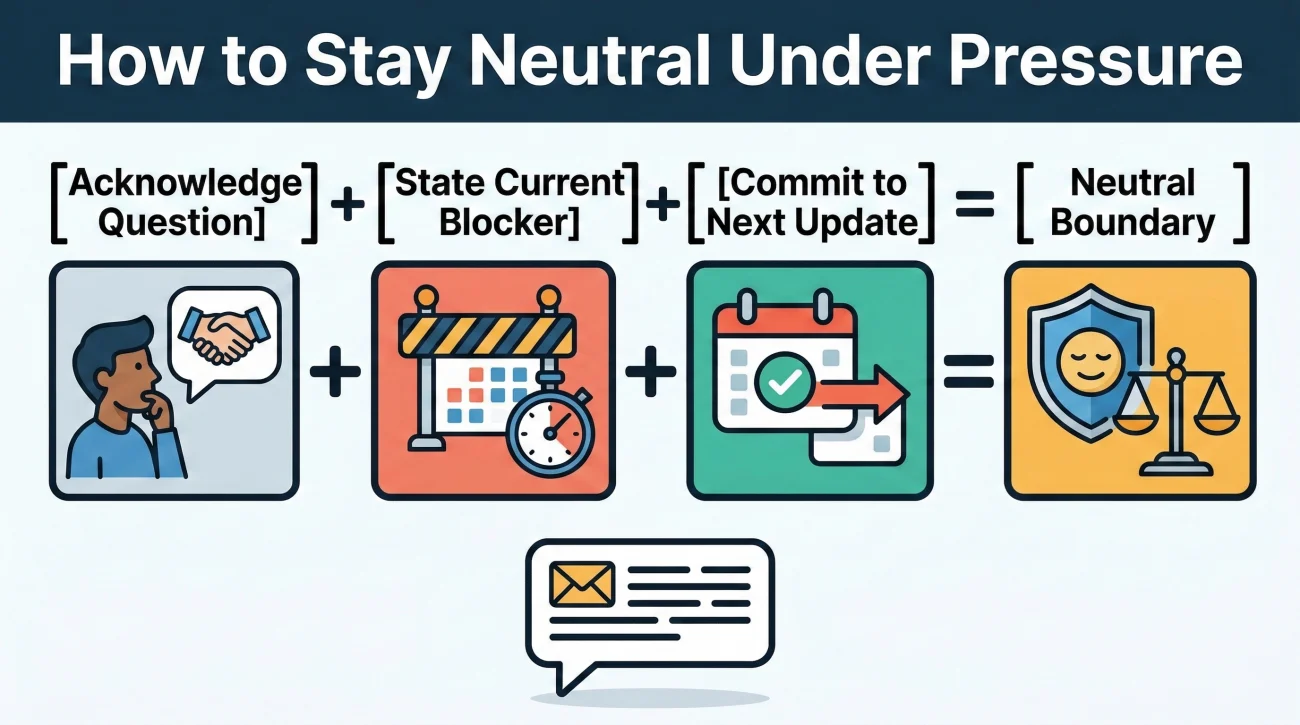
If you say the quote above, and a random administrative delay holds up the process, you have just created a massive conflict. The beneficiaries will assume you lied or are incompetent. Instead of guessing, use a simple communication formula that neutralizes the anxiety while protecting your boundaries. The formula is:
[Acknowledge the question] + [State the current blocker] + [Commit to a status update, not a completion date]
For example: “I understand everyone is eager to wrap this up. We are currently waiting on the final clearance letter. I cannot guarantee a distribution date until that arrives, but I will send another status update next Friday.”
What If the Conflict Has Already Started?
If you are reading this and the family is already arguing, your first step is a hard reset on communication. Stop all phone calls. Stop answering rapid-fire text messages. Move everything to email.
Acknowledge the situation neutrally: “I hear that everyone is frustrated by this timeline and the process. Going forward, to ensure everyone gets the exact same information and to keep accurate records for the estate, I will only be sending updates and answering questions via email every Friday.” This single move acts as a circuit breaker for emotional arguments and forces beneficiaries to interact with you as an administrator rather than a sibling or relative.
Handling Complex Distributions: Digital Tools and Distance
As estates modernize, executors are often dealing with beneficiaries scattered across the country, making traditional physical paperwork harder to manage. A few simple modernizations can drastically reduce friction.
The Read-Only Shared Folder
Instead of constantly emailing attachments every time a beneficiary asks a question, many executors now create a simple, read-only shared cloud folder (like Google Drive or Dropbox). You can place the initial inventory, the property appraisals, and copies of the bi-weekly updates in this folder. When someone asks a question, you can simply reply, “The appraisal for the house has been uploaded to the shared family folder for your review.”
❌ Note: Never give beneficiaries edit access to this folder. It must remain a read-only archive to prevent anyone from accidentally or intentionally altering the records.
Managing Out-of-State Beneficiaries
When you are dealing with beneficiaries who live far away, getting physical signatures on release forms or safely delivering large checks becomes a logistical headache. Do not rely on standard mail for final distributions. Use tracked, certified mail for any physical checks, or better yet, formal bank wire transfers. For release documents, look into secure digital signature platforms. The goal is to establish an indisputable, timestamped record of receipt.
Structuring Your Defense Folder
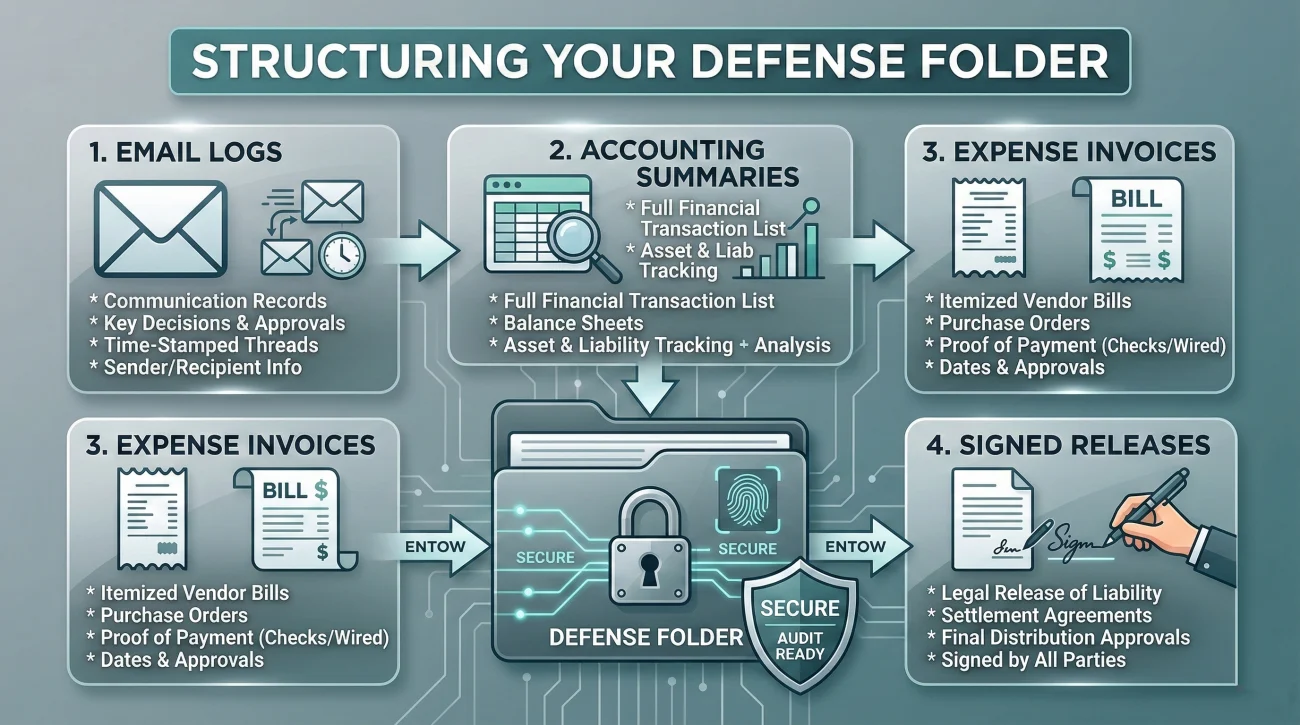
Before concluding your duties, compile a single master defense folder. If a dispute arises later, having all proofs centralized prevents frantic searches through old accounts.
- 📄 A copy of every routine update email sent to the beneficiaries.
- 📄 The final accounting summary showing all starting balances and deductions.
- 📄 Invoices and cleared checks for every major administration expense.
- 📄 Signed delivery confirmations, digital signatures, or bank wire tracking numbers for every distribution.
- ✅ A log of all communications regarding disputed items, showing your neutral, factual responses.
Centralize these files immediately. If a record is not safely stored in your master executor folder, treat it as if it does not exist.
Final Thoughts on Keeping the Peace
Preventing disputes at the distribution phase requires a fundamental shift in your mindset. You have to stop acting like a family member trying to please everyone, and start acting like a professional administrator executing a task. Emotional appeals will not protect you; properly formatted documents will.
By moving conversations to formal channels, sharing the math proactively, and refusing to guess at timelines, you drain the emotion out of the process. You protect the estate from costly delays, you protect yourself from liability, and ultimately, you give the beneficiaries the clarity they actually need to reach closure.
❓ FAQ
🗣️ What should I do if a beneficiary refuses to talk to me?
Continue sending your routine, scheduled written updates to their last known email or mailing address. Document every attempt to communicate. Your goal is to prove that you maintained transparency, regardless of their silence.
📧 How often should I email beneficiaries about the estate?
A bi-weekly or monthly update is commonly used. The exact frequency matters less than the consistency. Pick a schedule, stick to it, and send a brief note even if you are just waiting on paperwork to process.
🛑 What if a beneficiary demands their money early?
Respond in writing that distributions cannot be finalized until all estate debts, taxes, and expenses are cleared or safely reserved. Keep the boundary firm and rely on the written process, not emotion.
🧾 Do I have to show beneficiaries every single receipt?
Executors typically provide a clear, categorized summary of expenses first. If a beneficiary asks for proof of a specific line item, you should be able to produce the receipt to maintain transparency and avoid suspicion.
💍 What happens if two people want the same personal item?
Do not make the decision based on your personal opinion. Document the conflict and seek a documented disposition pathway, such as an agreement list or a rotation selection, ensuring everyone signs off on the final choice.
💻 Should I set up a shared Google Drive for the family?
A read-only shared folder containing the inventory, appraisals, and updates can reduce questions and save you time. However, never give edit access to anyone else to ensure the records cannot be altered.
💸 Can I use Zelle or Venmo for small distributions?
Avoid informal cash apps. Always use certified checks or formal bank wire transfers so the estate account shows a crystal-clear, indisputable transfer path for the final accounting.
✈️ How do I handle beneficiaries who live out of state or internationally?
Long-distance distributions often require formal wire transfers and digital signature platforms for the final release forms. Avoid mailing physical checks internationally if you can.
✍️ What if someone refuses to sign the receipt for their distribution?
If a beneficiary refuses to sign the final release, do not send their funds. That signature is your legal protection. Document their refusal in writing and reiterate that the estate cannot distribute funds without it. If the standoff continues, you may need to petition the court to approve the accounting and force the closure. Let them know this process will cause further delays and court fees, which will ultimately be paid from the estate.
⚖️ When should I stop trying to explain and get professional help?
If a beneficiary hires an attorney, threatens litigation, or formally challenges your accounting, it is time to pause direct explanations and seek local professional guidance immediately. Do not try to argue your way out of formal legal action.
⚠️ Disclosure: I'm not an attorney and nothing on this site is legal or tax advice. The content covers process, organization, and workflow—the operational side of estate administration. For legal interpretation, jurisdiction-specific deadlines, contested situations, or tax matters, please work with a licensed professional in your state.