When Can an Executor Distribute Money? A Safe Checklist of What To Clear First

When Can An Executor Distribute Money

The big picture: Distribution is not the first step of estate administration; it is the final milestone after all legal and financial obligations are cleared. The core rule: You must clear known debts, wait out the statutory creditor claim window, and handle tax filings before moving any money to heirs. The documentation packet: A clear, … Read more

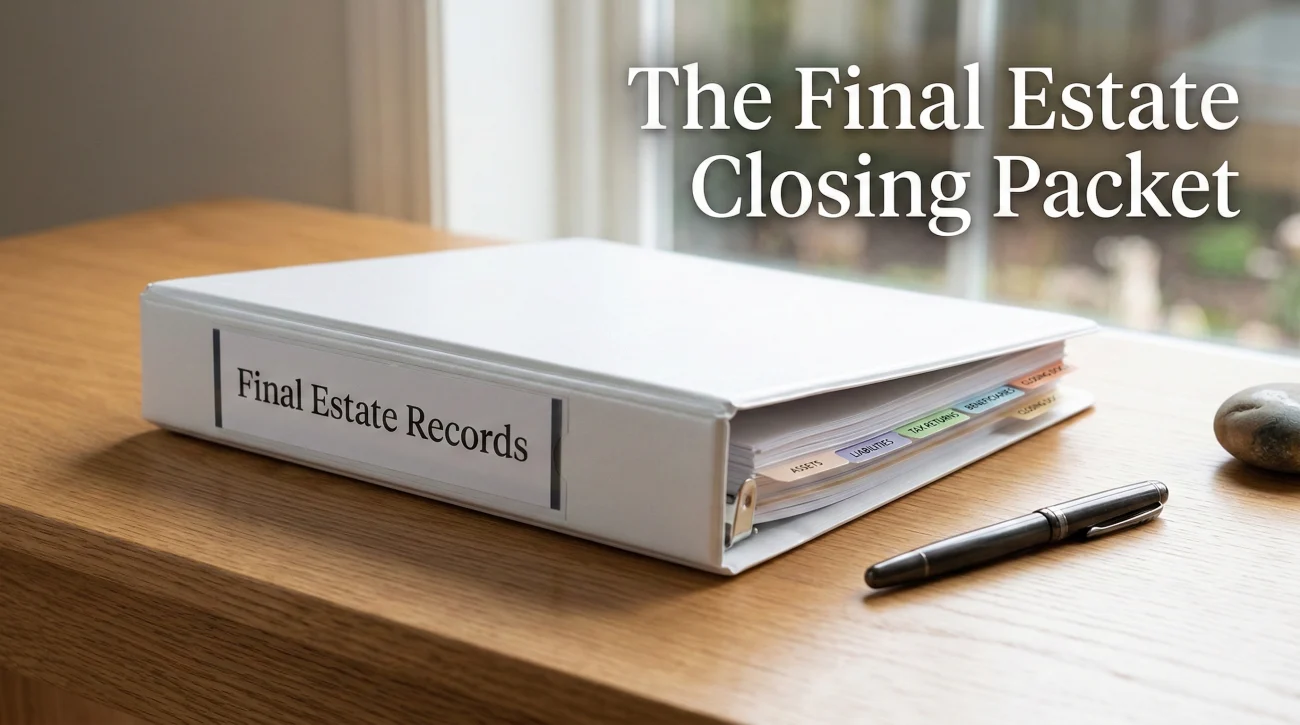
Closing the Estate: The Final Packet Executors Keep for Peace of Mind

Closing The Estate Checklist

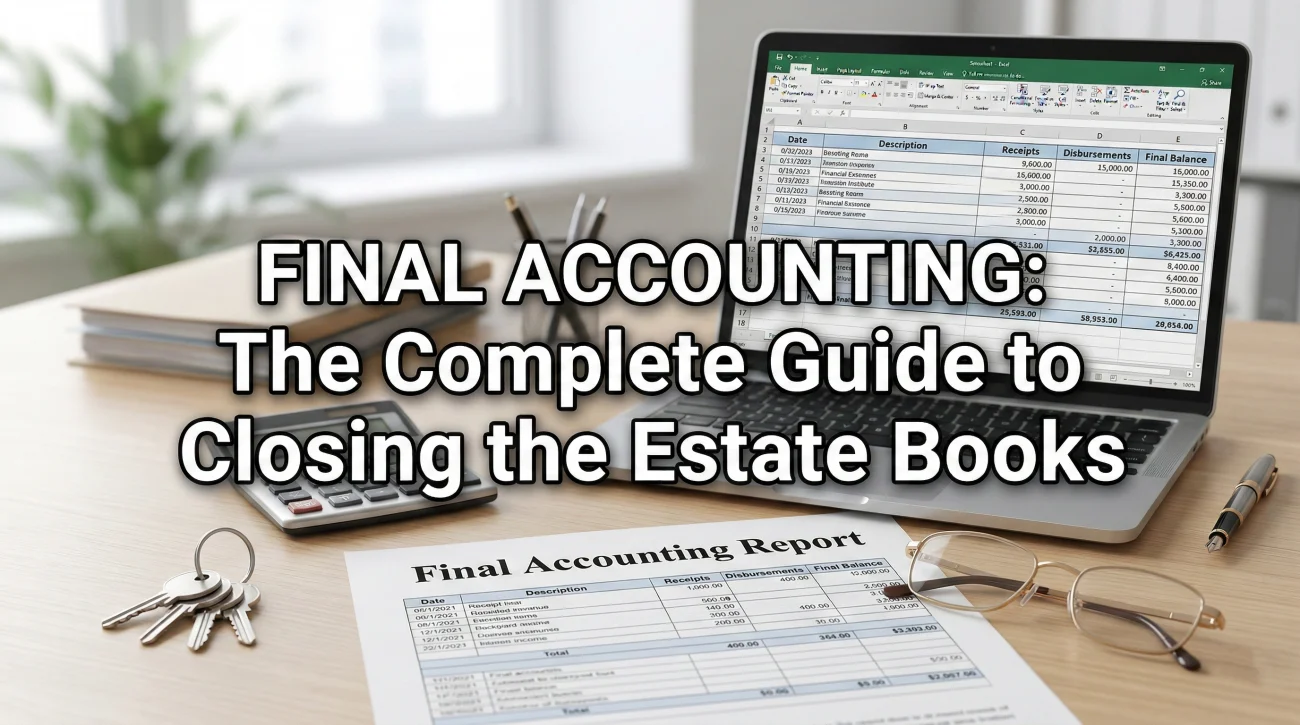
Closing an estate is not just about making the final payments; it is about building a secure, permanent record of everything you did. Your final closing packet should act as a self-contained history, combining your final accounting, proof of distribution, zero-balance bank statements, and communication archives. Never rely on verbal confirmations. Collect written receipts and … Read more

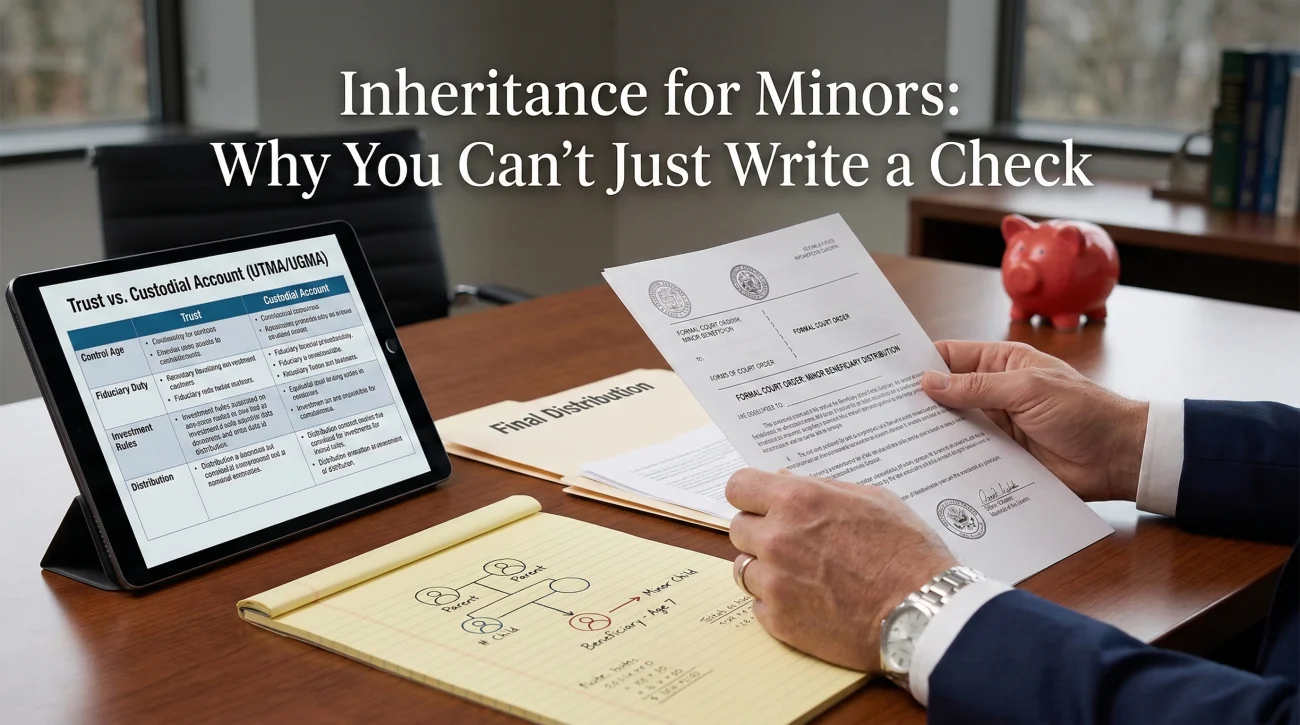
Distribution to Minors or Protected Beneficiaries: Why It Usually Cannot Be Handed Over Directly

Distribution To Minor Beneficiary

Minors usually cannot legally receive or manage inheritance directly, forcing the executor to use alternative, documented delivery methods. Informal handoffs to parents without a formal legal structure create massive personal liability for the executor. While waiting for custodial accounts or trusts to open, executors must use precise ledger entries to calculate, segregate, and protect the … Read more

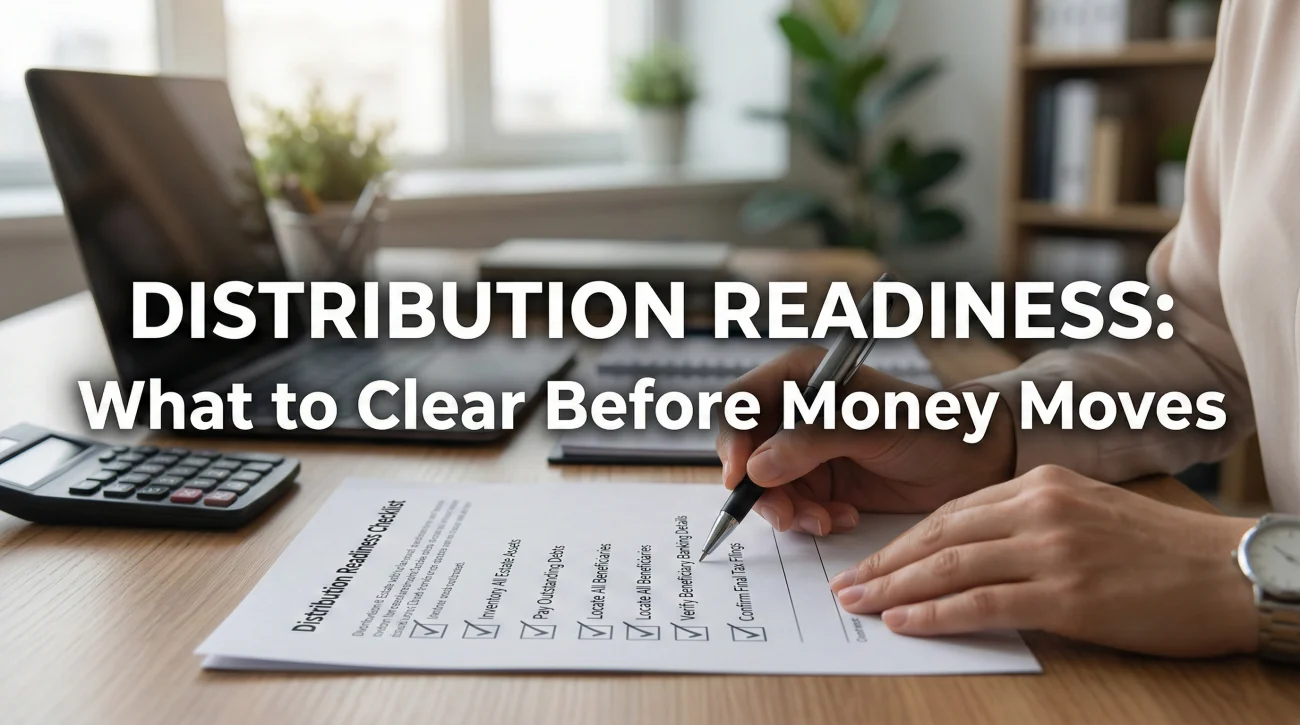
Distribution Readiness Checklist: What to Clear Before Money Moves

Distribution Readiness Checklist

The goal is safety: Distributing estate assets too early is the most common way executors accidentally take on personal financial risk. You need a structured readiness checklist. Verify the core gates: Before money moves, debts must be stable, tax lanes identified, assets fully pooled, beneficiary disputes addressed, and a readable accounting draft must exist. Holdbacks … Read more