
Insolvent Estate: What Changes When There Isn’t Enough Money to Pay Everyone
Insolvent Estate Executor

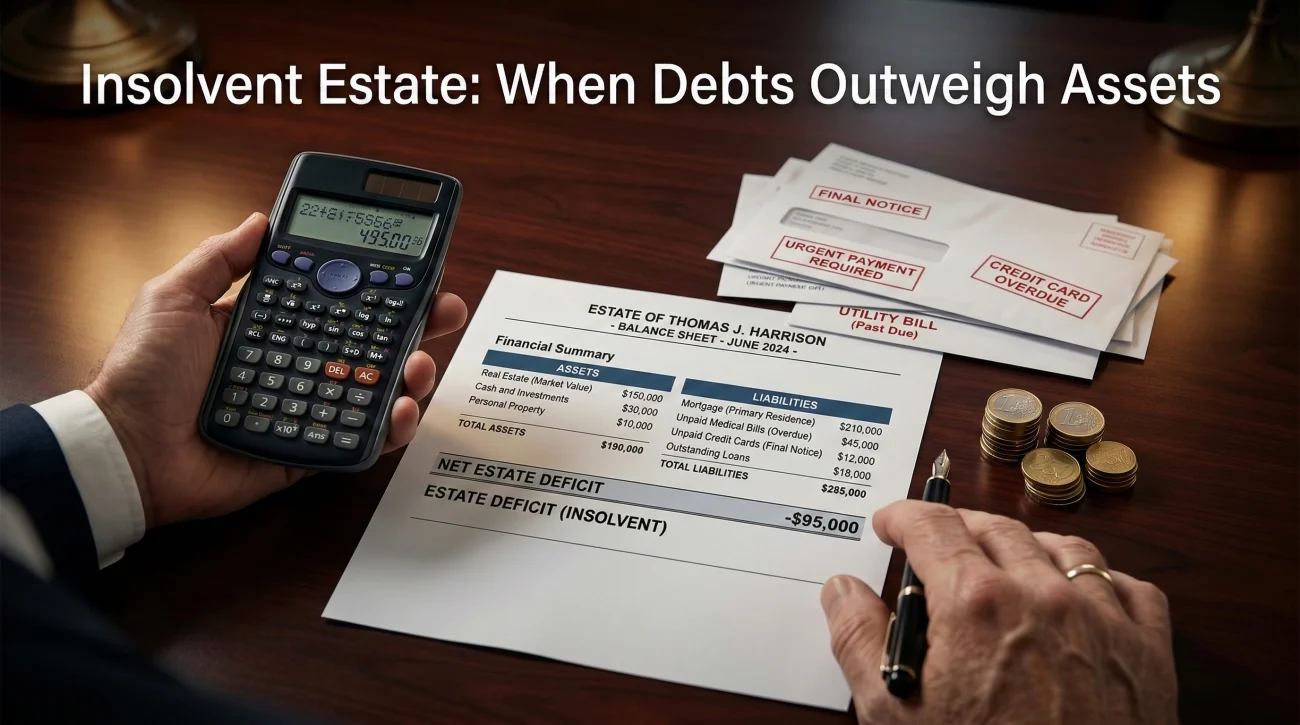
An insolvent estate simply means there is not enough money to pay all the deceased person’s debts; it changes your job from “paying bills” to “freezing payments and logging claims.” Do not guess who should be paid first. Paying an unsecured credit card before knowing the total medical debt can create personal liability for you … Read more
Executor Paying Debts: A Safe Order-of-Operations Without State-Specific Priority Charts

Executor Pay Debts In What Order

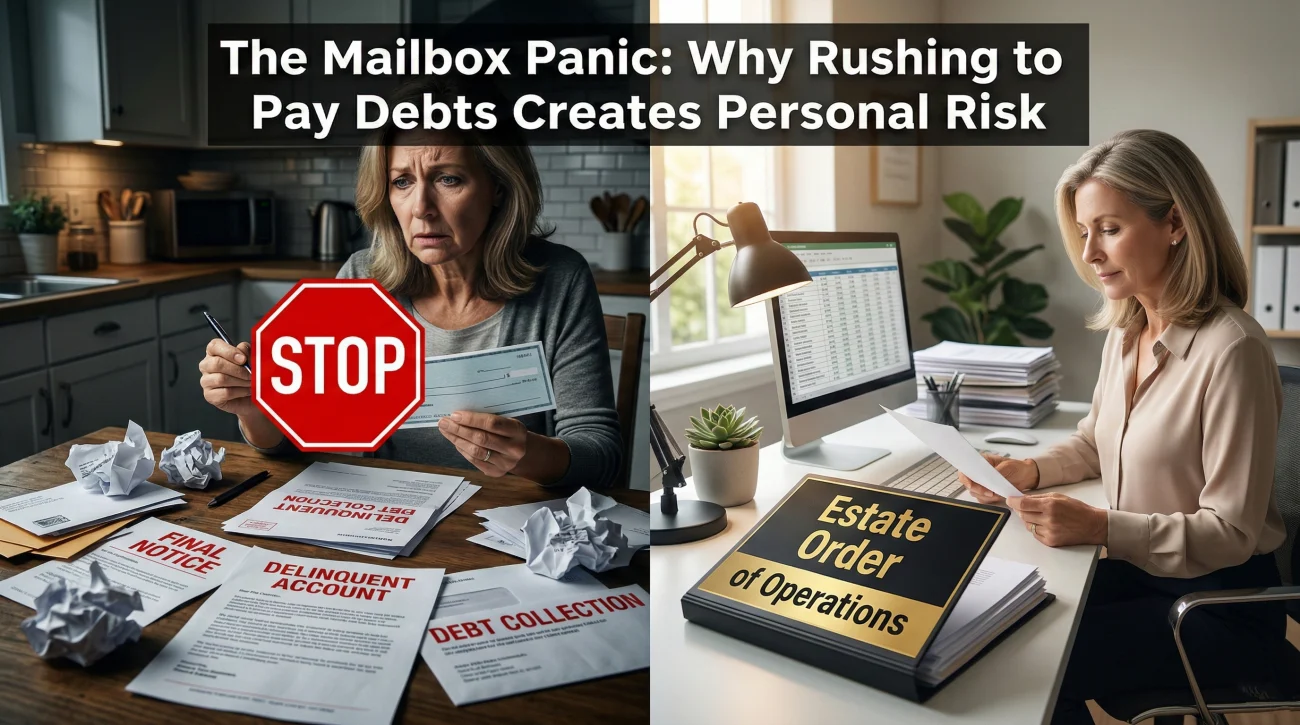
The most common trap for a new executor is paying the loudest creditor first, which creates massive liability if the estate runs out of money later. Estate administration relies on a strict workflow order: keep the estate running, reserve for taxes, manage secured assets, and finally, evaluate unsecured claims. Distinguishing between “administration expenses” (costs generated … Read more

Is an Executor Personally Responsible for Debts? The Real Risk Is Paying the Wrong Thing

Is An Executor Responsible For Debts

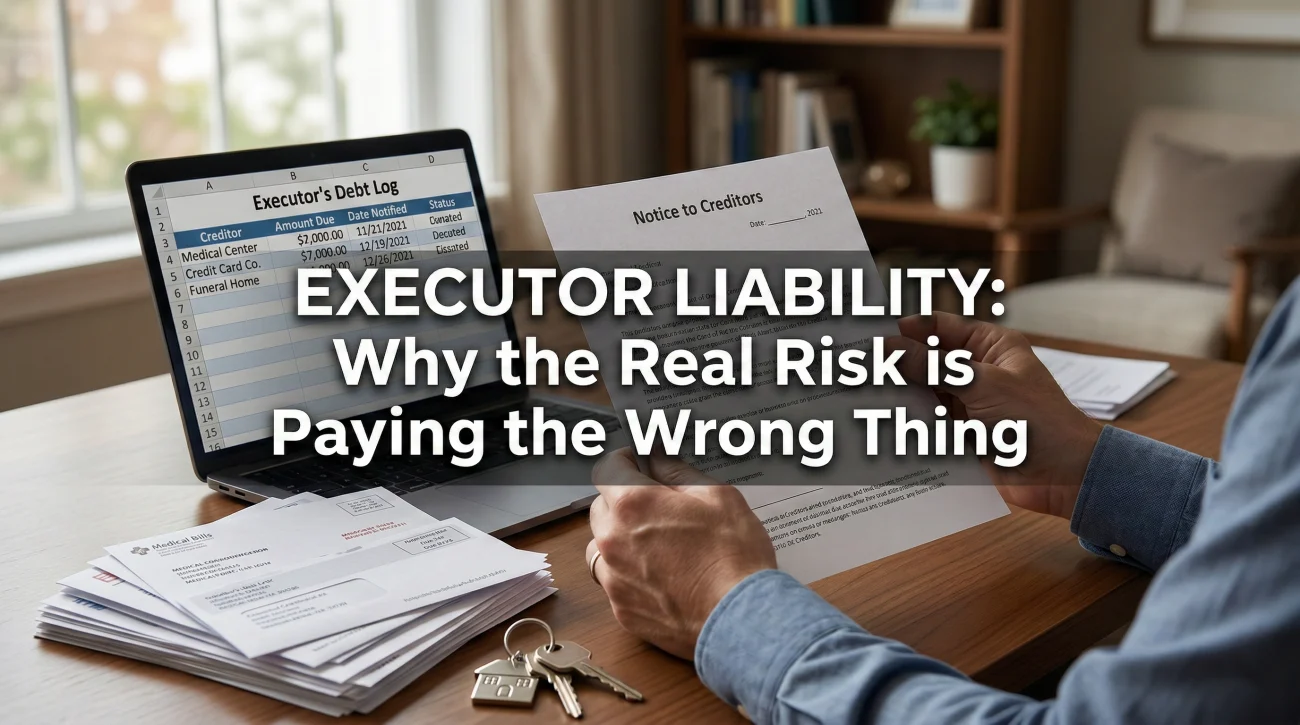
The financial obligations left behind belong entirely to the estate. Your risk as an administrator does not come from the debt itself, but from making procedural errors while handling it. Never guess who gets paid first. Paying a lower-priority bill while ignoring a major claim, or distributing money to beneficiaries too early, are the primary … Read more