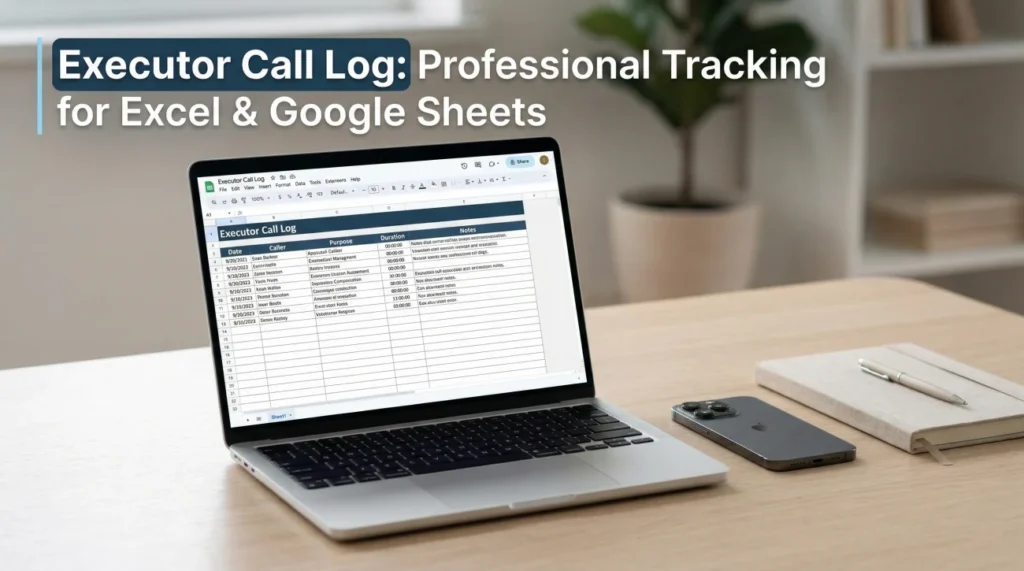
- Tracking phone calls is just as important as organizing paperwork. Relying on memory leads to repeated requests, lost reference numbers, and significant delays.
- A structured executor call log template ensures you have a permanent record of who you spoke to, what they promised, and what you need to do next.
- Always record the date, time, representative ID, reference number, and a clear summary of the outcome for every single interaction.
- Never hang up the phone without asking for a reference number or case ID. This is your anchor for future follow-ups.
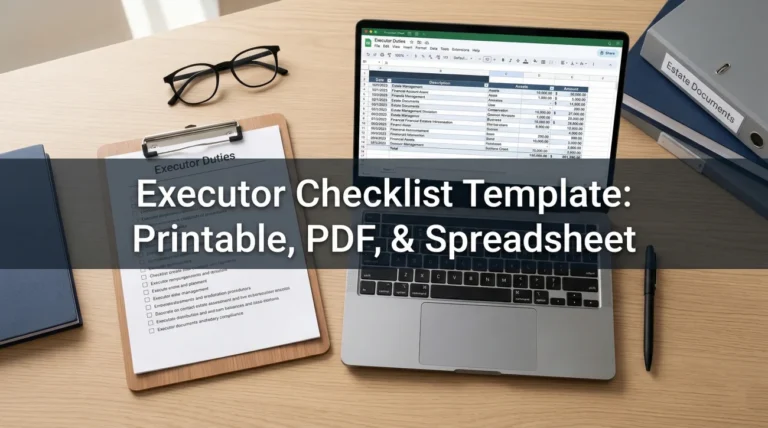
- Whether you use Excel for privacy or Google Sheets for co-executor collaboration, the tool matters less than the consistency of your data entry.
The Reality of Estate Phone Calls
Most executors brace themselves for a mountain of legal paperwork, but the real test of endurance usually happens on the phone. You will spend countless hours on hold, navigating automated menus, and explaining your situation to a revolving door of customer service representatives.
In my experience helping families organize estate workflows, the biggest breakdowns rarely happen because of legal complexities; they happen because of undocumented phone calls. I often see people finish a forty-five-minute call with a utility provider or an insurance company, sigh with relief, and move on to the next task. A week later, when the requested forms have not arrived, they call back. A new representative answers, cannot find any notes from the previous conversation, and the entire process resets to zero.
You cannot rely on the institution to keep perfect records on your behalf. You must maintain your own paper trail. Using an executor call log template is a practical defense mechanism. In this guide, I will show you exactly what a proper log looks like, what fields are non-negotiable, and the communication scripts that force institutions to give you the tracking data you need.
What a Completed Call Log Actually Looks Like
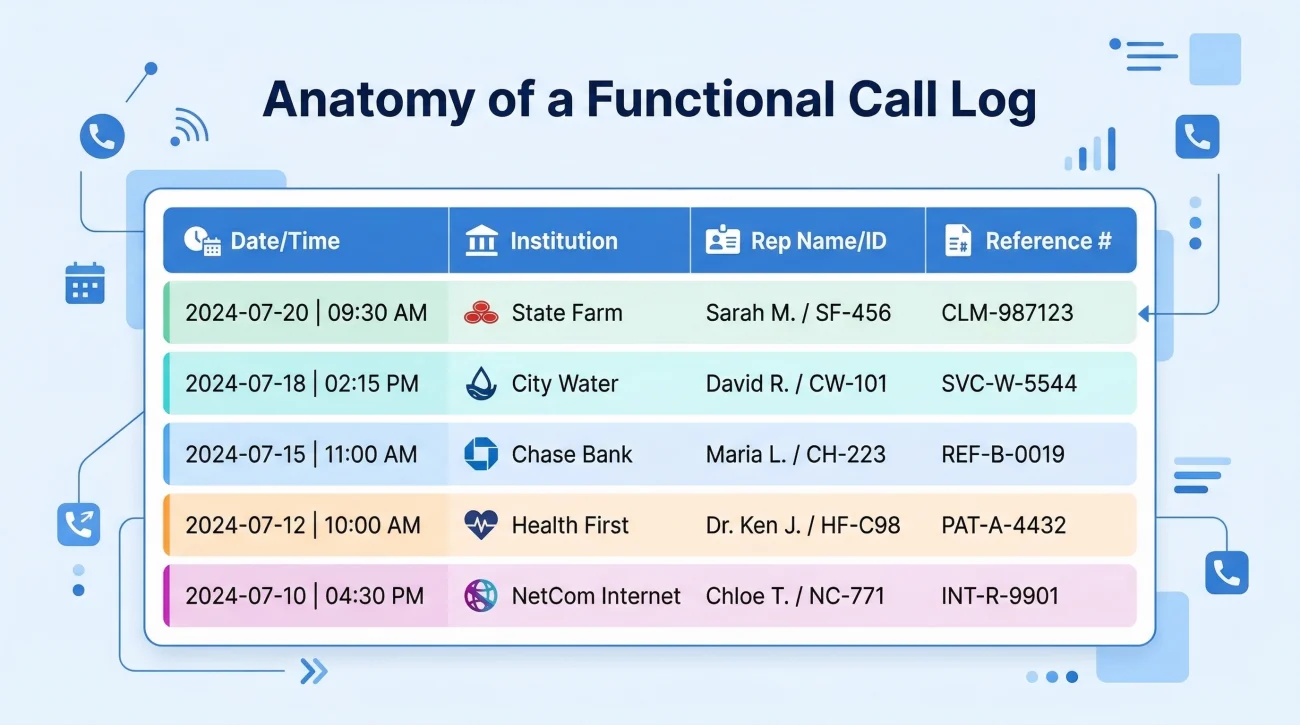
Before we break down the individual components, it helps to see the end goal. A highly functional call log is not a diary; it is a structured database of actions and outcomes.
Here is a snapshot of what your spreadsheet should look like after a few days of active administration work. Notice how specific the details are in the “Summary” and “Next Action” columns.
| Date & Time | Institution | Rep Name/ID | Reference # | Summary / Outcome | Next Action |
|---|---|---|---|---|---|
| Oct 12, 10:15 AM | State Farm Auto | David (ID: 4492) | #SF-9921-A | Reported death. Policy active until Nov 1. Needs Death Cert & Letters to cancel. | Mail documents by Oct 15. |
| Oct 12, 1:30 PM | City Water Dept | Maria (Ext 12) | N/A (No system) | Account moved to “Estate of” status. Final bill will generate on Oct 28. | Check mail for final bill early Nov. |
| Oct 13, 9:00 AM | Chase Credit Card | Automated System | None | Waited 25 mins. Disconnected before speaking to human. | Call back tomorrow morning. |
| Oct 14, 11:45 AM | Chase Credit Card | Sarah (Estates Unit) | Tkt-883920 | Card frozen. Balance is $450. Mailed affidavit of domicile form to my house. | Follow up Oct 24 if form not received. |
With a record like this, if Chase Credit Card fails to send the form by October 24th, you do not have to explain the whole story again. You simply call, provide ticket number 883920, and ask for a status update.
Core Fields to Include (and Why They Matter)
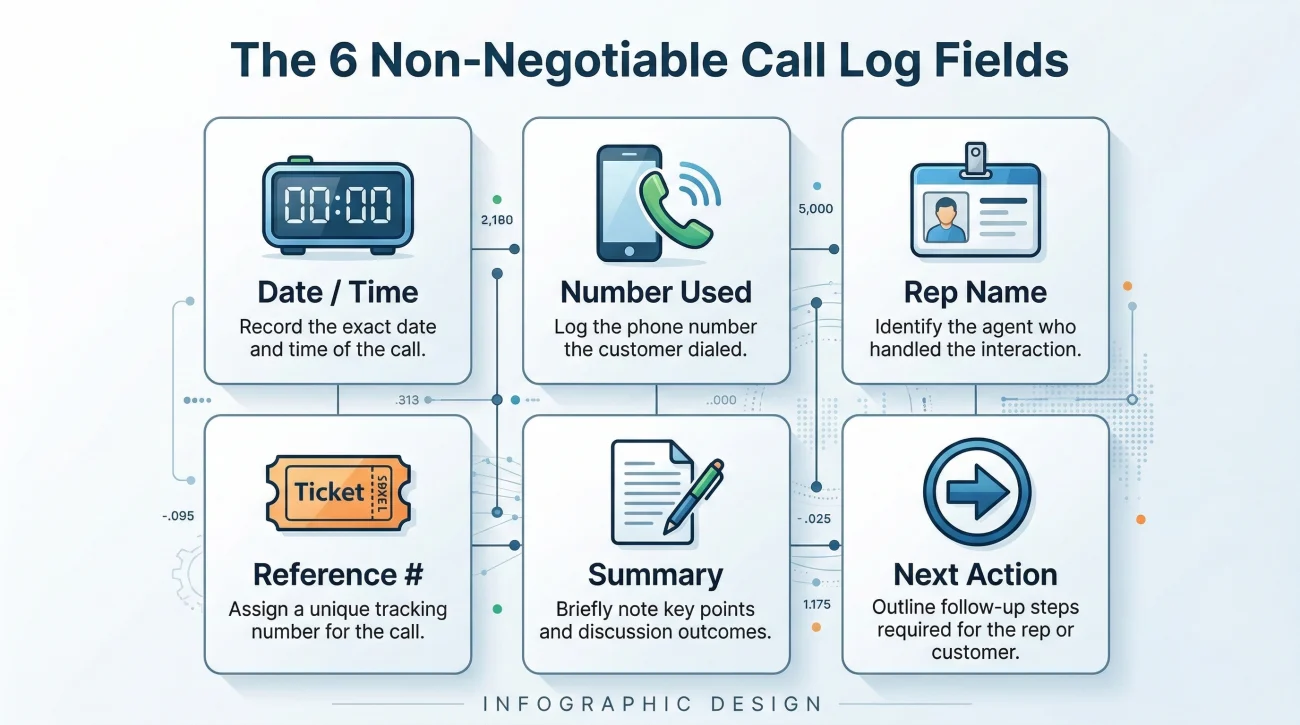
Looking at the mockup above, you will notice that a single “Notes” column is not enough. To make your log truly actionable, you need to break the conversation down into specific data points. If you are building your own spreadsheet, these are the essential columns you should include.
| Column Name | Why You Need It |
|---|---|
| Date, Time & Time Zone | Crucial for institutions to locate call recordings if a dispute arises. Always note the time zone if calling a national center. |
| Phone Number Used | Agencies have many numbers. Note the exact routing number you used to avoid going through the main menu again. |
| Rep Name / ID | Many agents only give a first name. Ask for their Employee ID or Agent Number to properly identify them later. |
| Reference / Case # | The most important field. This ties your call to a specific system ticket in their database. |
| Summary / Outcome | What they told you. Keep it factual and objective, avoiding emotional notes. |
| Next Action & Date | Who owes what to whom, and when. This serves as your built-in to-do list. |
⚠️ Warning: Do not use your call log to store sensitive data like full Social Security Numbers or complete bank account numbers. Use placeholder references (like “Checking ending in 1234”) to keep the document safe if it is ever printed or accidentally shared.
Logging Voicemails and Callbacks
A common gap in tracking happens when you do not actually speak to a person. If you reach a specialized estate department and have to leave a voicemail, log it. Record the exact time you left the message and what you requested. If an agent promises a callback within 48 hours, put that in your “Next Action” column. Documenting these attempted contacts is vital if beneficiaries or creditors later ask why a certain process took so long.
Avoiding Common Tracking Mistakes
Even with a perfect template, the quality of your log depends entirely on what you type into it. A frequent issue is taking emotional notes instead of factual notes. The log should be an objective administrative record, not a place to vent about how unhelpful an agent was. Stick to the facts: who you spoke to, what was said, and what the next step is.
Called the phone company. They were terrible and said I need to mail something to them before they can close the account. I will try again later.
Spoke to Agent Sarah (ID 8492). Ref #99281. She stated account cannot be closed over phone. Must mail copy of death cert to PO Box 123. Action: Mail documents by Friday.
The “After” example gives you the exact operational information required to move forward. If you need to refresh your memory on what to do immediately after taking control, review the Executor First Steps Checklist to ensure you have the correct documents ready to mail when these agents ask for them.
What to Do When They Cannot Find Your Previous Call
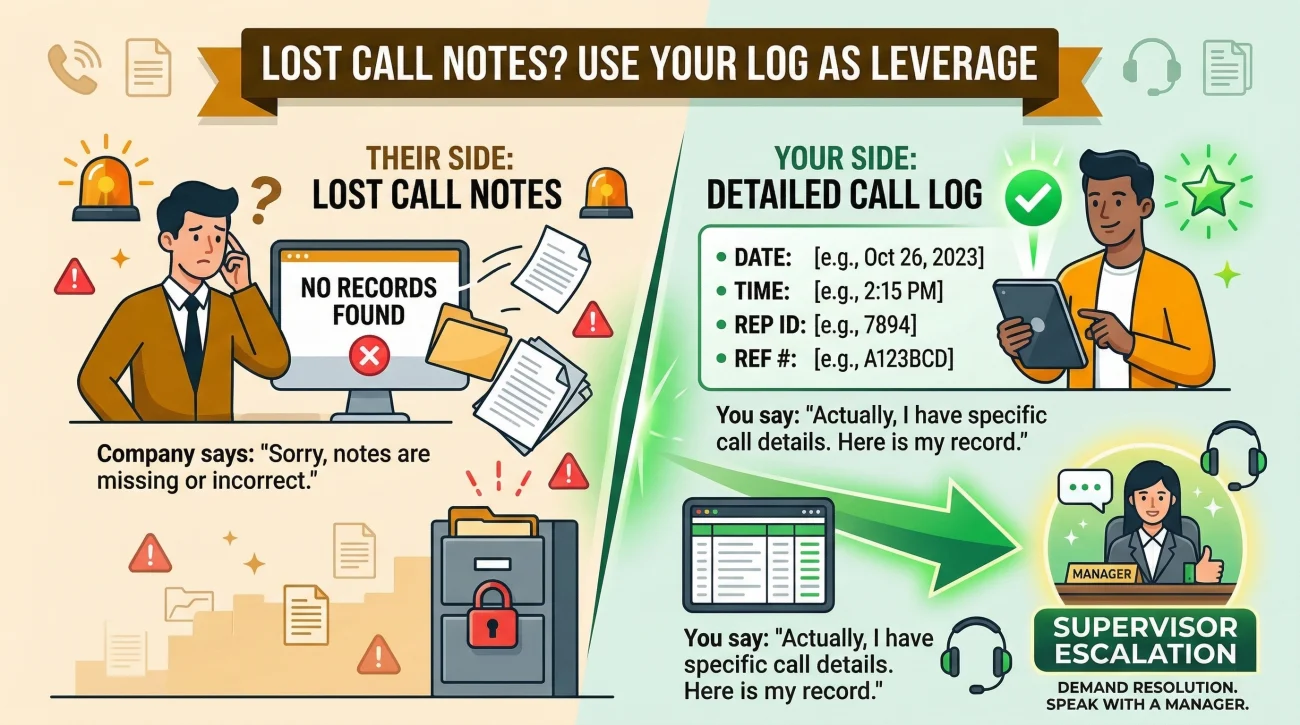
One of the most stressful situations an executor faces is calling an institution to follow up, only to hear: “I’m sorry, I don’t see any notes from a previous call.”
When this happens, your call log is your leverage. Do not panic and do not immediately agree to start the whole process over. Instead, calmly provide the data you recorded.
Give the agent the exact date and time of the previous call, the name and ID of the person you spoke with, and the reference number. Ask them to search their system using those specific parameters, or ask them to check the call recordings for that specific timestamp. In many cases, providing this highly specific data prompts the agent to escalate the issue to a supervisor who can locate the “lost” ticket in a back-office queue.
Scripts to Control the Conversation
To get the data you need, you have to actively manage the flow of the conversation. Customer service agents are trained to resolve calls quickly and move on to the next person in the queue. You need to politely interrupt their routine to secure your records.
When an agent only provides a first name, it is not enough for your log. I always use a simple conversational formula to get their specific identifying information without sounding confrontational: [Acknowledge Name] + [Request Identifier] + [Explain Reason]. Here is how that sounds in practice.
Script: Getting a specific identifier
“Thanks, Michael. Since I know there are likely many Michaels in your department, do you have an agent ID number or an extension I can note down in case I need to reference this call later?”
Sometimes, an agent will tell you they do not generate reference numbers. You still need to anchor the conversation.
Script: When they refuse a reference number
“I understand your system doesn’t generate a specific ticket number. In that case, how should I reference this specific conversation if I need to call back next week? Should I just use my father’s account number and today’s date?”
Estate administration often involves being bounced around. If you are transferred, do not let the first agent go without getting their info.
Script: When being transferred
“I appreciate you transferring me to the Estate Unit. Before you put me on hold, can I get your name and agent ID, just in case the call drops during the transfer?”
Finally, when you call back for a status update, take control immediately so they do not force you through the standard verification script twice.
Script: Calling back with a reference number
“Hello, I am calling to follow up on an existing estate request. I spoke with Agent Sarah on October 12th, and my reference number is 99281. Can you pull up that ticket and let me know the current status?”
Choosing Your Tracker: Excel, Sheets, or Databases
The tool you choose to host your call log depends entirely on who needs to see it.
Offline Spreadsheets (Excel): If you are a solo executor handling a private family matter, a local Excel file is highly effective. It feels secure, you control the file entirely, and you do not have to worry about internet connectivity. Establish a strict naming convention like “SmithEstate_CallLog_Current.xlsx” and back it up regularly.
Cloud Spreadsheets (Google Sheets): If you have been appointed alongside someone else, coordination is your biggest hurdle. I recently saw a family with three co-executors living in three different states. They avoided major arguments simply because they used a shared Google Sheet. It acted as a single source of truth. If one brother saw that his sister had already called the utility company and logged the reference number, he knew not to duplicate the effort.
Modern Databases (Notion/Airtable): For tech-savvy executors, tools like Notion or Airtable offer powerful alternatives. You can link your call log directly to your task list or document inventory. However, only use these if you are already comfortable with them. The weeks following a death are not the time to learn a complex new software system.
Archiving the Call Log After the Estate Closes
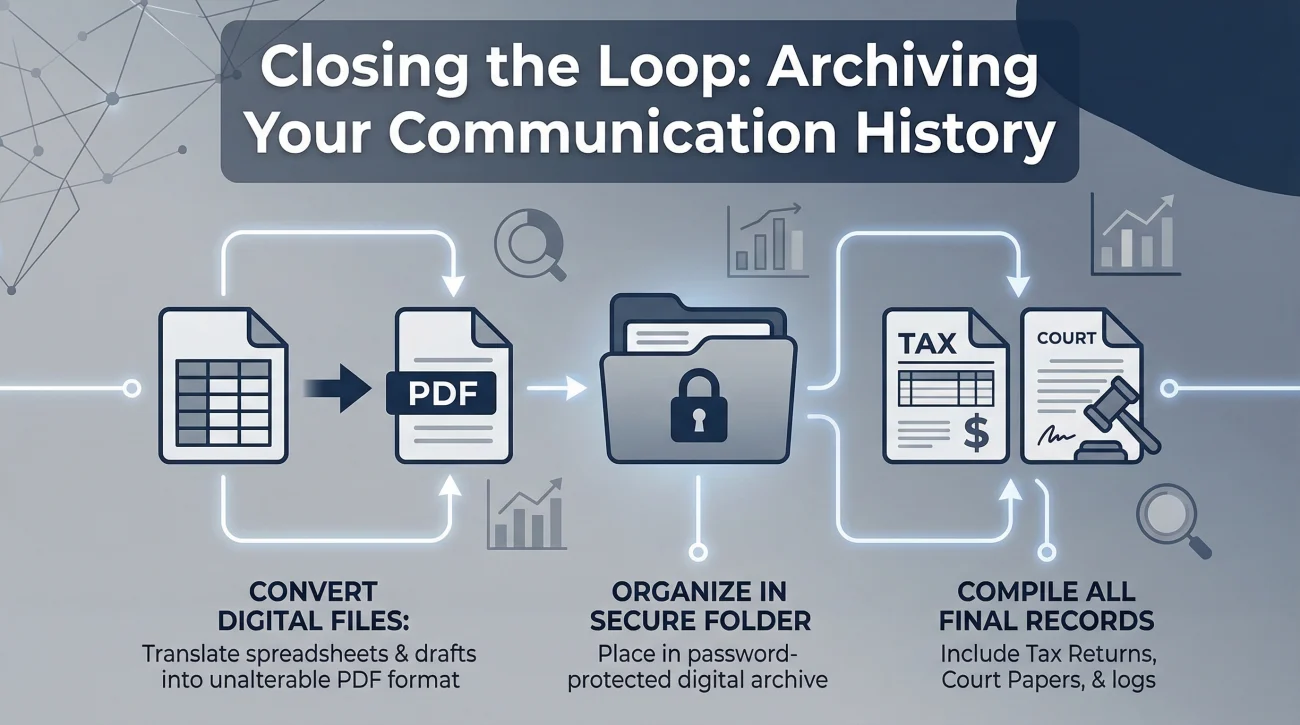
Your call log has value even after the final distributions are made. When the estate is officially closed, this log becomes a core part of your permanent records.
Do not simply delete the file or leave it floating in a cloud drive. Export your final spreadsheet as a PDF. A PDF is a static, un-editable snapshot of your work. Save this file alongside the final tax returns, court discharge papers, and bank statements. If a creditor or a frustrated beneficiary raises a question a year later about how a specific account was handled, your archived log serves as concrete proof of your diligent, timely communication.
❓ FAQ
⚖️ Do I need a separate log for conversations with the estate attorney?
It is best practice to keep attorney communications in a separate, dedicated file to maintain clear attorney-client privilege, keeping your general administrative call log strictly for banks, creditors, and agencies.
📱 Can I just rely on my phone’s recent call history?
No. Your phone history only shows the main 1-800 number and duration. It does not capture the department, the representative’s ID, the reference number, or the outcome, which are the details you actually need.
👀 What if a beneficiary demands to see my call notes?
Beneficiaries generally have a right to an accounting of the estate’s finances, but not necessarily your daily administrative notes. However, keeping a clean, factual log makes it easy to share a sanitized version if it helps ease their concerns.
🔄 How do I log a call where I was transferred to three different departments?
Log it as a single entry, but in the “Summary” column, note the progression (e.g., “General Support transferred to Fraud Dept, who transferred to Estate Processing. Spoke to final agent Mike ID#123”).
✉️ Should I mail a copy of my call log when I send the death certificate?
No. Institutions only want the specific legal forms they requested. Including your personal call log will only confuse their scanning departments and delay your processing.
📝 Is a handwritten call log legally acceptable?
Yes, there is no legal requirement that a log must be typed. However, a digital spreadsheet is far easier to search, filter, and back up securely compared to a paper notebook.
🗣️ What if an agent gives me conflicting information from the previous call?
Note the discrepancy in your log immediately. Use the script to provide the previous reference number, and ask the current agent to explicitly clarify why the instructions have changed since the last update.
🧑⚖️ Do I log calls made by the estate attorney on my behalf?
You do not need to track their daily calls. Your attorney will bill for their own time and keep their own records. You only need to log the direct communications you handle personally.
📬 How do I track promised mailed documents that never arrive?
Use the “Next Action & Date” column. If an agent says a form will arrive in 7 days, set a date for 10 days out. If it is empty on that date, your log tells you exactly who to call back.
⏱️ Should I record the exact duration of each call?
Unless you are a professional executor billing by the hour, logging exact call duration is usually unnecessary. Focus your energy on capturing the outcome and the reference numbers.
⚠️ Disclosure: I'm not an attorney and nothing on this site is legal or tax advice. The content covers process, organization, and workflow—the operational side of estate administration. For legal interpretation, jurisdiction-specific deadlines, contested situations, or tax matters, please work with a licensed professional in your state.