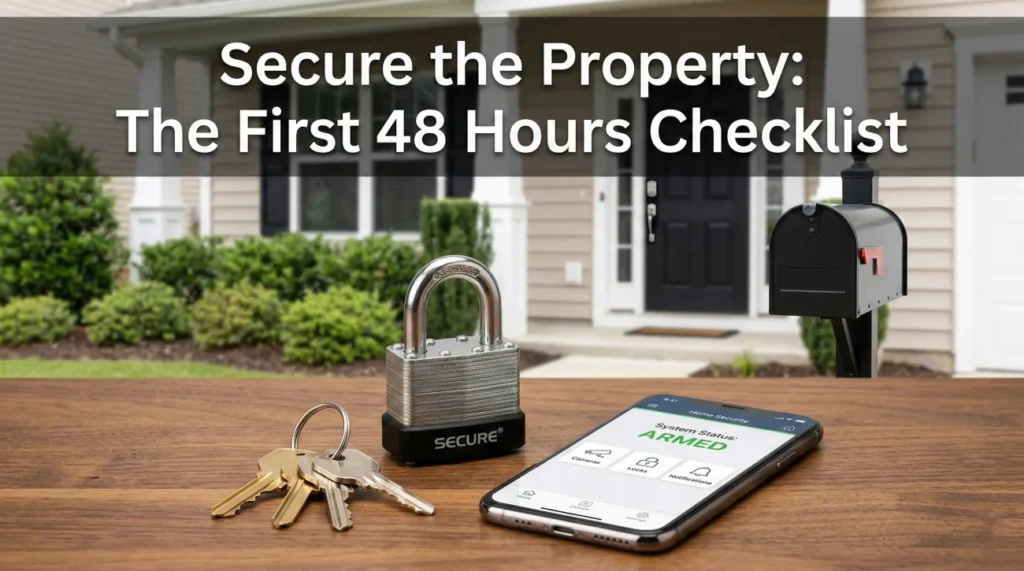
- Control the Perimeter: Limit access immediately. Collect outstanding keys and establish a visual baseline of the home’s contents before anyone starts sorting.
- Prevent Insurance Voidance: Notify the homeowner’s insurance about the vacancy to ensure the policy remains active. Keep climate control running to prevent structural damage.
- Stop the Mail Pile-up: Request a 30 day hold from the post office to secure incoming paper trails while you wait for official court authority.
- Lock Down Digital Access: Keep the deceased’s phone and primary email active. They are your required tools for receiving two factor authentication codes later.
- Build Your Defense: Track every action, every property entry, and every key conversation in a dedicated log to protect yourself from family disputes.
The Reality of Protecting an Estate in the First 48 Hours
When I talk to people who have just stepped into the role of executor, their minds are usually racing with thoughts of probate courts, tax forms, and tracking down bank accounts. But in my day-to-day experience supporting estate administration workflows, I always pull them back to the immediate physical reality: the house, the mail, and the risk of theft.
An unoccupied home is highly vulnerable. Mailboxes overflow quickly, signaling to the neighborhood that no one is home. And while you are focused on the legal paperwork, the physical property needs immediate protection. You need a practical secure house after death checklist to stabilize the situation.
Field Note: I once worked on a case where the executor assumed the house was completely secure because they had “the key.” It wasn’t until a week later they realized the dog walker, a neighbor, the cleaning service, and a former contractor all had spare keys. The home wasn’t nearly as secure as they thought.
My goal with this guide is to walk you through the immediate steps to lock down the property, manage the incoming mail safely, and put up defenses against identity theft. We are not talking about clearing out the house or selling assets yet. This is purely about stabilization, protection, and buying yourself the time you need to do the job right.
While this guide focuses heavily on the physical property, keeping the big picture in mind is critical. If you haven’t mapped out your overarching duties yet, I highly recommend reviewing our complete Executor First Steps Checklist to see exactly how securing the home fits into the broader timeline of your responsibilities.
Step 1: Immediate Physical Security and Asset Preservation
The very first priority is physical stabilization. This means controlling who can get in, ensuring the house doesn’t suffer environmental damage, and preserving the state of the belongings exactly as they were.
Controlling Access and Family Dynamics
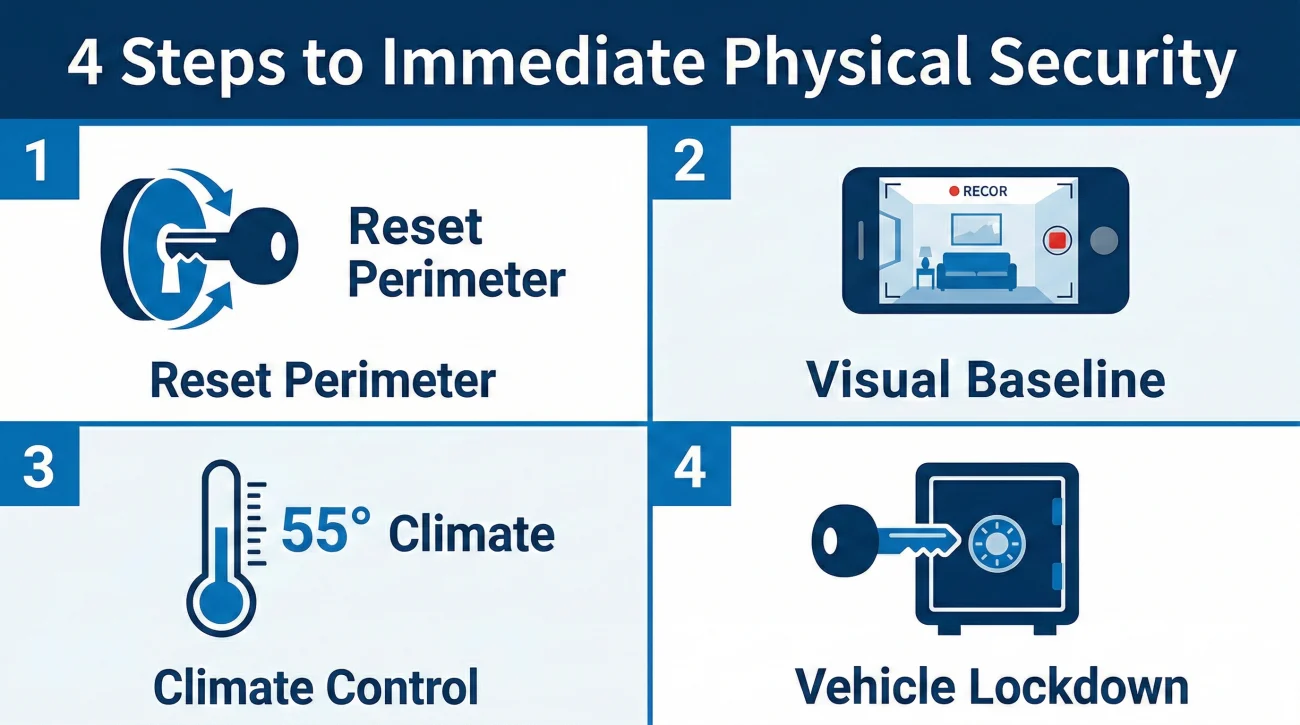
If you have legal access to the property, your first job is to reset the perimeter. If budget and authority allow, re-keying the locks is the most definitive way to secure the property. If that is not possible, you must actively track down and retrieve spare keys from neighbors and service providers.
You also need to manage family expectations immediately. It is incredibly common for relatives to want to enter the home to “grab a few keepsakes.” You must politely but firmly stop this.
“Until the probate court officially appoints you and you have inventoried the assets, nothing leaves the house. A missing watch or television on day two can create months of bitter family conflict.”
Before anyone else enters, do a continuous video walk-through of the entire property on your phone. Open closets, look inside the garage, and check the basement. Do not narrate with assumptions. Just capture the visual baseline. If you find a home safe, a lockbox, or envelopes of cash, document their location on video, secure them in a locked container, and log them immediately.
The Vacancy Clause and Utilities
A major blind spot for first time executors is homeowner’s insurance. Most standard policies have a “vacancy clause” stating that if the home is unoccupied for more than 30 or 60 days, coverage for certain damages (like vandalism or water damage) can be denied. You must contact the insurance agent to inform them the owner has passed and the property is currently vacant.
Coupled with insurance is utility management. Never attempt to save the estate money by immediately shutting off the electricity, water, or climate control.
⚠️ Warning: Shutting off the heat in winter guarantees burst pipes. Shutting off the air conditioning in a humid summer guarantees mold. Keep the basic utilities running at a baseline level (around 55°F in winter and 80°F in summer).
The Car in the Driveway
Vehicles are massive liability magnets. Lock the car, remove the keys from the house, and take out any registration or title documents from the glove compartment. Absolutely no one should be driving the deceased’s vehicle. If an uninsured family member gets into an accident while driving the estate’s car, the financial fallout can be devastating.
Once the physical perimeter is locked down and the home is environmentally stable, your next biggest vulnerability sits right at the curb: the mailbox.
Step 2: Managing the Mail, Landlords, and Paper Trails
If you are wondering what to do with mail after someone dies, your first goal is simply to stop the flow of sensitive information from sitting unsecured at the curb.
Stopping the Pile-up
A stuffed mailbox advertises to burglars that the home is vacant. In many cases, setting up permanent mail forwarding via the USPS requires you to present your official court appointed executor documents. But the probate process can take weeks.
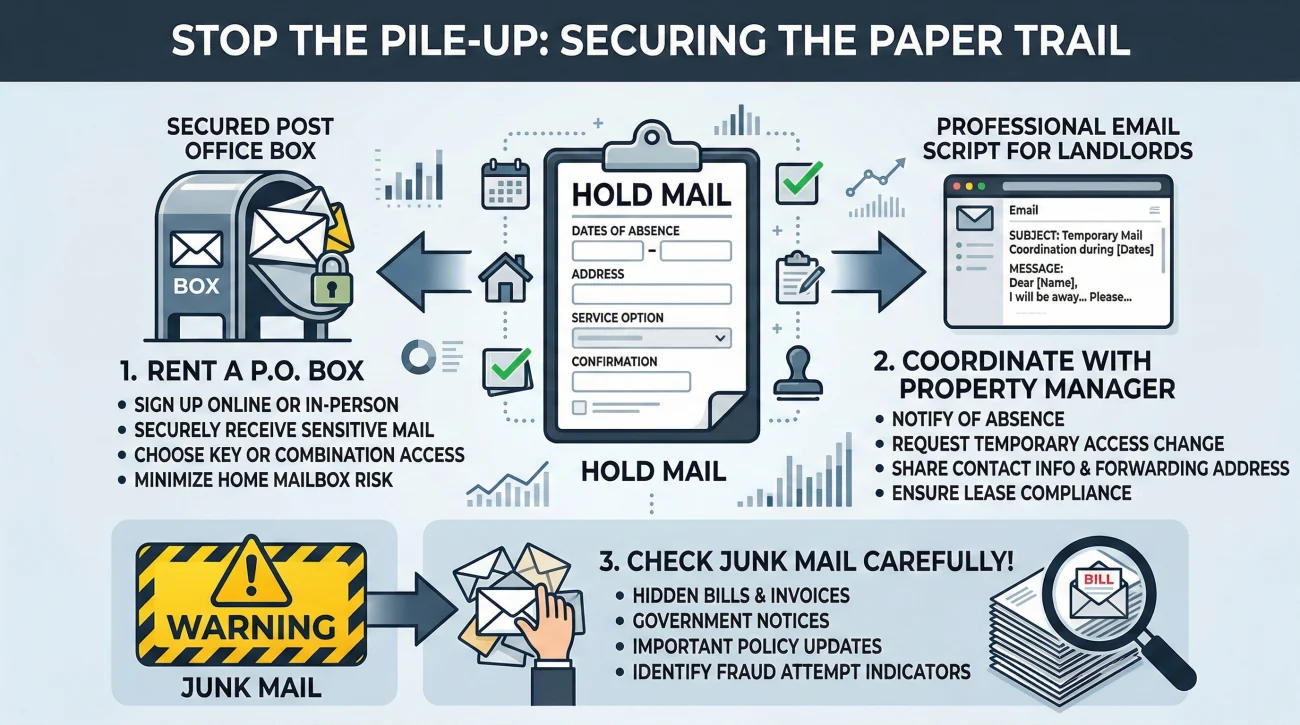
Use a standard “Hold Mail” request first. Anyone who shares the address or has basic access can usually request the local post office to hold the mail for up to 30 days. This stops the visual pile-up and secures the paper trail while you wait for official paperwork.
Field Note: I once saw an executor throw away a stack of what looked like generic junk mail. I asked to look through it, and hidden between two catalogs was a past due notice for an off-site storage unit. If we hadn’t caught it, the facility would have auctioned off the contents a week later. Treat every envelope as a potential asset lead.
Rentals and Property Managers
If the deceased rented their home, you do not own the perimeter. You have to work with the landlord or property manager. You need to establish a clear, written trail regarding property access, lease termination, and mail pickup.
Here is a polite, professional script you can use to communicate with a property manager before you have your final court documents:
Hello [Name],
I am writing regarding the apartment of [Deceased Name]. As the intended executor of the estate, I am currently working on securing the property and managing incoming mail while official paperwork is being processed.
Could you please provide a written list of your facility’s requirements for releasing the contents of the mailbox to me? Additionally, please let me know if your front office can temporarily hold their packages until I provide the necessary documentation.
I want to ensure I follow your protocols exactly. Please let me know what you need from me in writing.
Thank you,
[Your Name]
Notice the structure: [Your role/status] + [Request for written requirements] + [Offer to comply with their protocols]. This keeps the conversation calm and documented.
Step 3: Identity Theft and the Digital Estate
Identity thieves actively monitor obituaries and county death records. They know there is a bureaucratic lag between a person’s passing and the moment the credit bureaus lock the files. If you want to stop identity theft after death, you have to be proactive.
The Obituary Vulnerability
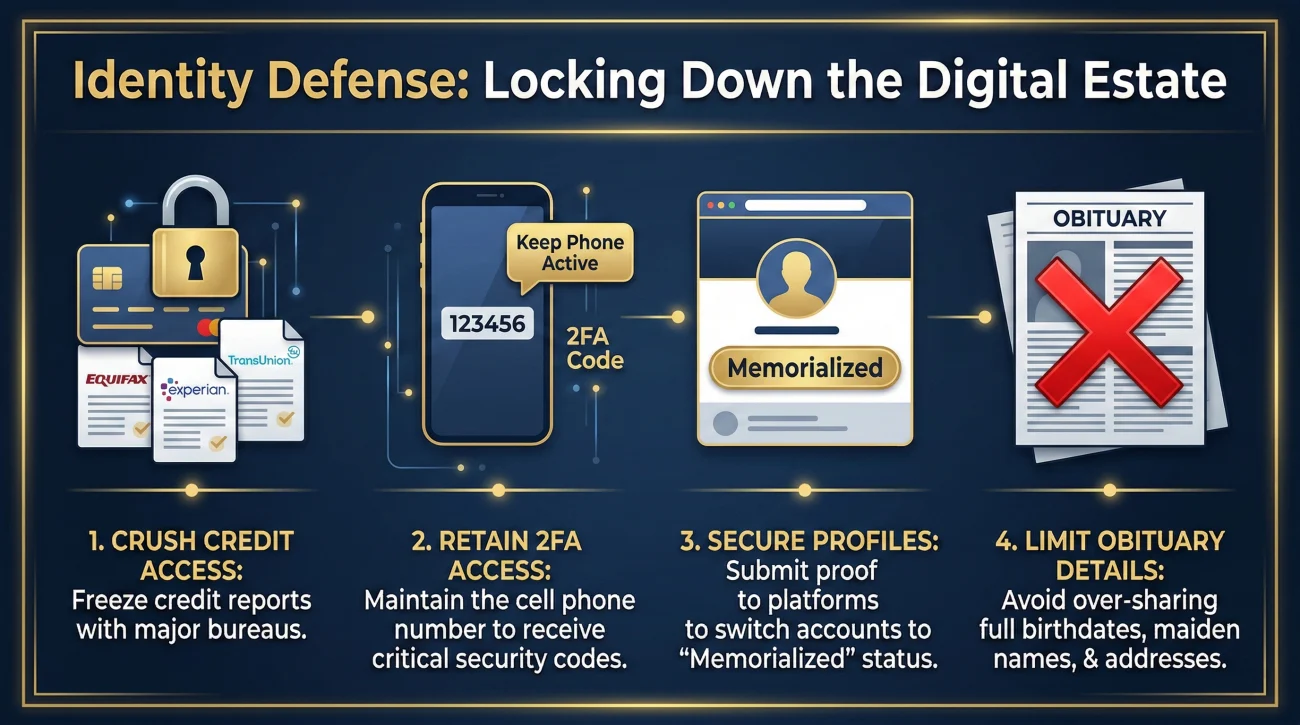
One of the most common mistakes families make is over-sharing in the obituary. Burglars read obituaries to find out exactly what time the family will be at a funeral home, leaving the property empty. Identity thieves look for the mother’s maiden name, date of birth, and home address.
“John Smith, born May 1, 1940 in Springfield to Mary Johnson, passed away at his home at 123 Maple Street. Services will be held Tuesday at 10:00 AM.”
“John Smith, 83, of Springfield, passed away peacefully. Services will be held privately.”
Locking Down Credit and Accounts
When you are able, notify the three major credit bureaus (Equifax, Experian, and TransUnion) to place a “Deceased Notice” on the credit file. This prevents anyone from opening new credit cards or loans. You should also secure their physical wallet and destroy any duplicate credit cards found in desk drawers.
Next, focus on the digital estate. Do not cancel the deceased’s cell phone plan or delete their primary email address. You will likely need that phone to receive two factor authentication (2FA) codes when trying to legitimately notify banks, subscription services, and password managers later.
Look for a password manager app on their phone or desktop. If you can legally access it, it serves as a master map of their digital life. Finally, consider memorializing their social media accounts rather than deleting them immediately, as this freezes the account and prevents hackers from taking it over to run scams on their friends list.
Step 4: Building Your Defense with an Action Log
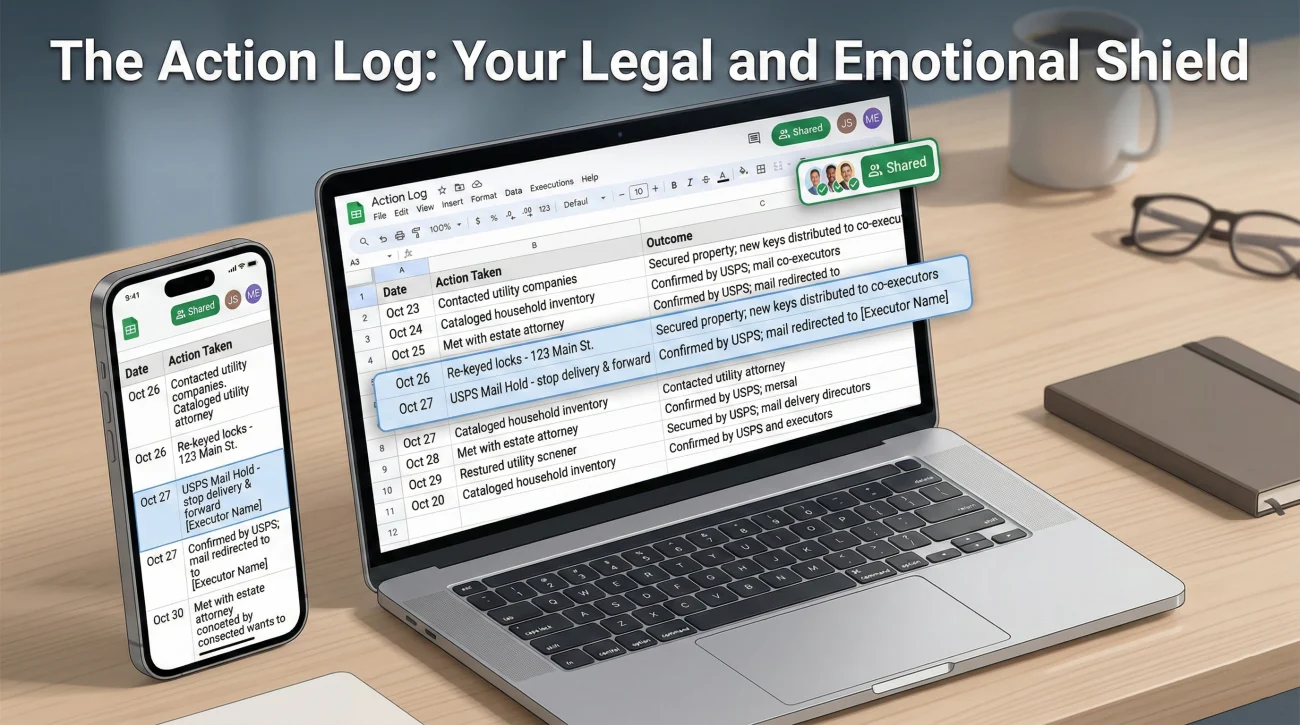
Once you have secured the physical perimeter, paused the mail, and locked down the digital accounts, your role shifts from putting out fires to managing information.
As an executor, your memory is your weakest asset. You are going to be overwhelmed with details, dates, and phone calls. The most effective way to protect yourself from accusations of mismanagement or family suspicion is to document your actions rigorously.
You need to track what you did to secure property after death, who you spoke to, and what mail you intercepted. An action log is not just for organization. It is your legal and emotional shield.
How to Organize Your Log
I always advise against using a physical notebook for this. Notebooks get left on kitchen counters and lost in the shuffle of packing boxes. Instead, set up a simple cloud-based spreadsheet, like Google Sheets.
A cloud document provides a single source of truth that you can pull up on your phone while standing in the driveway or waiting at the post office. If you are working with a co-executor, you can share this link with them. This single operational step completely eliminates those frustrating “Did you call the insurance company yet?” text messages because they can just check the live log themselves.
Keep your columns incredibly simple:
| Date | Action Taken / Mail Received | Status / Outcome | Notes |
|---|---|---|---|
| Oct 12 | Video walk-through of 123 Maple St | Completed | Saved to estate digital folder; backup on USB. |
| Oct 13 | Cleared fridge, set AC to 78°F | Completed | Water left ON for scheduled lawn care. |
| Oct 14 | Called State Farm re: Vacancy | Active | Spoke to Sarah. Policy requires bi-weekly checks. |
| Oct 16 | USPS 30-Day Mail Hold Requested | Completed | Confirmation #8829104. Ends Nov 13. |
If a beneficiary later asks, “Why is the power bill so high, did anyone even check the house?” you don’t have to get defensive. You just pull up your log and provide the exact date you adjusted the thermostat and the name of the insurance agent you spoke with to maintain the policy.
The Shift from Panic to Process
The first 48 hours after a passing are chaotic, but by following these steps, you are actively shifting the estate from a state of vulnerability into a state of control. You are building a fortress.
By changing the locks, managing the climate, holding the mail, and silencing the digital footprint, you eliminate the immediate risks of theft and decay. More importantly, you buy yourself the operational breathing room required to sit down, review the will, and prepare for the probate court without constantly looking over your shoulder.
❓ FAQ
🔑 What if a family member demands a key to the house right away?
You must politely decline. Explain that as the executor, you are legally responsible for preserving the entire estate until the court gives you the authority to distribute items. Giving out keys early creates liability for you.
💸 Who pays the mortgage and utility bills while we wait for probate?
If there is money in an accessible joint account or trust, those funds can often be used. If accounts are frozen, the executor or family members may choose to pay essential bills out of pocket and keep meticulous receipts to be reimbursed by the estate later.
📬 Can I legally open the deceased person’s mail?
If you have not yet been officially appointed by the probate court, you generally cannot legally open mail addressed solely to the deceased. This is exactly why requesting a 30-day mail hold at the post office is the safest initial step. It secures the envelopes at the facility until your official authority documents arrive, at which point you have the legal right to open and review everything.
💡 Should I cancel the internet and cable right away to save money?
Cable can usually be canceled quickly. However, consider keeping the internet active temporarily if the home relies on Wi-Fi for security cameras, smart thermostats, or remote alarm systems.
💳 Should I cut up their credit cards immediately?
Yes, locating and destroying physical credit cards is a smart security move. Just be sure to write down the account numbers and customer service phone numbers first so you can officially close the accounts later.
📱 Is it safe to use their thumbprint or Face ID to unlock their phone?
Using biometrics to bypass security can violate the terms of service of the device or carrier. Focus on keeping the device powered on to receive incoming verification texts (2FA) rather than trying to unlock the operating system yourself.
🚗 Should I notify the DMV or cancel their driver’s license?
Yes, returning the license to the DMV or notifying them of the passing is a key step in preventing identity theft, as a valid driver’s license is a primary tool for opening fraudulent accounts.
🐕 What happens to the pets left in the home?
Pets require immediate safe placement with family, friends, or a temporary foster service. In estate administration, pets are technically considered personal property, so you should document where they are placed and who is caring for them.
🗑️ Can I start throwing away old magazines and junk mail?
It is generally safe to recycle obvious retail flyers, but be extremely careful. What looks like junk could be an obscure dividend notice or a collection letter. When in doubt, box it up and save it until you have a clearer picture of the estate’s assets.
🛑 How do I stop random people or distant relatives from coming to the house?
Beyond locking the doors, you can leave a polite but firm note on the door stating the home is secured and directing inquiries to your specific phone number or email address. This deters casual visitors and helps you track who is looking for the deceased.
⚠️ Disclosure: I'm not an attorney and nothing on this site is legal or tax advice. The content covers process, organization, and workflow—the operational side of estate administration. For legal interpretation, jurisdiction-specific deadlines, contested situations, or tax matters, please work with a licensed professional in your state.