- The executor’s year guideline is a historical rule of thumb meant to give you breathing room, not a strict legal expiration date.
- Beneficiaries often weaponize this timeline around month six when they feel anxious and stop receiving proactive updates.
- Document specific delays like tax backlogs or real estate listings, and send brief monthly updates to prevent timeline disputes.
The 11:00 PM Text Message You Dread Getting
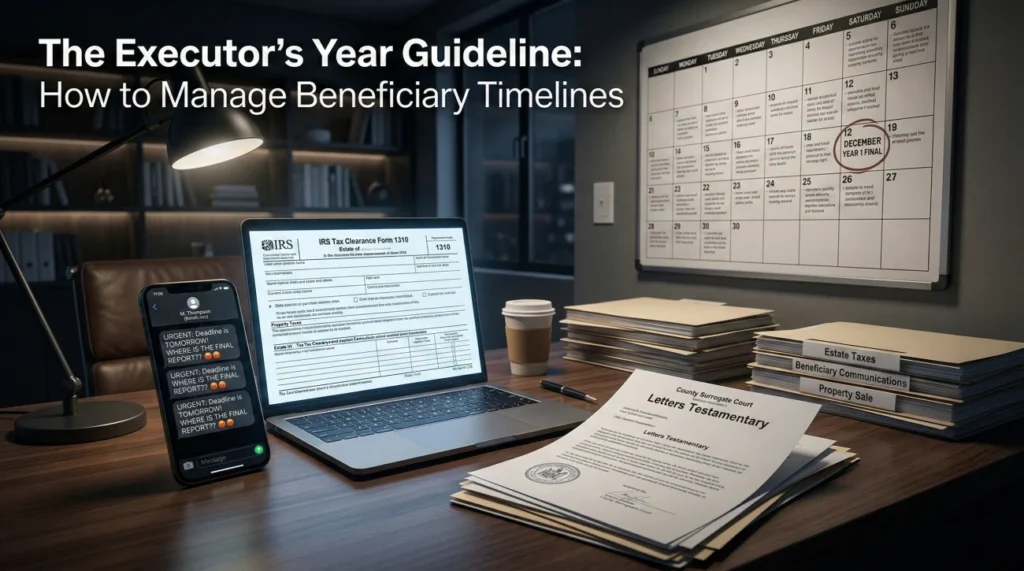
Michael was staring at a stack of unprocessed state tax clearance forms at 11:00 PM on a Tuesday. He was exactly six months into settling his mother’s estate. Then, his phone buzzed. It was a text from his sister.
“It has been over half a year. I read online about the executor’s year guideline. Why isn’t the house money distributed yet? Are you actually working on this?”
When you are drowning in paperwork, waiting on hold with institutions, and trying to manage your own grief, a message like that feels like a massive personal attack. You are putting in the hours, but from the outside, it looks like you are stalling.
Fortunately, instead of sending an angry reply, Michael used a structured approach. He sent a brief monthly update that Friday detailing the exact state tax backlog and providing a timeline from his CPA. With the unseen work finally visible, his sister’s tone immediately shifted from accusatory to understanding.
I see Michael’s exact situation constantly in my work helping executors organize their workflows. The breakdown rarely happens because the estate is actually moving too slowly. The breakdown happens because of a massive gap in expectations. Beneficiaries treat the executor’s year guideline as a hard legal deadline for receiving their money, while the executor is just trying to survive the next round of paperwork loops.
What the Guideline Actually Means in Practice
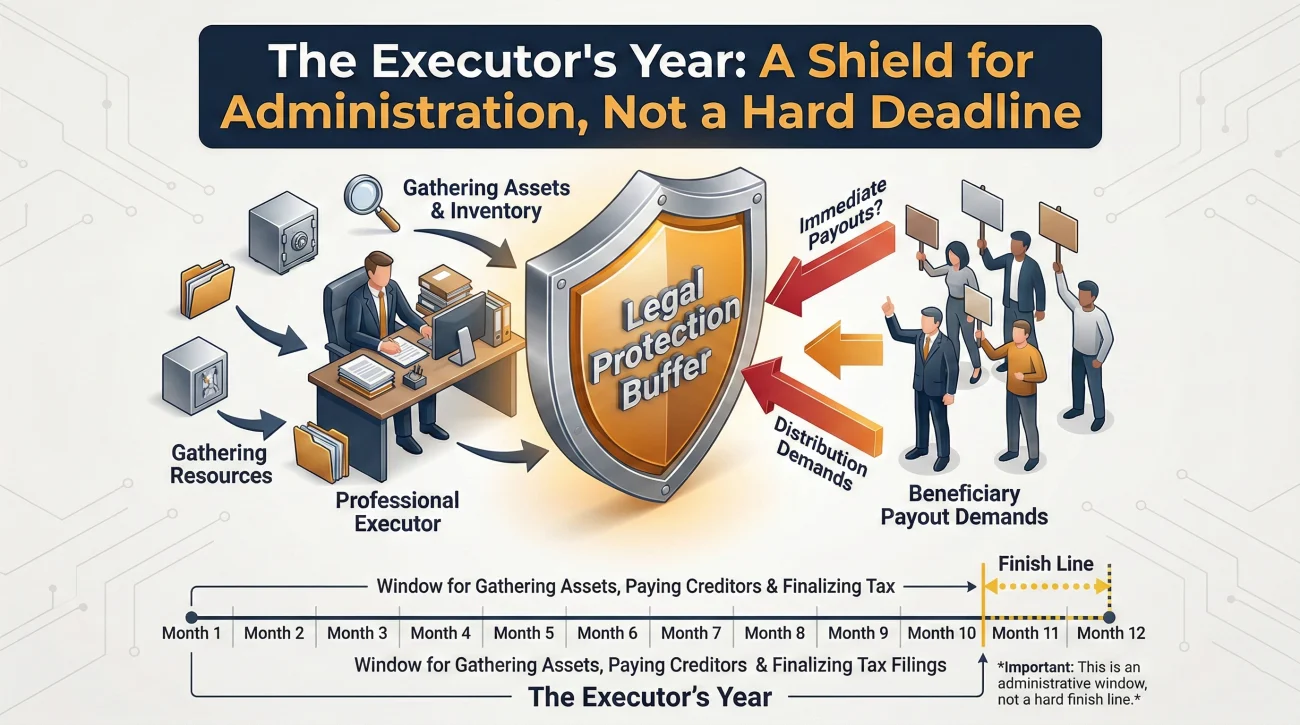
To fix the communication breakdown, we first have to understand what this term actually means. Historically, the executor’s year was designed as a shield to protect the person doing the administrative work.
The concept originated to give the executor a reasonable window of time, typically one year from the date of death or the date of court appointment, to gather the assets, identify creditors, and pay off debts without being legally harassed by beneficiaries demanding early payouts. As noted in Lexology’s analysis of estate administration timelines, it is a rule of thumb for standard estates, not a strict legal stopwatch.
Key Point: The one-year mark is generally the period where you are protected from demands for distribution. It is not the date by which everything is guaranteed to be finished.
However, when beneficiaries search online, they often misinterpret this protection. They read “one year” and assume that on day 365, a check will automatically arrive in their mailbox.
The Month-Six Pressure Spike
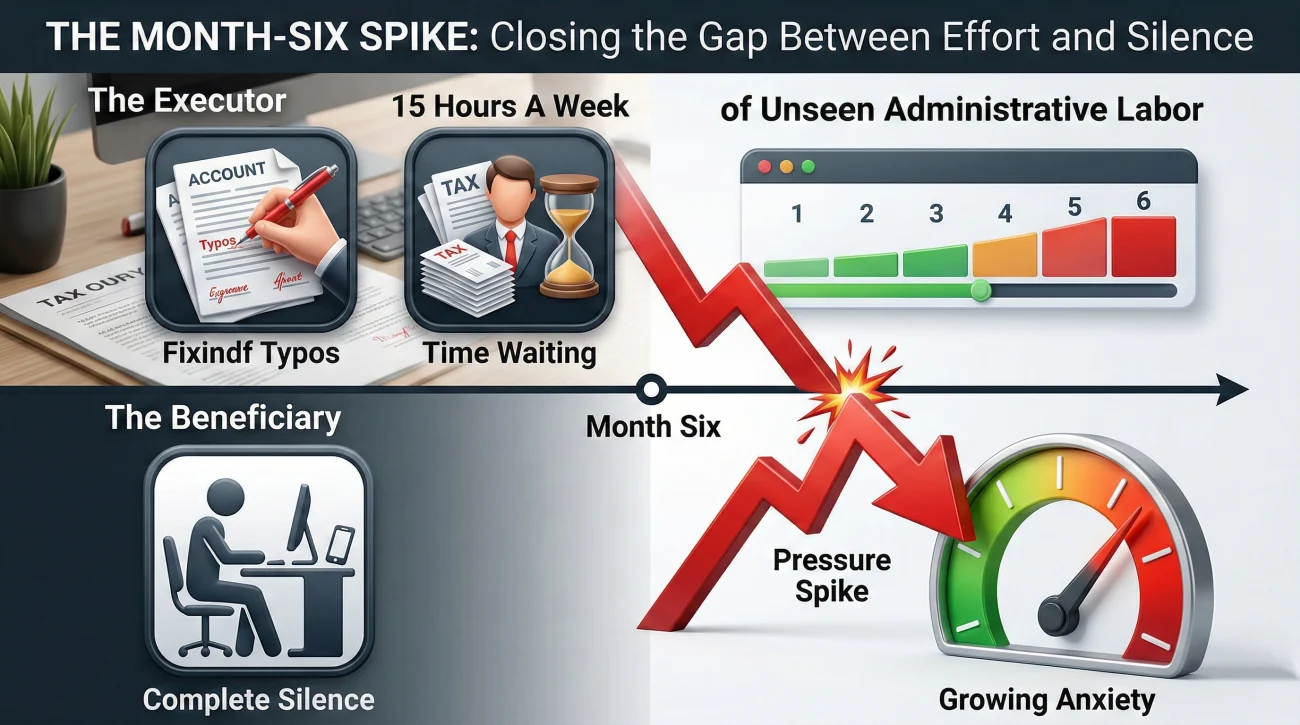
In day-to-day admin work, I have noticed that beneficiary pressure does not build gradually. It usually spikes suddenly around the six-month mark. There are practical reasons for this.
In the first few months, everyone understands that funerals, initial court filings, and mourning take priority. But by month six, the emotional shock has faded for the beneficiaries. They return to their normal lives, and their thoughts shift to the financial reality of the estate.
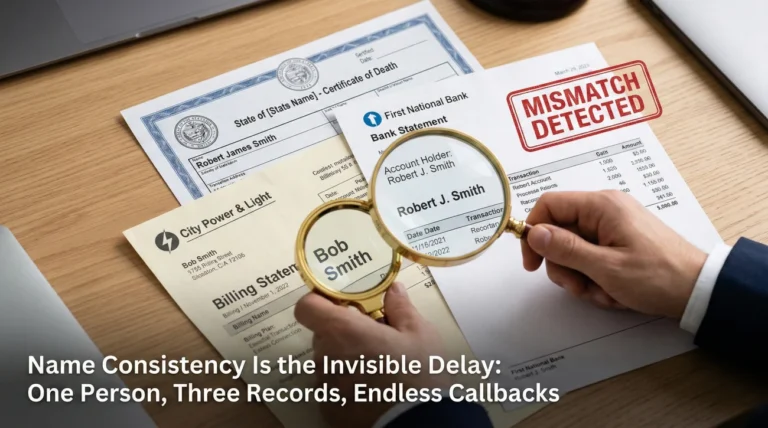
Waiting on a final tax clearance letter, calling three different departments to fix a misspelled name on an account, and logging 15 hours a week of unseen administrative labor.
Complete silence. No news, no checks, and growing anxiety that the executor is mismanaging the funds.
When there is no visible progress, beneficiaries fill the silence with their own anxiety. This is the exact moment they start quoting the executor’s year guideline as a weapon rather than understanding it as a protective buffer.
How to Protect Yourself with Proactive Communication
The hardest lesson for many executors to learn is that doing the work is only half the job. The other half is communicating that the work is happening. A helpful perspective shared in industry guides on managing beneficiary expectations highlights that tension almost always stems from a lack of transparency.
To disarm the timeline weapon, you have to step out in front of it. Do not wait for beneficiaries to text you asking for updates. I recommend sending a brief, factual email update on the first Friday of every month. Keep it neutral, list what was completed, and list what you are waiting on.
Here is a safe, copy-paste script you can use to set expectations early in the process.
Hello everyone,
I want to provide a quick update on where we are with the estate administration.
What was completed this month:
* The final tax documents were filed.
* We received the formal claim release from the hospital.
What we are waiting on next:
* We are currently waiting for the state to process the tax clearance. They have informed us this review takes approximately 6 to 8 weeks.
As a reminder, standard estate administration often takes between 12 and 18 months due to these mandatory institutional review periods. I will send another brief update next month once we hear back from the state.
Best regards,
[Your Name]
Bridging the Gap: Handling the Aggressive Text
Even with monthly updates, a beneficiary might still send an aggressive text demanding a payout. When this happens, you must transition from proactive communication into reactive damage control. Do not respond with anger. Respond with process.
Documenting The 3 Most Common Reasonable Delays
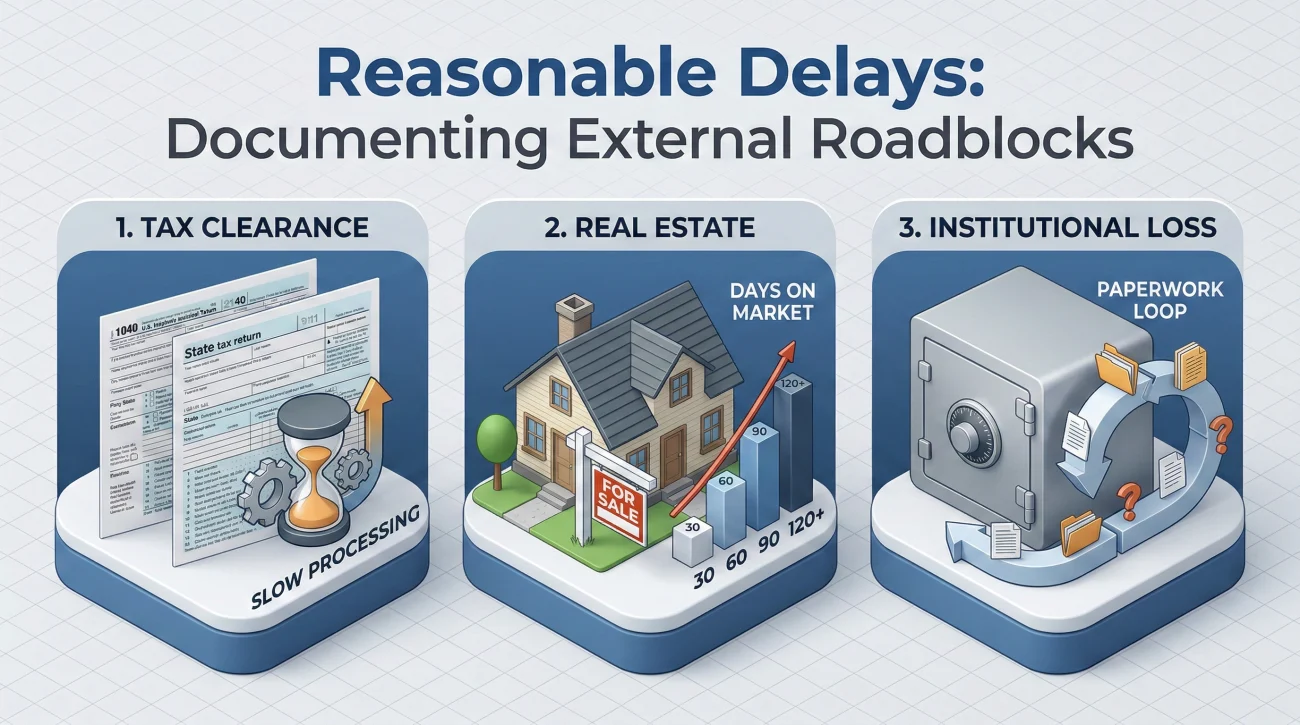
In many cases, an estate will legitimately take much longer than a year. Your job is to document these specific delays so you can prove you were not acting negligently. Here are the three most common roadblocks and exactly how to document them.
1. Tax Clearance Backlogs
State and federal tax agencies are notoriously slow. You cannot safely distribute funds until they formally sign off.
How to track this: When your CPA or attorney files the final returns, ask them for a written estimate of the current agency processing times. Save this email and quote it directly in your monthly beneficiary update.
2. Real Estate Market Realities
Selling a physical house depends entirely on local market conditions, interest rates, and buyer demands. An estate cannot close if the house sits on the market for nine months.
Your best defense: Ask your real estate agent to provide a monthly market report showing comparable sales and current average days-on-market. Keep these reports in your executor folder to prove the pricing and timeline are market-driven, not caused by your neglect.
3. Institutional Paperwork Loss
Banks and financial institutions frequently lose paperwork, require new signatures, or reject forms due to minor spelling errors. This reset can add weeks to your timeline.
The paper-trail rule: Never rely on a customer service rep saying “it looks good” over the phone. Use this exact formula every time you interact with an institution:
When to Stop Explaining and Call an Attorney

But even the most organized paper trail has a limit when legal threats enter the picture. There is a distinct line between a beneficiary who is emotionally venting and a beneficiary who is taking legal action. You need to recognize when communication templates are no longer enough.
If a beneficiary moves from sending frustrated texts to sending a formal demand letter from their own lawyer, or if they threaten to petition the court to have you removed as executor for timeline delays, you must stop communicating directly. This has crossed into a legal dispute.
❌ Note: Do not attempt to argue your case over email if legal action is threatened. Review your probate court checklist, gather your communication logs, and contact your estate attorney immediately to draft a formal response.
Turning the Weapon Back Into a Shield
The executor’s year guideline was created to protect people like Michael, not to be used as a club against him. When beneficiaries use it as a weapon, it is almost always a symptom of anxiety mixed with a lack of information.
You cannot control how fast institutions review your packets, and you cannot control the legal timelines required by your local jurisdiction. But you can entirely control how you communicate. By logging your specific delays, saving timeline estimates in writing, and sending proactive monthly updates, you replace beneficiary anxiety with hard facts. When they can clearly see the administrative wall you are climbing, the pressure on you will drop significantly, allowing you to finish the job you agreed to do.
📚 Sources & References
To ensure practical accuracy, the operational concepts in this article reference standard administrative expectations discussed in the following professional resources:
❓ FAQ
⏱️ What exactly is the executor’s year guideline?
It is a historical rule of thumb that generally gives an executor one year from the date of appointment to gather assets and settle debts before beneficiaries can demand their share of the estate.
🗓️ Do I have to distribute all the money exactly at 12 months?
No. If the estate has complex assets, pending taxes, or outstanding creditor claims, it is common and often necessary to hold funds beyond the one-year mark to ensure all obligations are met.
📜 What if the will specifically states a shorter timeline for payouts?
Even if a will requests a fast payout, state law regarding creditor claims and mandatory waiting periods always supersedes the will’s requests. You must clear debts before distributing funds.
🍕 Can I make a partial distribution before the year is up?
In many jurisdictions, yes, if you are absolutely certain the remaining funds will cover all possible debts and taxes. However, doing so carries high personal risk for the executor if unexpected bills arise later. Review an estate distribution checklist before considering this.
🏠 What if selling the estate property takes longer than a year?
Real estate delays are common and are generally considered a reasonable cause for extending the timeline. Just ensure you document the listing process and communicate the market status to the beneficiaries.
⚖️ Can beneficiaries force me to pay them before the year is up?
Generally, institutions and courts recognize that you need time to clear debts first. Attempting to force an early payout is very difficult if you are actively and properly working through the creditor phase.
⏳ Where is the line between a reasonable delay and negligence?
A delay is “reasonable” if it is caused by external factors you are managing and documenting, such as tax agency backlogs or slow real estate markets. It crosses into “negligence” if the delay happens because the executor fails to file required paperwork, ignores creditor claims, or refuses to communicate with beneficiaries for months.
👨⚖️ What happens if a beneficiary hires a lawyer to force a payout?
If a beneficiary hires legal counsel to pressure you, you should immediately stop communicating directly with them and route all correspondence through the estate’s attorney to protect yourself from liability.
🏦 Does the executor’s year apply to accounts with named beneficiaries?
Usually not. Accounts like life insurance or payable-on-death (POD) bank accounts bypass probate and go directly to the named beneficiary outside of the executor’s timeline.
📂 What documents prove I am actively working on the estate?
Your best proof includes a detailed timeline log of your phone calls, copies of emails sent to institutions, certified mail receipts, and any written requests you have made for status updates.
⚠️ Disclosure: I'm not an attorney and nothing on this site is legal or tax advice. The content covers process, organization, and workflow—the operational side of estate administration. For legal interpretation, jurisdiction-specific deadlines, contested situations, or tax matters, please work with a licensed professional in your state.